



The principle of holographic projection is to record and reproduce the true three-dimensional image of an object by utilizing the principles of interference and diffraction.
Because the propagation of light waves in holograms does not require a reference object, the light information recorded on the medium can perfectly reconstruct the true three-dimensional image of an object.
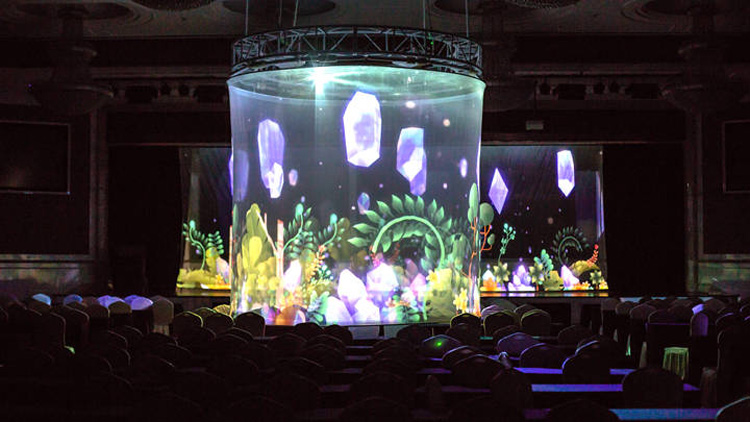
Holographic projection differs significantly from traditional screen projection.
Firstly, holographic projection has no screen, thus it is free from physical limitations.
Secondly: Traditional screen displays can only present images on a flat surface, whereas holographic projection can create a three-dimensional image, offering viewers an immersive experience.
Once again, traditional display methods require manual control of light information output devices to control image signal output devices.
Holographic projection utilizes machines to automatically control the output of light information devices, connecting the image information output devices with the optical system, thereby creating a three-dimensional stereoscopic image to achieve the effect of expressing image information.
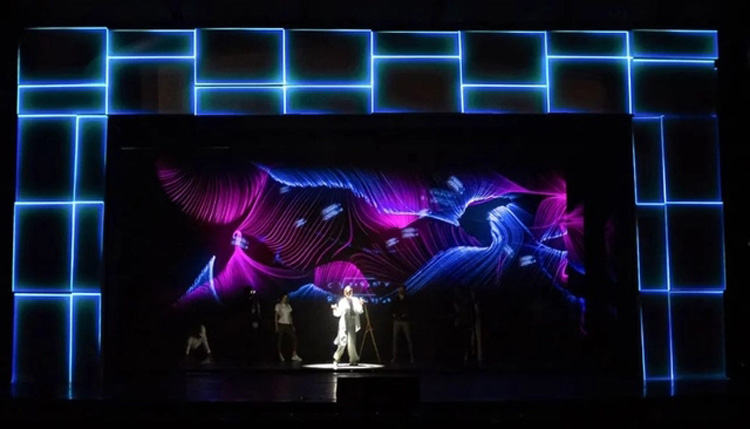
The advent of holographic projection has elevated the art of cinema, offering audiences an entirely new visual experience.
Holographic projection transforms traditional two-dimensional images into three-dimensional ones, providing the audience with a realistic and immersive experience, as if they were in a virtual world.
Holographic projection can also be applied in exhibition displays, museum exhibitions, and large-scale events.
Holographic projection is primarily used in places such as shopping malls, museums, science and technology museums, and exhibition halls.
As urban planning and construction progress, many new venues demand higher standards for lighting and shadows.
