



Holographic film, offering dynamic aerial displays, provides clear imagery while allowing viewers to see the scenery behind the projection film. It can be combined with interactive software to produce three-dimensional interactive images, creating an immersive experience and a sense of manipulating space. It boasts numerous unparalleled advantages, including high definition, resistance to strong light, ultra-thinness, and anti-aging properties. Do you really understand holographic film?
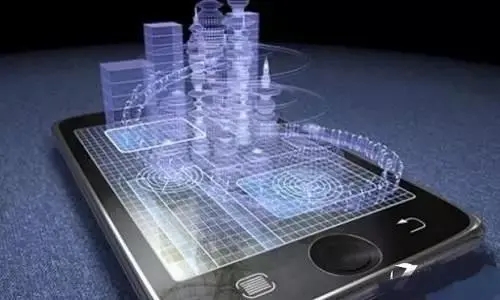
What is a holographic film?
Holographic film is an actual application of the hologram technology, which is a revolutionary patented projection film that allows for viewing images from both the front and back sides simultaneously and at multiple angles (360°), regardless of the light source availability.
The holographic projection film boasts unique high-definition transparency, creating a crystal-clear visual effect that immediately captures the audience's curiosity and attention. It effectively communicates high-quality visual information without hindering the display of the exhibits. Furthermore, it is不受限制by venue or design constraints, allowing for悬浮半空悬浮or to be spread across walls, making design and communication omnipresent. It lets inspiration and technological fashion permeate the entire environment, elevating the value of the exhibits through its free and agile nature.
Section II: Classification of Projection Films
Holographic Projection Film
The transparent holographic projection film boasts a unique transparent quality, allowing viewers to see through the film and perceive the background while maintaining a crystal-clear and vivid image. With a 100% sharp and bright picture quality, its extraordinary ultra-thin design has no spatial limitations. This神奇 effect is attributed to the practical application of an integrated diffraction hologram technology released in the international market. It represents a groundbreaking patent technology that enables viewers to directly observe images from both the front and back sides, at multiple angles, regardless of the light source's availability.
Grey projection film
The light gray and dark gray projection films are the latest generation of display devices, boasting numerous unparalleled advantages such as high clarity, resistance to strong light, ultra-thinness, and anti-aging. They are made with molecular-level nano-optical components, the core material being holographic color filter crystal (HCFC), and integrated with nanotechnology, materials science, optics, and polymer science achievements, as well as preparation and processing technologies. The materials used include organic materials, inorganic nano-powders, and fine metal powders. Their thin and light internal structure incorporates advanced optical design to achieve high clarity and brightness in imaging.
Magic Mirror Projection Film
The projection film utilizes a special composite material that effectively blocks UV and infrared rays from damaging the film, while offering high resistance to acid and alkali as well as excellent antioxidant properties. Worry no more about the lifespan of the projection film due to long-term use or exposure to the outdoors. Any dirt on the surface can be easily cleaned with a soft cloth. The holographic projection film maintains image quality and surface integrity from -10°C to 70°C. This feature is significantly superior to the projection film formed by spraying, making it hassle-free and worry-free for both commercial and residential use!
Mirror Projection Film
Mirror Projection Film is a high-performance double-sided display projection film. Utilizing new coating sputtering and SI optical structure technology, it achieves a thickness just half that of similar products, yet offers a softer and more refined image with more realistic details. With nearly 180° of viewing angle and double-sided display capabilities, this product serves as a powerful tool for visual appreciation and communication. It enhances the promotional effect of window advertisements or in-store displays, drawing customers' attention even more effectively.
Phantom Image Projection Film
The Phantom Imaging Film is a high-performance double-sided display projection film. The surface of the film is coated with a nanometer-grade photo-sensitive coating through a vacuum magnetron sputtering deposition process, maintaining a high transmittance of 99.99% while also featuring a high reflectivity (mirror-like appearance). The main component of the film layer is SOB (a photo-sensitive material used by NASA), which offers fine imaging and high-definition imaging capabilities, enabling the creation of a significant sense of depth and stereoscopic effect.
What is holographic projection technology?
Holographic projection technology, also known as virtual imaging technology, is a technique that utilizes interference and diffraction principles to record and reproduce a real three-dimensional image of an object.
The working principle of holographic projection technology is mainly divided into two steps. The first step involves recording the light wave information of an object using the interference principle, which is the process of photography: the object is illuminated by a laser to form a diffused beam of light; another part of the laser is used as a reference beam, which is projected onto the holographic film, overlapping with the object beam to produce interference. This converts the phase and amplitude of each point on the object's light wave into varying intensities in space, allowing the full information of the object's light wave to be recorded through the contrast and spacing of the interference fringes. After the film, which records the interference fringes, undergoes development and fixation processes, it becomes a hologram, or holographic photograph. The second step utilizes the diffraction principle to reproduce the object's light wave information, which is an imaging process.
A hologram acts like a complex grating, and under the illumination of coherent lasers, the diffraction light waves of a linearly recorded sine-wave hologram typically produce two images: the original image (also known as the initial image) and the conjugate image. The reconstructed images have a strong sense of stereoscopic vision and possess a realistic visual effect. Each part of a hologram records the light information of each point on the object, so in principle, every part can reconstruct the entire image of the original object. Through multiple exposures, multiple different images can also be recorded on the same film, and they can be displayed separately without interference.
