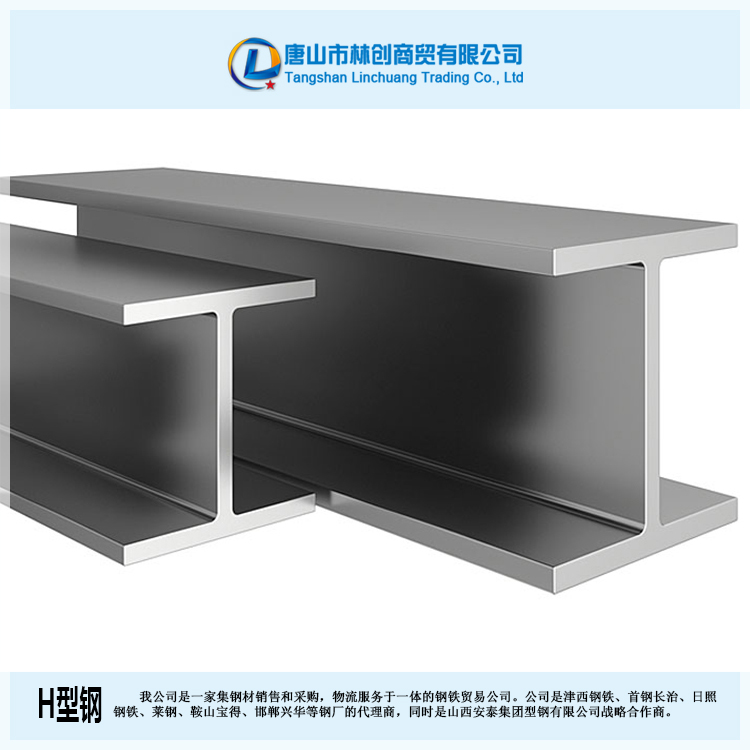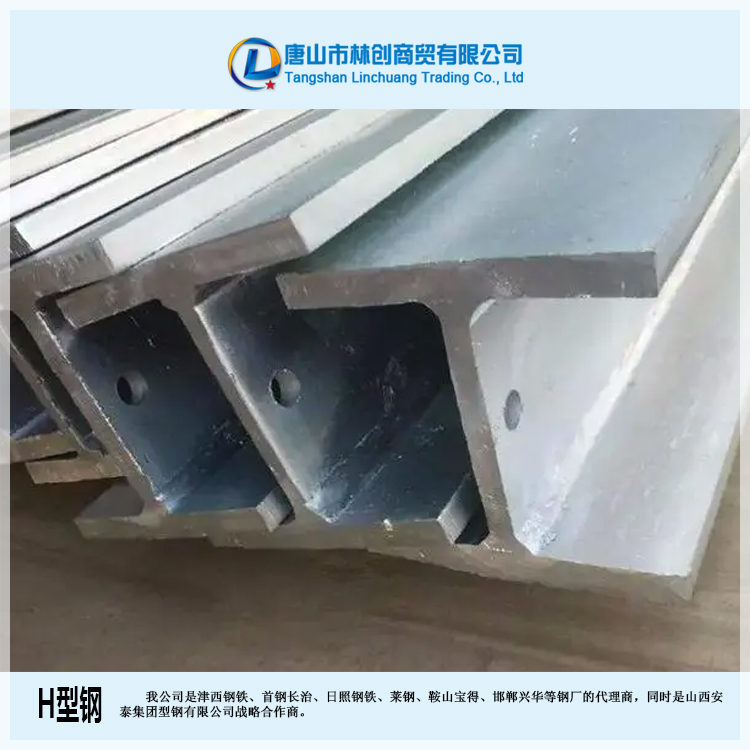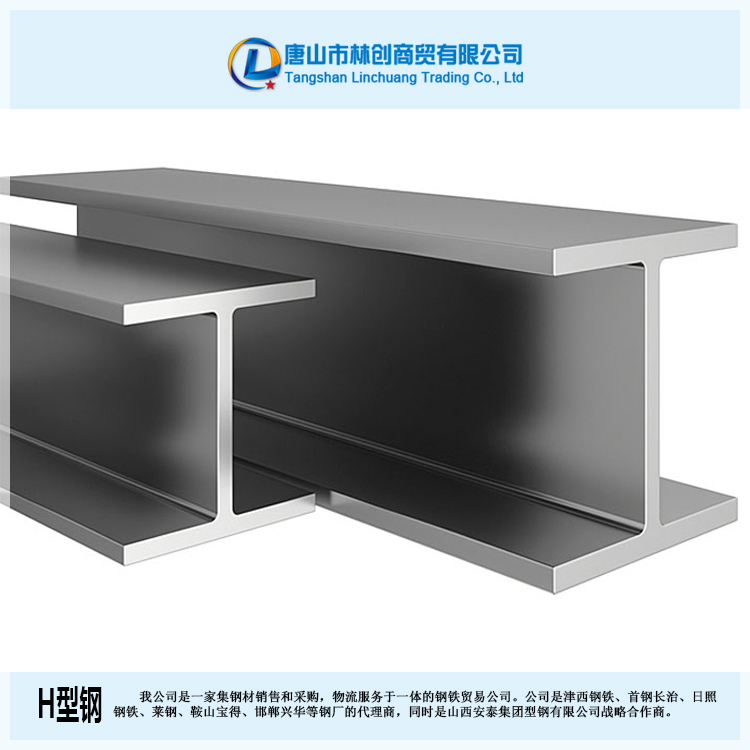

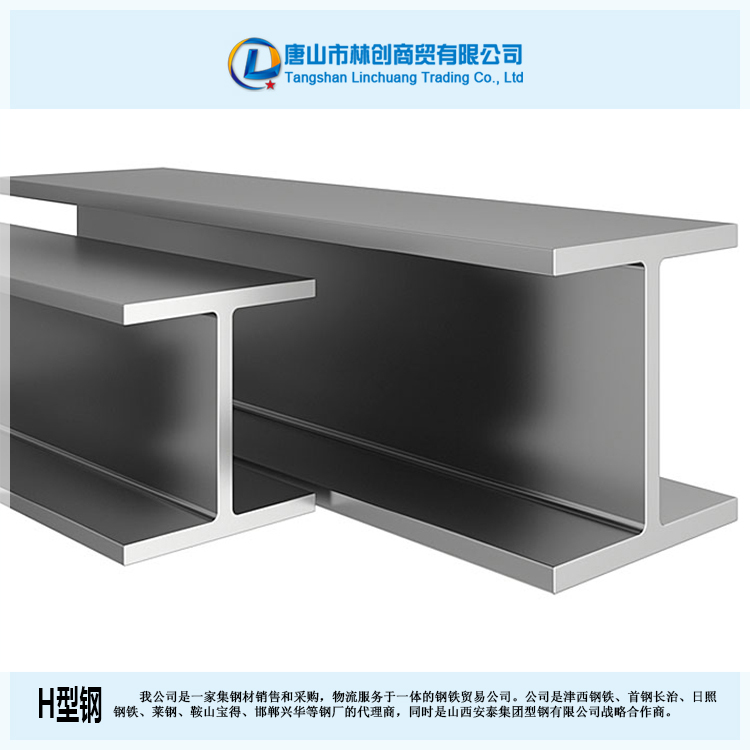
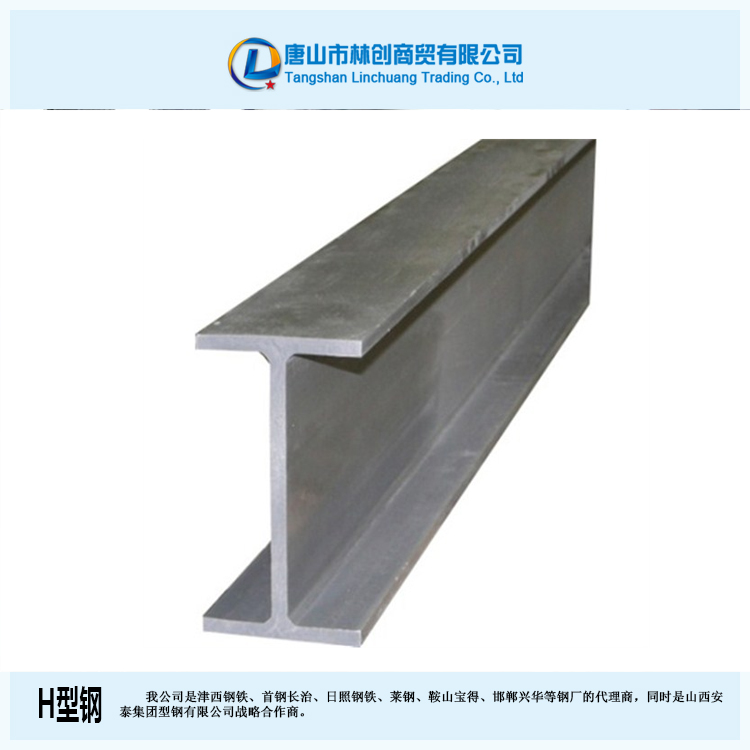
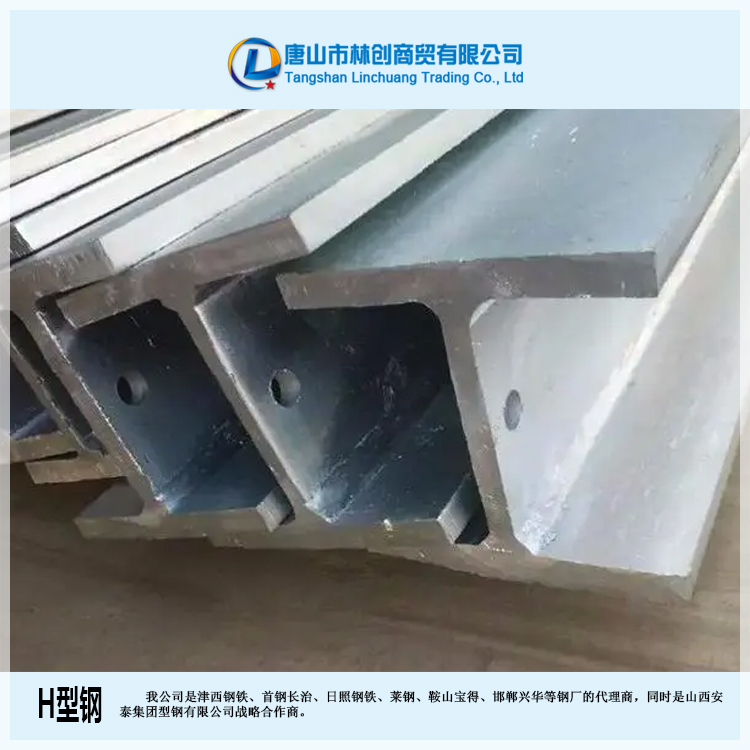















The inner and outer sides of the flange of H-beam are parallel or nearly parallel, and the end of the flange is at a right angle, hence the name parallel flange I-beam. The thickness of the belly plate of H-beam is smaller than that of ordinary I-beam with the same height as the belly plate, and the width of the flange is larger than that of ordinary I-beam with the same height as the belly plate, hence it is also called wide edge I-beam. Due to its shape, the section modulus, moment of inertia, and corresponding strength of H-beams are significantly better than those of ordinary I-beams of the same weight. Used in metal structures with different requirements, it exhibits excellent performance in withstanding bending moments, pressure loads, and eccentric loads, greatly improving the bearing capacity compared to ordinary I-beams and saving 10% to 40% of metal. H-shaped steel has wide flanges, thin web plates, multiple specifications, and flexible use, which can save 15% to 20% of metal when used in various truss structures. Due to the parallel inner and outer sides of its wing edges and the right angled edge ends, it is easy to assemble and combine into various components, which can save about 25% of welding and riveting work, greatly accelerate the construction speed of the project, and shorten the construction period.