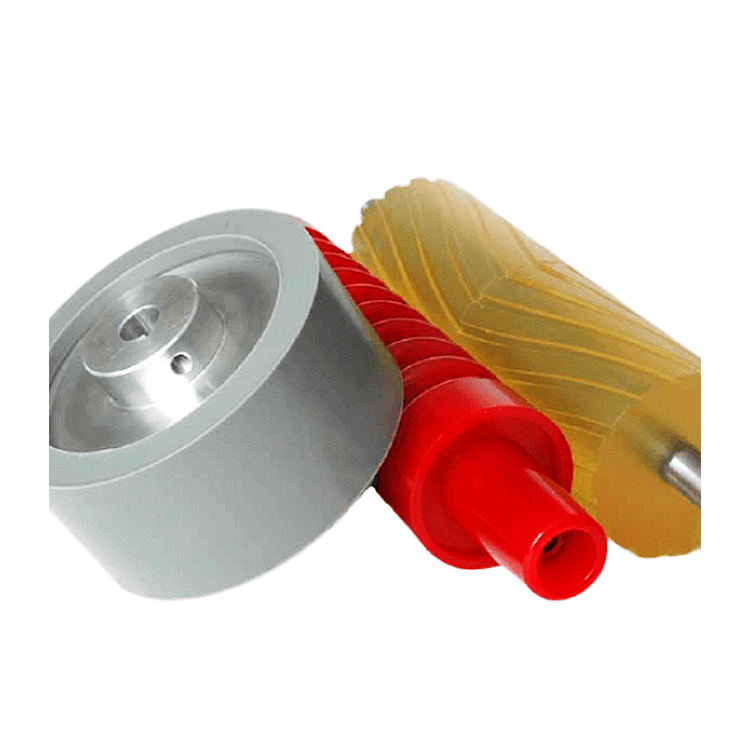










Xiwang Roll Industry develops customized polyurethane products to fully meet your needs. This ensures that the form, assembly, and functionality of the parts match your application.
Polyurethane performs well in various applications. Even though some applications may be typical, we still specialize in manufacturing customized parts. The design and manufacturing of each customized polyurethane component can meet your unique requirements. Some applications include environments that require excellent wear resistance. Polyurethane typically causes significant wear and tear on corresponding parts made of metal, plastic, or rubber. Other applications include situations where carrying is crucial. Polyurethane has excellent load-bearing capacity, and its flexural and recovery rates far exceed those of plastics or metals. The methods of manufacturing parts from polyurethane include open casting, centrifugal molding, compression molding, and injection molding.
Open casting
This is a simple molding method. Pour polyurethane smoothly into the open mold, or sometimes gently flow upwards from the bottom of the mold. The mold used for casting polyurethane parts can be made of various materials. The important factor is that they must be impermeable and free of any moisture. Some of the main materials used for manufacturing molds include polyurethane aluminum, silicone resin, steel, or hard thermoplastic.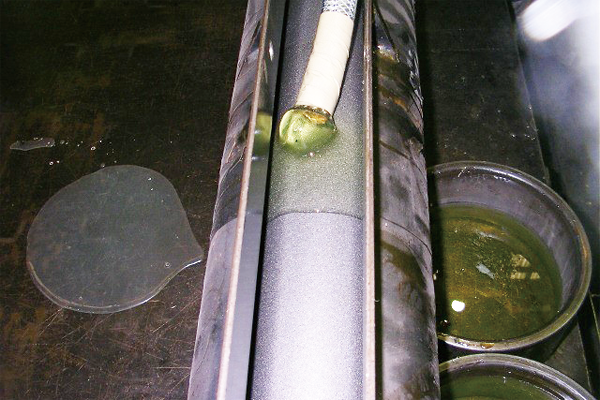
Centrifugal molding
While pouring polyurethane, rotate the mold along one dimension (e.g. on a horizontal plane). As the air moves towards the center of the mold, the spinning process forces the polyurethane to move around the mold. This method is used to mold products with complex details that would otherwise capture bubbles. By rotating the mold on the horizontal and vertical axes (or at a certain angle), three-dimensional hollow parts can be manufactured. As an option, the mold can be rotated and shaken.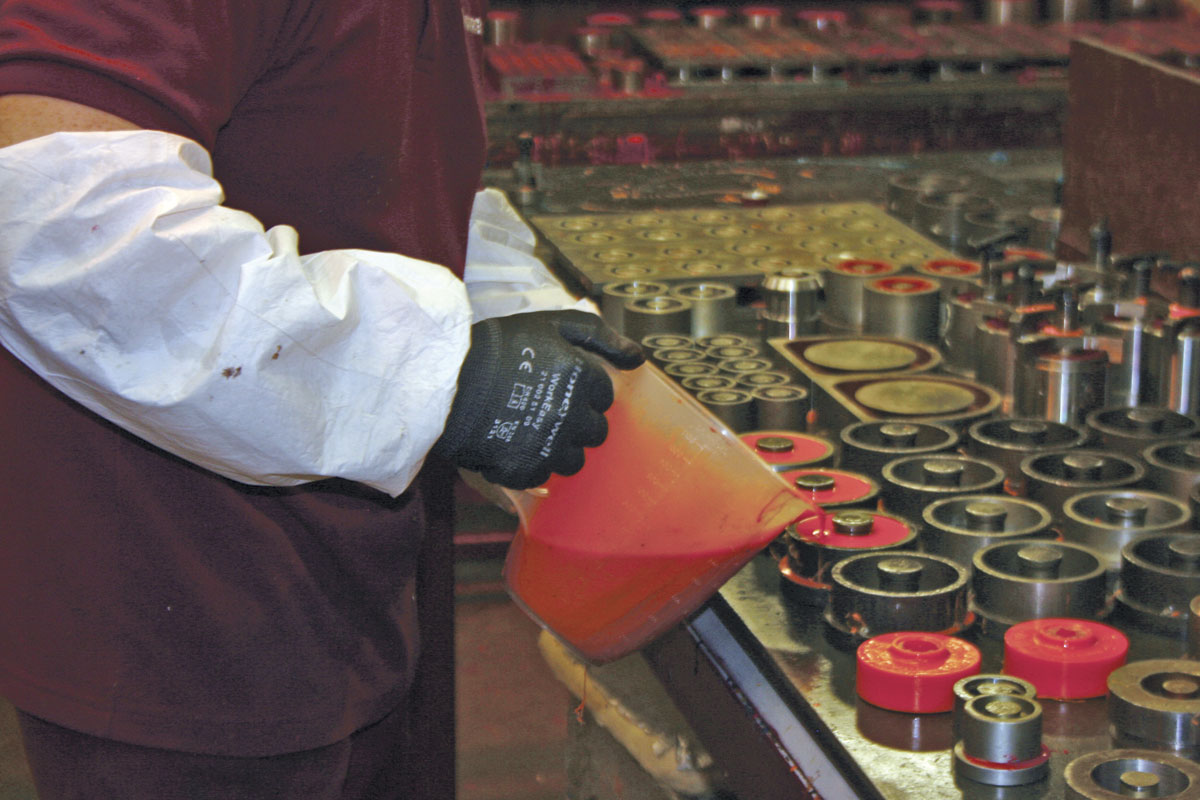
Compression molding
Compression molding uses mechanical force to clamp the two halves of the mold together through hydraulic pressure. The applied pressure forces polyurethane into all cavities of the mold. This allows for the production of products with complex shapes without the need for secondary processing. When all sides have shapes, more complex molds can be manufactured. The position of the board is controlled by installing positioning pins and corresponding bushings in the board. The compression mold also applied greater deterministic pressure to the cementitious polyurethane. If there is moisture bubbling, it will reduce porosity.
Injection molding
Injection molding can automatically complete the process in just a few seconds with a fast cycle time. The entire process is carried out in a professional automatic injection molding machine. Firstly, feed the solid polyurethane particles into the injection cylinder of the machine. The material barrel contains a reciprocating screw that feeds the granules forward and plasticizes them towards the mold. The high shear effect of the screw heats the granular material by friction, causing complete melting of polyurethane at the end of the barrel. When enough material accumulates at the end of the cylinder, the molten polyurethane will enter the mold at high pressure and speed.