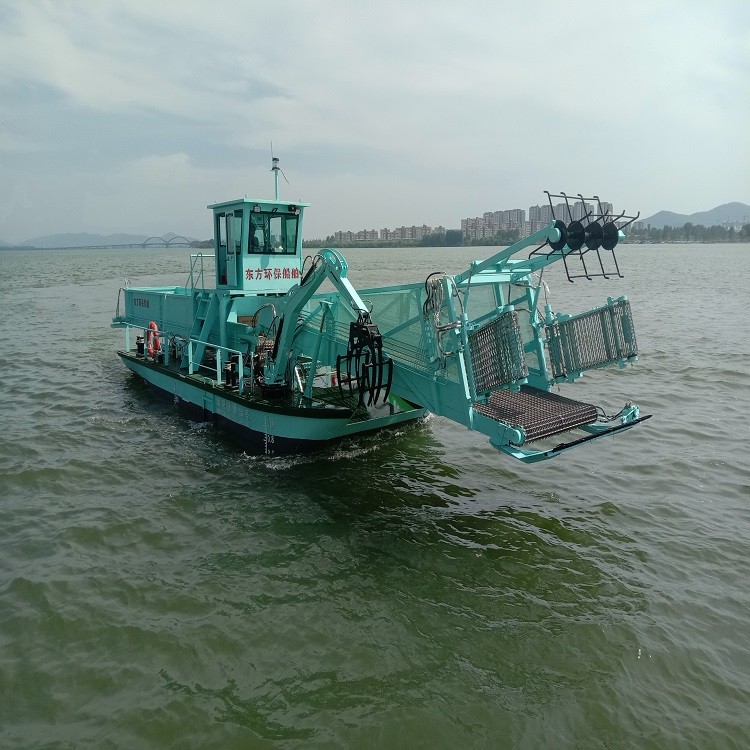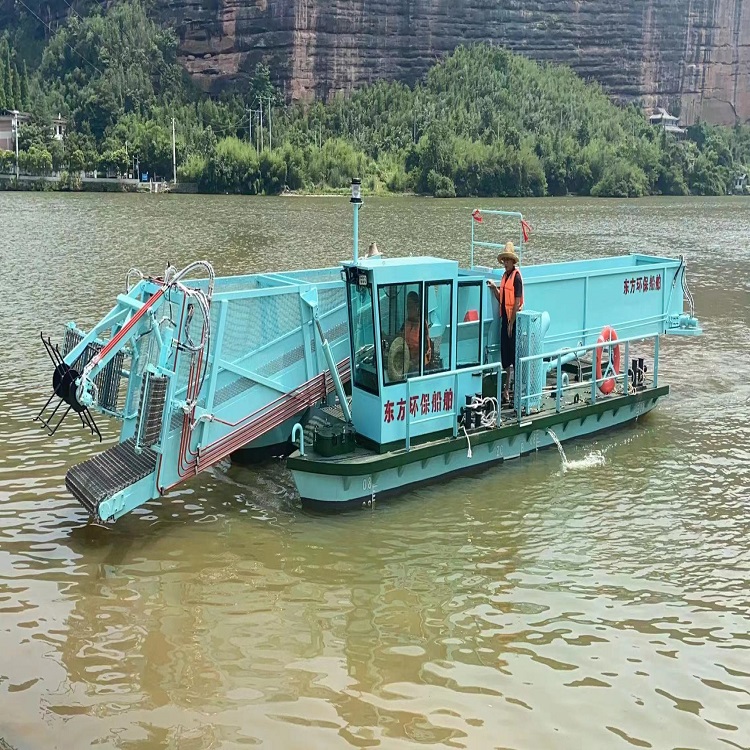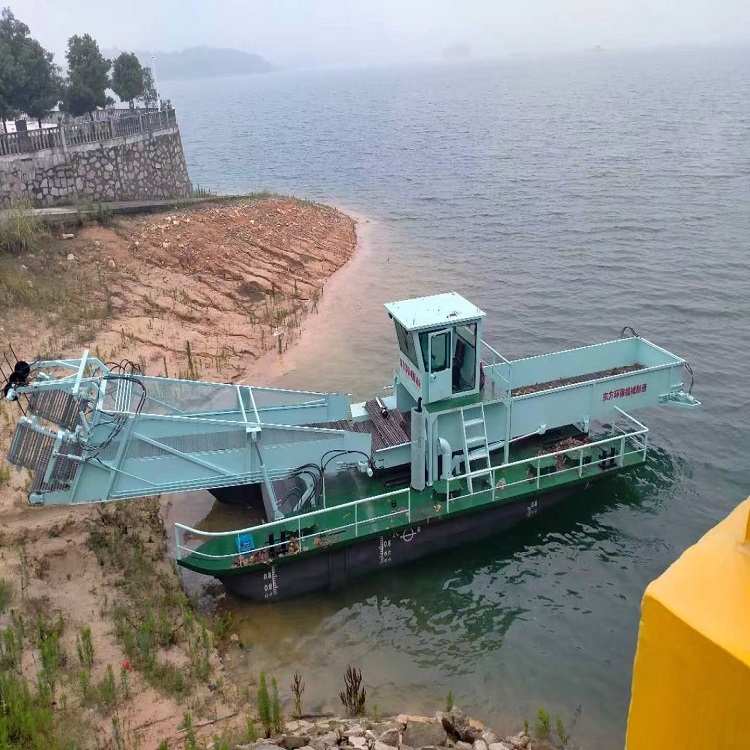

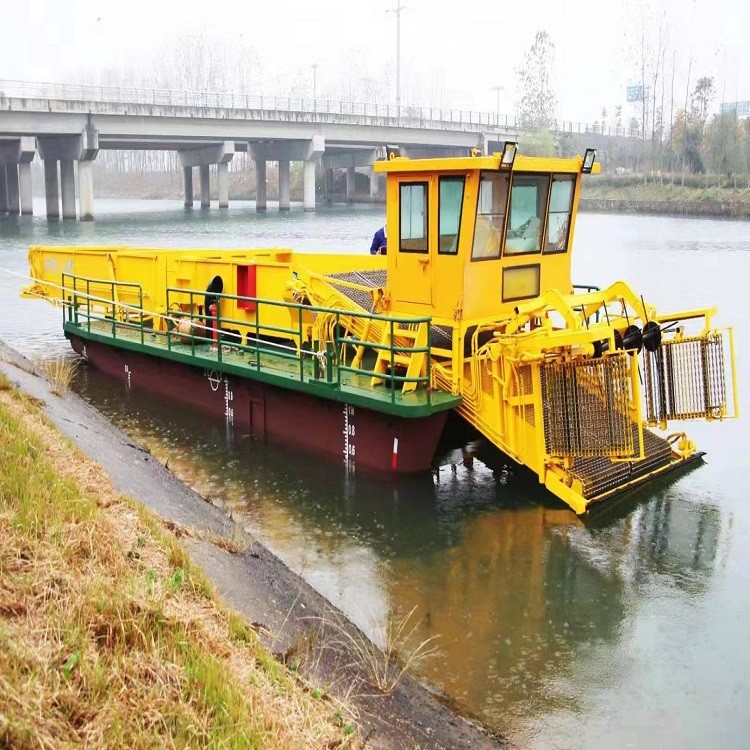







1. Cleaning vessels are primarily used for the removal of river and lake debris and floating waste, and they can automatically discharge the collected waste and debris onto designated shore docks or garbage trucks.
2. The cleaning vessel features a two-compartment design, with the collection chamber located at the front of the ship. It can freely adjust the retrieval depth based on the waste situation. The ends of the collection chamber are equipped with mechanical swing arms, which can move left and right to expand the cleaning area. The conveyor belt on the swing arms can rotate, creating a water flow to suction small debris into the collection chamber, thereby enhancing cleaning efficiency.
3. The central compartment serves as a storage and unloading bay for collected waste and debris. Upon the ship docking, the central compartment can be lifted to rotate and unload the waste via a conveyor belt.
4. Cleaning vessels have a broad recovery range, are spacious and aesthetically pleasing, produce low noise, have low fuel consumption, are safe and easy to operate, highly automated, and can effectively clean waterways.