

















Electric locomotives are traction devices for rail vehicle transportation, powered by electric motors that drive the wheels. They rely on the friction between the wheels and the rail surface to operate on the tracks. This mode of operation is limited by both the power of the traction motor (or internal combustion engine) and the friction between the wheels and the rail. The transportable gradient for locomotives is restricted, with the general track gradient being 3‰, and local gradients not exceeding 30‰. They are categorized structurally into overhead-wire electric locomotives and battery-powered electric locomotives.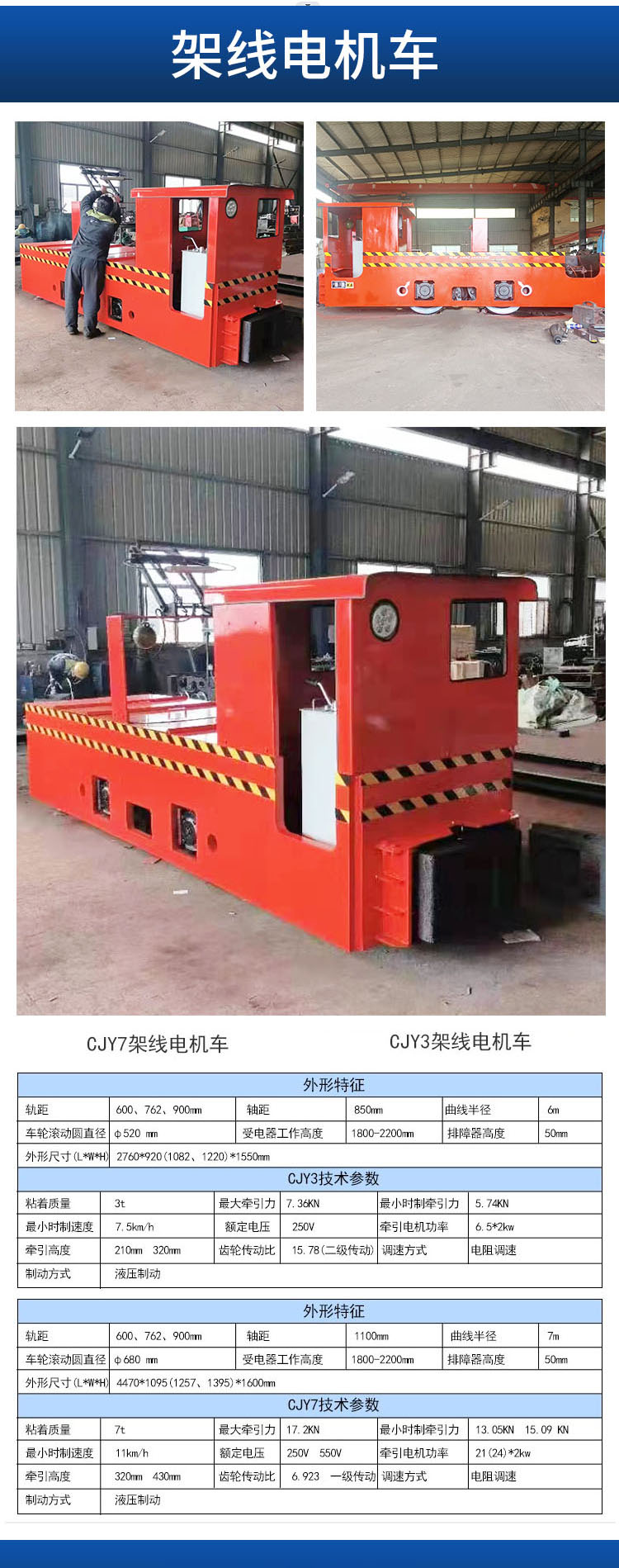
The working principle of battery-powered locomotives is similar to that of overhead-wire locomotives, where direct current provided by the battery powers the motor through components like explosion-proof plugs, controllers, and resistor boxes, thus propelling the train.
Battery-powered electric trolley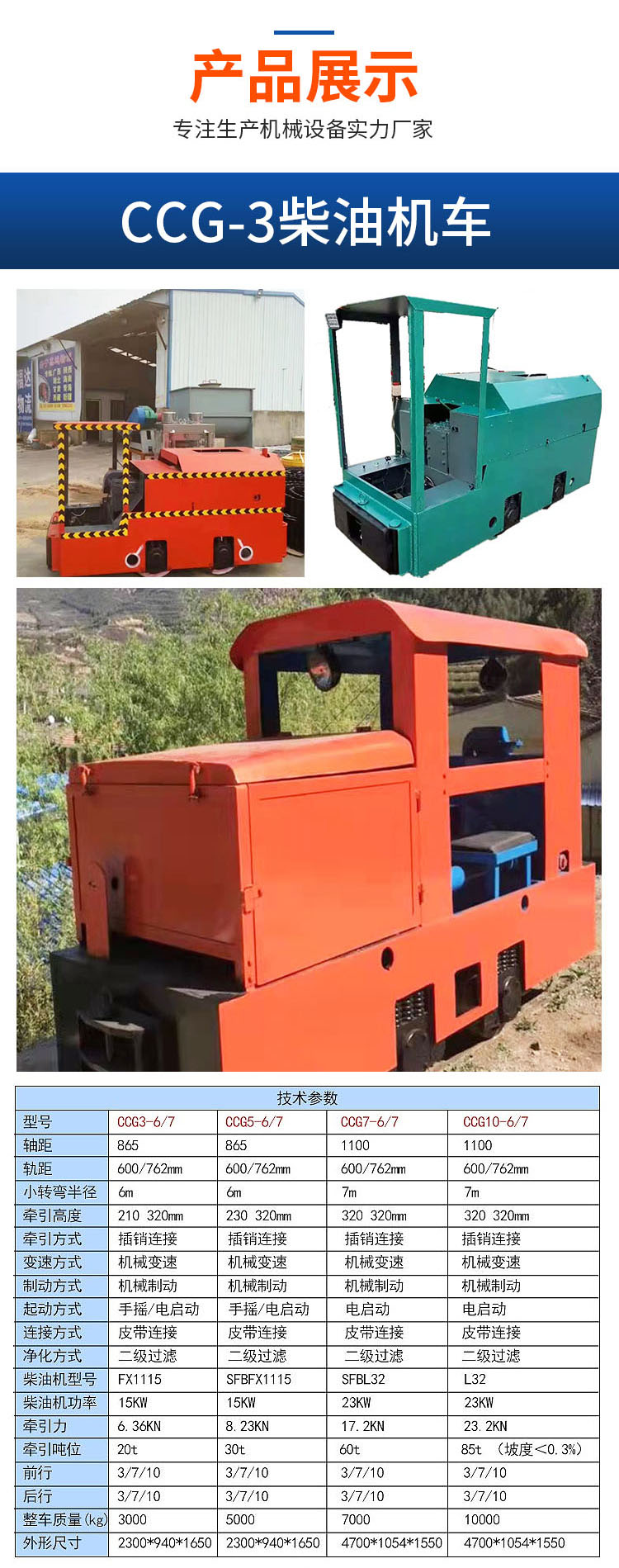
Battery-powered electric locomotives are powered by battery packs. Battery charging typically occurs in the underground locomotive garage. Once the battery pack on the locomotive has been used to a certain extent, it is removed and replaced with a fully charged one. Therefore, each locomotive must be equipped with 2-3 battery packs.
Advantages: No spark ignition risk, suitable for use in mines with gas; no need for wiring, flexible usage, highly applicable for transportation systems with low output and irregular tunnels, as well as tunneling transportation.
Drawbacks: Requires charging equipment; High initial investment; Low energy efficiency; High transportation costs.


















