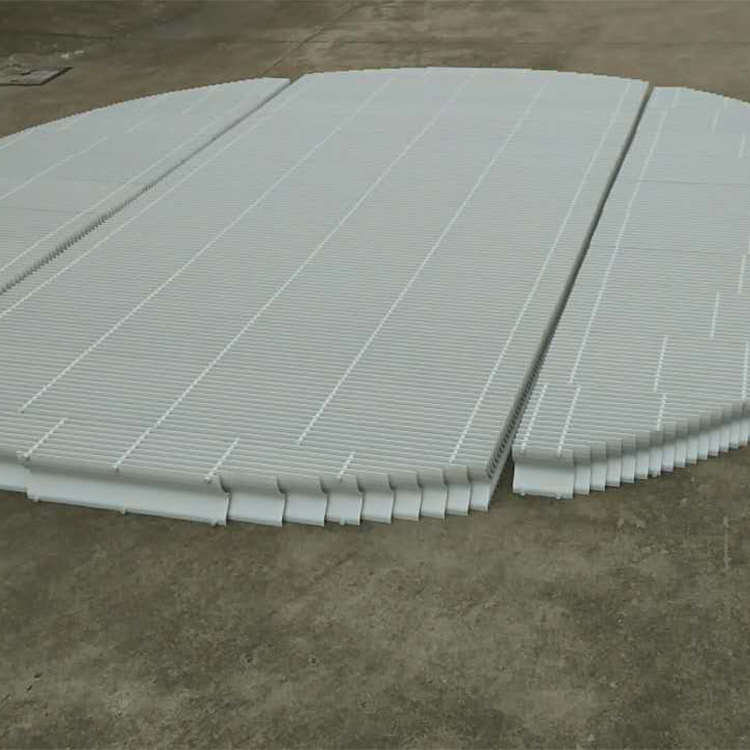








Foam insulation board is a high-performance inorganic thermal insulation material. It is a porous, lightweight, and high-performance thermal insulation board made from various inorganic cementitious materials, modifiers, foaming agents, and other additives through a mixing system, curing system, cutting system, and other equipment. This material boasts low thermal conductivity, excellent thermal insulation properties, high-temperature resistance, aging resistance, and is A1-rated non-flammable. Cement foam insulation board is widely used in the external wall thermal insulation systems of buildings.
1. Eco-friendly
Non-irritating and free of harmful gas emissions; no mineral wool-like floating materials causing harm to human skin and respiratory system; smoke toxicity at safety level (AQ1); production and construction installation processes free of harmful gases and waste emissions; low carbon emissions; no waste from repeated thermal insulation removal polluting the environment.
2. Heat and fire resistant
Cement foam insulation boards can withstand temperatures above 1000 degrees Celsius, have an A1 fire rating, are non-combustible materials, and boast superior fire safety performance.
3. High thermal insulation properties
Cellular concrete thermal insulation boards have a closed-cell rate over 97%, which significantly reduces heat transfer through convection. The thermal conductivity of the cellular concrete insulation board can reach 0.045 W/m·K, comparable to polystyrene boards, meeting the requirements for building thermal insulation and heat preservation.
4. Low water absorption rate
Low water absorption rate of the foam insulation board ensures the product will not mildew in humid conditions, maintains its thermal insulation properties, and guarantees the product's safety and durability.
5. Lightweight and high-strength
Cement foamed insulation boards resolve the technical challenge of the contradictory characteristics of low density and high strength in materials, achieving relative uniformity. With a density of 180 kg per cubic meter and compressive strength exceeding 0.2 MPa, they meet the strength requirements during transportation and engineering applications.
6. Long-life anti-aging
Typical lifespan of organic thermal insulation board systems is 25 years, requiring a second or third insulation application for buildings once the lifespan expires; cement foam insulation boards have a lifespan exceeding 50 years, matching the building's lifespan, necessitating only one insulation application throughout the building's lifetime.
7. Good combustion integrity
Insulated foam cement boards, enhanced with advanced technology, have a fire resistance of over 3 hours and maintain excellent post-fire integrity, resisting powdering and retaining good overall integrity after exposure to fire.
8. Freeze-thaw resistance
Cement foamed thermal insulation board is a new type of insulation material developed by our R&D team through improvements on existing foamed cement products. The product has undergone continuous 25 freeze-thaw tests, with a quality loss rate less than 5% and a strength loss rate less than 20%. This ensures the board maintains stable physical and chemical properties even in complex weather conditions.
9. Excellent soundproofing properties
The internal structure contains a large number of independent bubbles, offering sound absorption capabilities 5-7 times greater than conventional concrete, and achieves a soundproofing effect of up to 60dB (140mm) as a new type of foamed cement soundproofing material.
10. Excellent usability
Cement foamed thermal insulation boards are a cement-based porous material, identical in composition to mortar and walls, with excellent bonding properties. They can be directly粘贴 after a simple clean-up, ensuring a strong adhesive bond.
11. Low Cost
Insulation EPS foam board with several key indicators, superior performance, and energy-saving efficiency over similar products; lifespan up to 50 years. Eliminates the need for repeated organic material exterior wall insulation during the building's trial period, ultimately reducing the building's insulation cost by 3-5 times.
Production Process
1. Feeding and Mixing: Quantitative cement, foaming agent, and foam-stabilizing enhancer are added to the mixer via the feeding system, and dried mixed for 30 seconds.
2. Stirring: Add the measured warm water to the mixer and wet stir for 2 minutes; then add the measured foaming agent to the mixer and stir for 8-15 seconds.
3. Injection and Foaming: The slurry is immediately injected into the mold for foaming, with the foaming process taking approximately 3-5 minutes.
4. Initial Care: After molding, allow the product to rest for several hours for initial care.
5. Demolding: The foam concrete insulation board can be demolded once it has achieved initial setting and strength.
6. Cutting: After the rough casting of the foam concrete thermal insulation board with certain strength is demolded, it can be cut. The cutting specifications can be adjusted by changing the cutting blades as needed.
7. Product Maintenance: The curing period for expanded polystyrene thermal insulation boards should not be less than 7 days.