



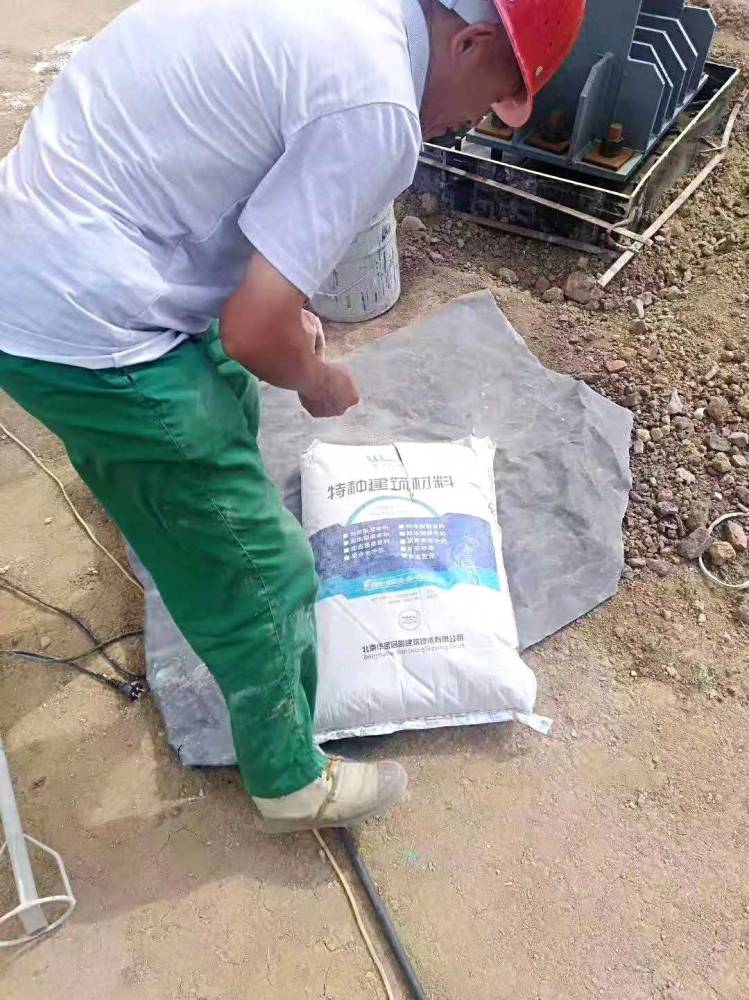
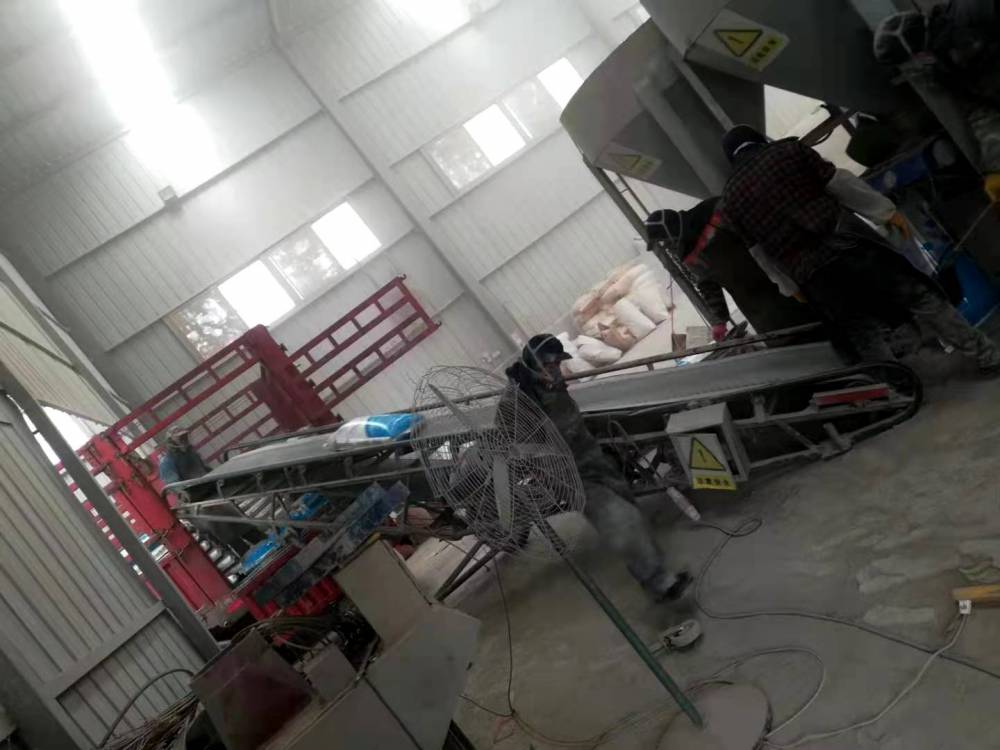










Winter construction
When the daily average temperature is below 5 ° C, winter construction should be carried out and meet the following requirements:
1. Before grouting, measures should be taken to preheat the foundation surface, keep its temperature above 100 ° C, and remove accumulated water.
Before being frozen, the compressive strength of cement-based grouting materials shall not be less than 5MPa.
Quality assurance of secondary grouting support grouting material Suining high-temperature resistant high-strength grouting material

At present, foam glass is rarely used in China. It is a new type of material, which can be used as energy-saving window glass or thermal insulation material of building envelope. Key points of application technology of foam glass: the matrix of foam glass is glass, so it does not absorb water. The internal bubbles are also closed, so there is no capillary phenomenon and they will not penetrate. Because these two points make foam glass superior to any other inorganic and organic insulating materials in most physical and chemical properties, foam glass is the current cold insulation material. The mechanical strength is relatively high, and the strength change is proportional to the apparent density. It has excellent compressive performance and is better able to withstand external environmental erosion and loads than other materials.
Construction in high temperature climate environment
If the temperature of the grouting site is greater than 35 ° C, construction should be postponed according to the high temperature climate and meet the following requirements:
Measures should be taken 24 hours before grouting to prevent direct or other thermal radiation from the grouting area.
2. Take appropriate cooling measures, and the temperature of the concrete foundation and equipment base plate in contact with the cement-based grouting material should not exceed 35 ° C.
3. The injection temperature of the slurry should not exceed 30 ° C.
4. Moisturizing and curing measures should be taken promptly after grouting.
Quality assurance of secondary grouting support grouting material Suining high-temperature resistant high-strength grouting material

Why use corner protectors? What is the difference between using and not using them? Corner protectors can maintain the verticality and levelness of wall corners, effectively control the thickness of the plaster layer, avoid excessive thickness of the plaster layer, and prevent cracking of the wall corner caused by excessive shrinkage force. Assuming that once the wall corner cracks, water seepage will occur, and the polystyrene board suddenly absorbs a large amount of water. As we all know, water flows downwards, and the more water seeps, the larger the area, which invisibly increases the load-bearing capacity of the polystyrene board. Currently, there is no more perfect way to control this phenomenon in exterior wall insulation construction. The sudden influx of moisture makes it difficult for the polystyrene board to accept this reality. If you don't treat it well, it will retaliate against you, causing water seepage, condensation, and cracking of the wall. At this point, we begin to ponder and search for why this outcome occurred and which link went wrong? In fact, the key lies in some nodes. The construction of internal and external corners is usually based on intuition, especially in some blind spots where there is no fixed standard. In order to save time and make more money, construction personnel tend to overlook these details. This is where the problem lies. In addition, after rain, it is very fierce, which will cause a large amount of gas to be produced in the wall. If this gas is not released in a timely manner, it will cause hollowing between the polystyrene board and the wall.
The maintenance free construction conditions are as follows
When the construction temperature is above 5 ℃ and below 35 ℃, there is no need for maintenance after foundation grouting. If the temperature exceeds the range, the grouting material construction and maintenance methods should be followed for maintenance.

Secondly, in order to achieve the goal of self insulation system for walls, the physical, chemical, and thermal properties of inorganic materials and lightweight insulation aggregates were studied. Combined with the characteristics of lightweight filling wall materials, the thermal bridging problem of blocks and lightweight filling walls was effectively solved, achieving an improvement in the insulation performance of lightweight filling walls. Thirdly, by treating the concrete beam column thermal bridge of the enclosure structure, a complete insulation system is formed between the lightweight filling wall of the outer enclosure structure and the concrete beam column, achieving the requirements of building energy-saving self insulation. Fourthly, research has been conducted on the supporting design, construction, and application technology of self insulation systems. The introduction of the overall technical solution provides more favorable quality assurance for the promotion and application of system products.















