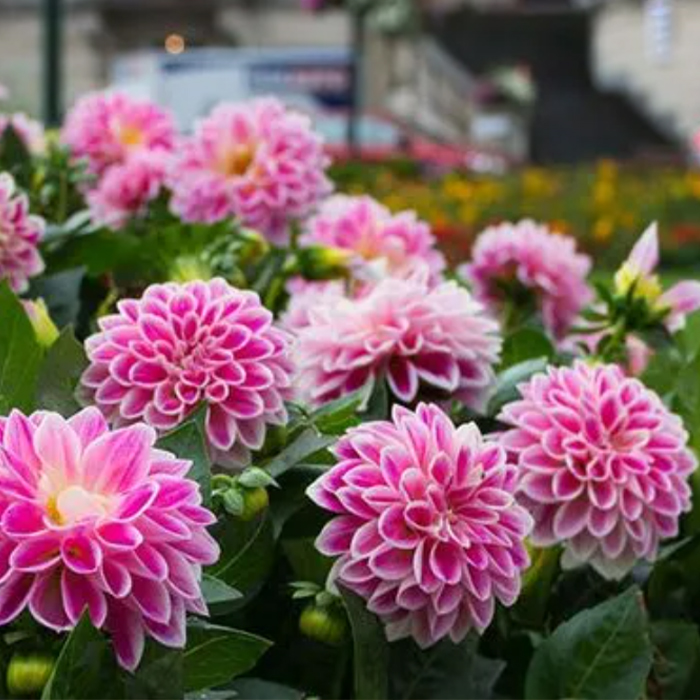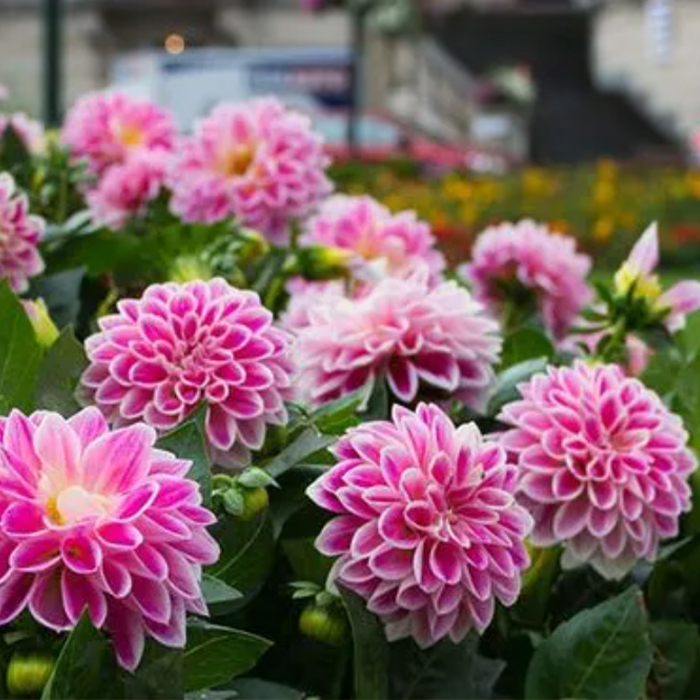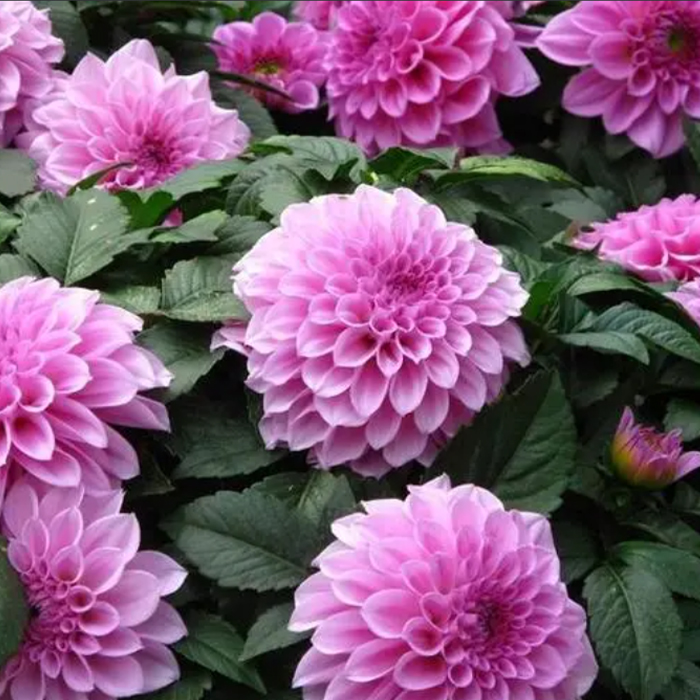

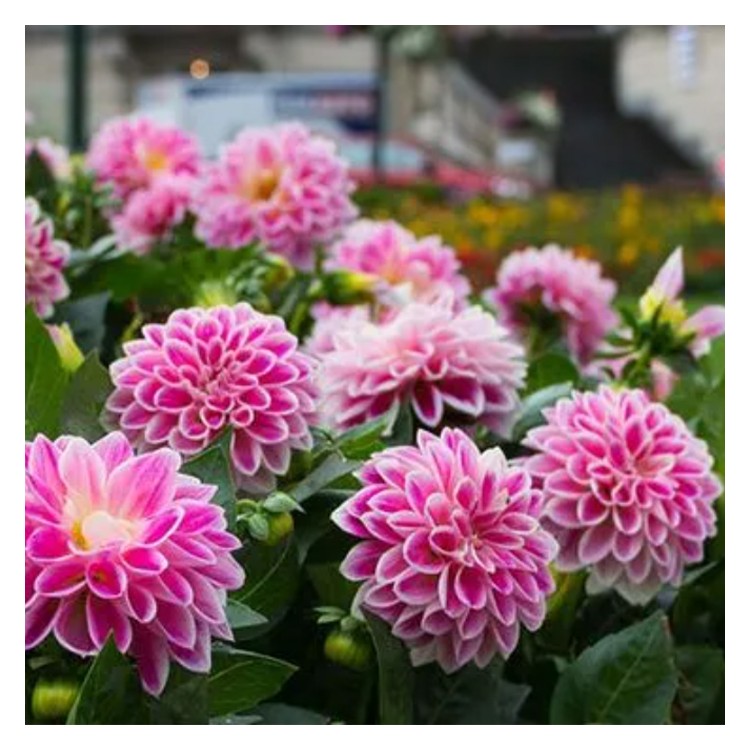


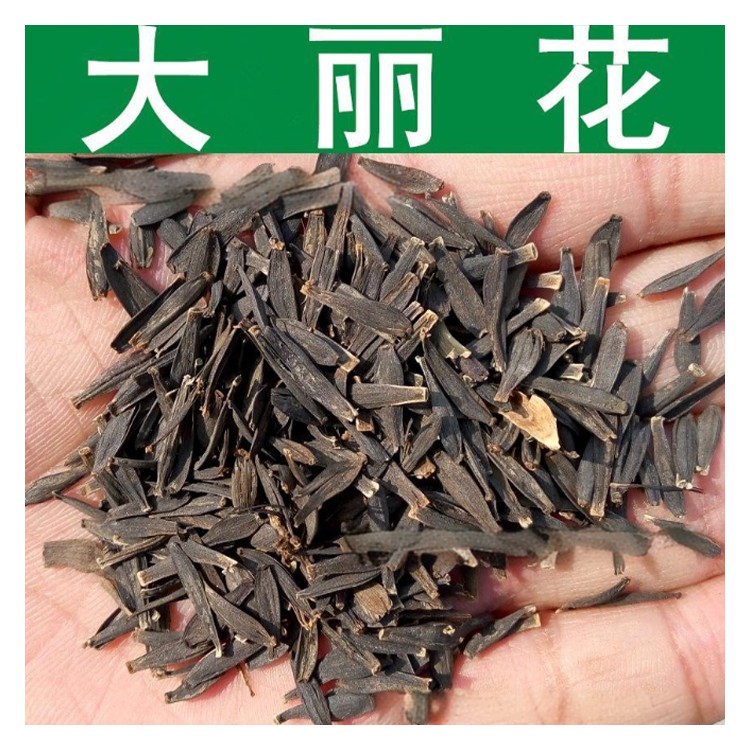













DaylilyDahlia pinnataCav., a genus of perennial herbaceous plants in the Dahlia family. The stems are erect, highly branched, and robust; the leaves are pinnately deeply lobed, with ovate or broadly ovate segments, grayish green. The large capitula have long peduncles and often droop; the ray florets are white, red, or purple, usually ovate, flowering from June to December. The achenes are oblong, black, and flat, ripening from September to October.
The large dahlia is native to Mexico. One of the world's famous flowers. Introduced to China in the early 20th century, cultivated in all provinces. Prefers sunlight, dislikes drought and waterlogging. Adores loose, fertile soil with good drainage. Adaptable to various climates and soil types, with minimal pests and diseases, easy to manage, and tolerates semi-shade. Root division and cuttings are the primary methods of propagation.
The meaning of the Dahlia is: good fortune, gratitude, novelty, and freshness. Its vibrant and diverse colors symbolize generosity, magnificence, and great fortune, making it the national flower of Mexico, the city flower of Seattle, the provincial flower of Jilin Province, and the city flower of Zhangjiakou City, Hebei Province. Suitable for planting in flower beds and alleys, there are also dwarf varieties ideal for pot culture, and it is renowned for its long blooming period, abundant flowers, and large blooms. The Dahlia root contains inulin.