














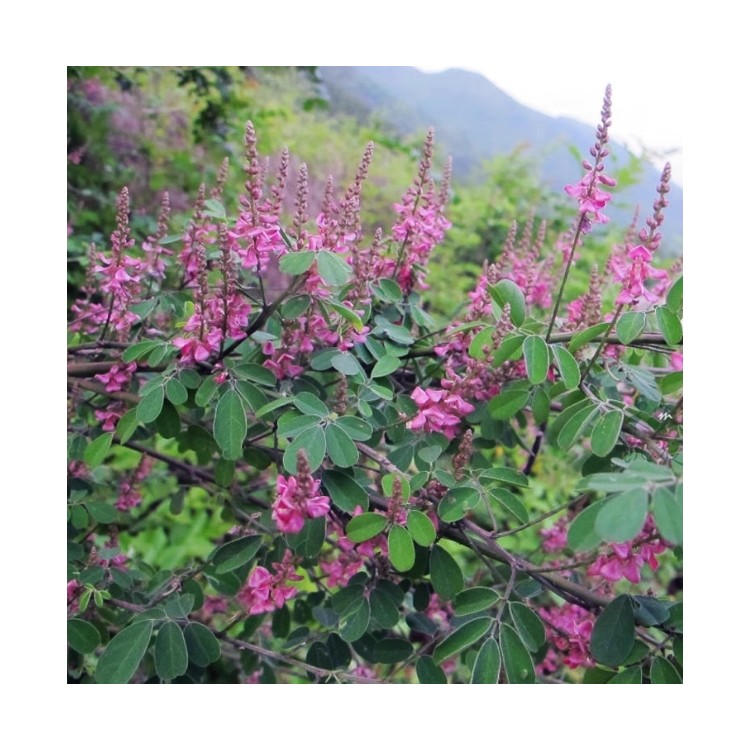
Chicory is a perennial herb belonging to the genus Chicory in the Asteraceae family. Below is a detailed introduction:
Chicory has distinct physical characteristics. Its roots are fleshy, short, and thick, with upright stems that are ridged and hollow, and are highly branched. The leaves are alternate, long oblong, and the flower corolla is lingulate, with a blueish color. Chicory is primarily found in coastal wastelands, riverbanks, ditches, or slopes, and is distributed in countries such as China.
Chicory thrives in cold and arid conditions, prefers sunny fields and hillsides, and blooms from May to September.
Cichorium intybus propagation methods. The primary method of propagation for chicory is by sowing.
Chicory uses. Chicory can be used as wild garden material or scattered in forest plantations, and it can also be consumed as a vegetable. Its leaves can be processed into lettuce, and its roots contain inulin and aromatic substances, which can be extracted to make substitute coffee. It helps to promote the activity of human digestive organs and is known as the "good helper" of humanity.
Chicory's medicinal properties. Chicory is known for its cooling and detoxifying effects, diuretic properties, and stomachic benefits, earning it the title of "human's good assistant." In the "Chinese Pharmacopoeia," chicory is described as slightly bitter, salty, and cool. Its primary functions include clearing the liver and benefiting the gallbladder, improving digestion, and reducing edema. It is particularly effective in lowering uric acid levels, can alleviate gout pain through diuretic effects, and is also used for conditions such as anorexia, epigastric pain, damp-heat jaundice, and edema with reduced urine output.
Contraindications for Chicory: Caution for lactating women, prohibited for pregnant women.