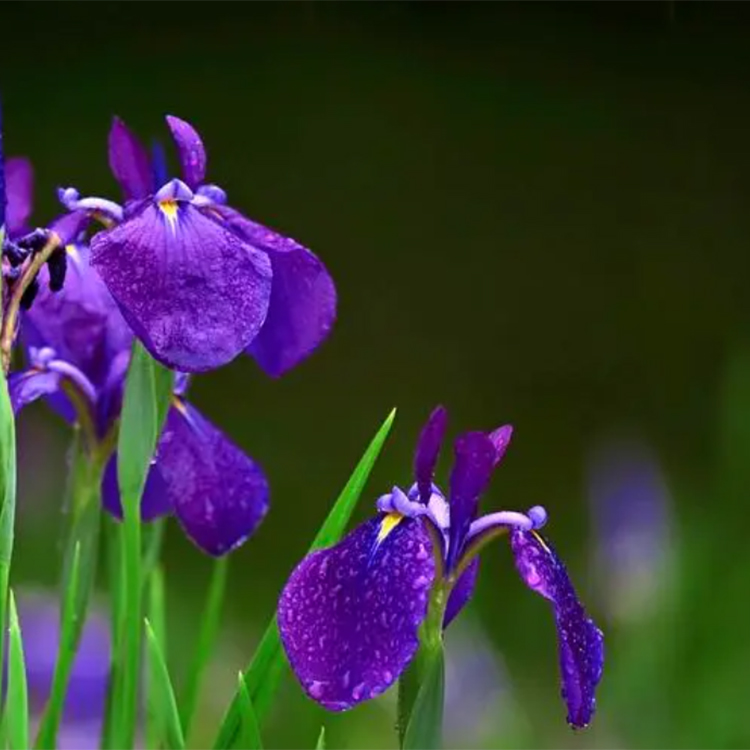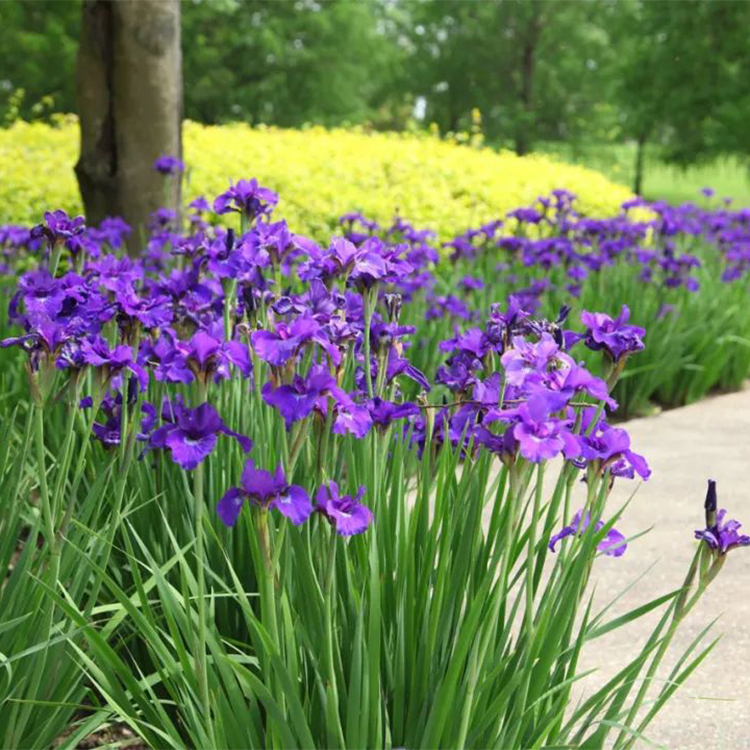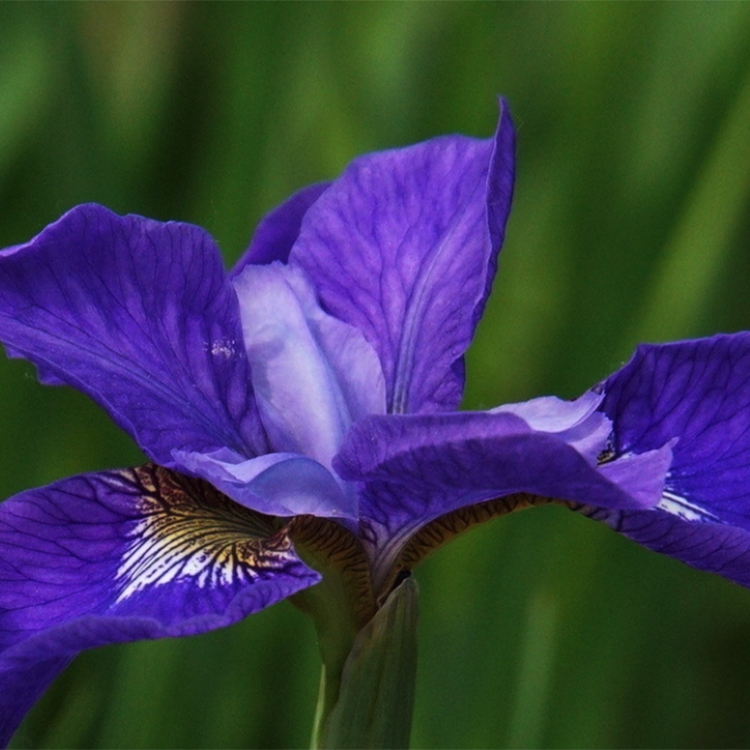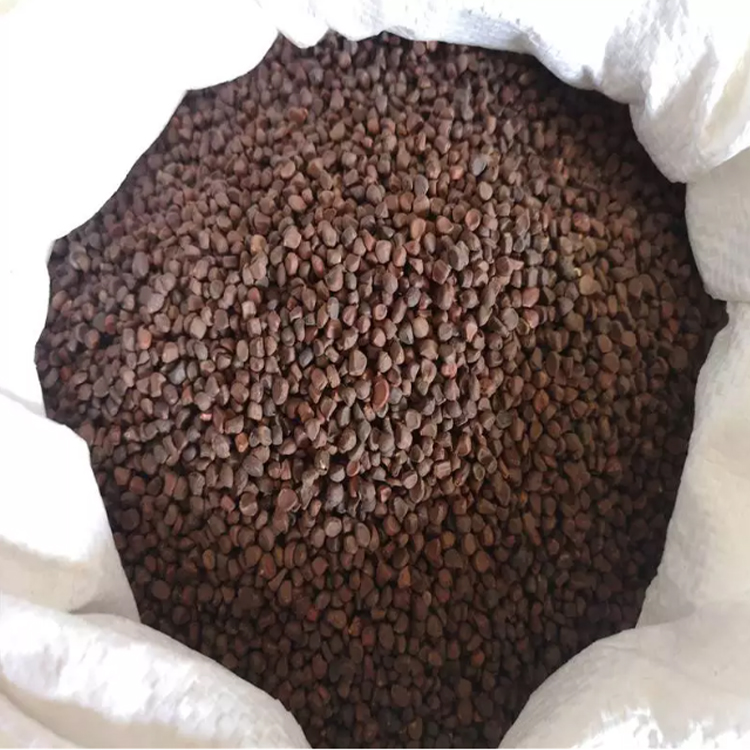

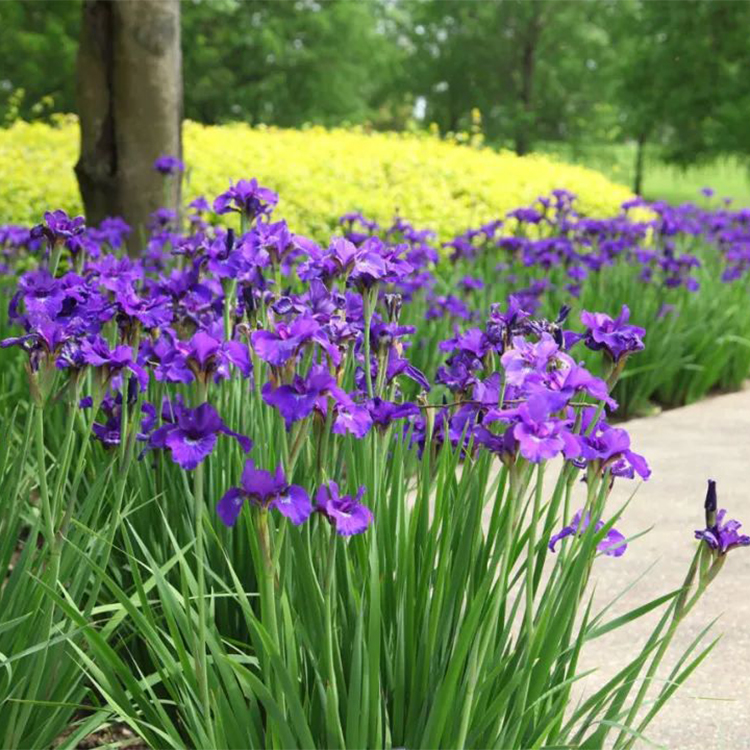

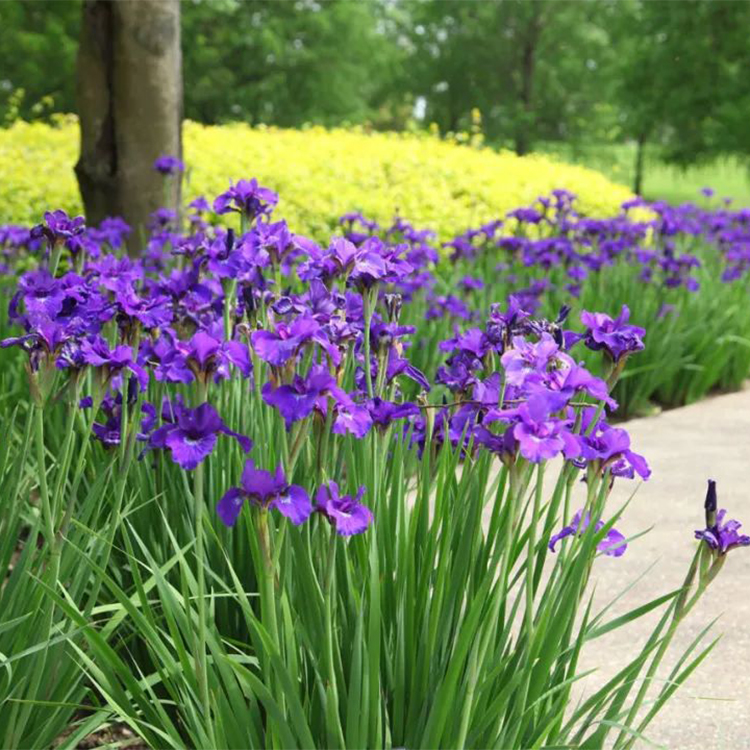
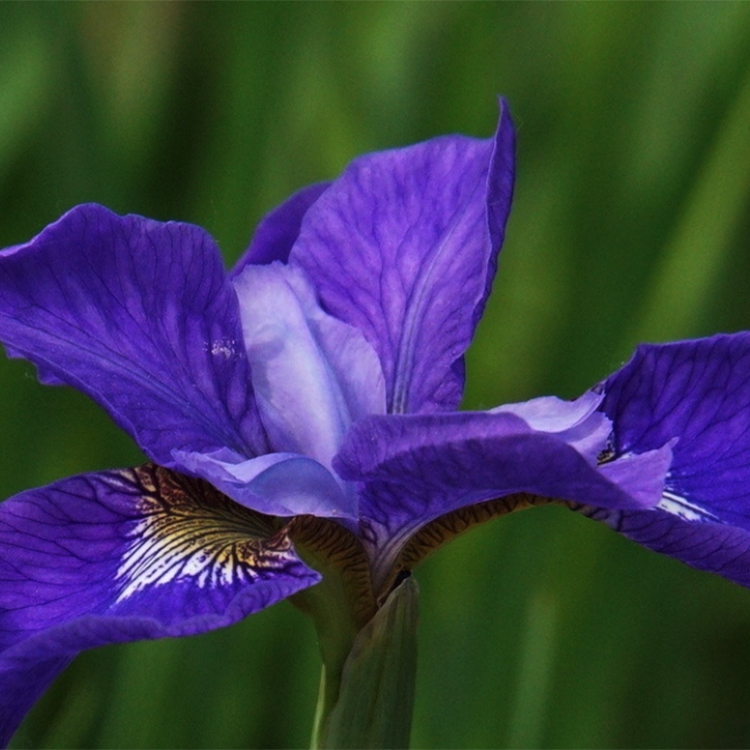
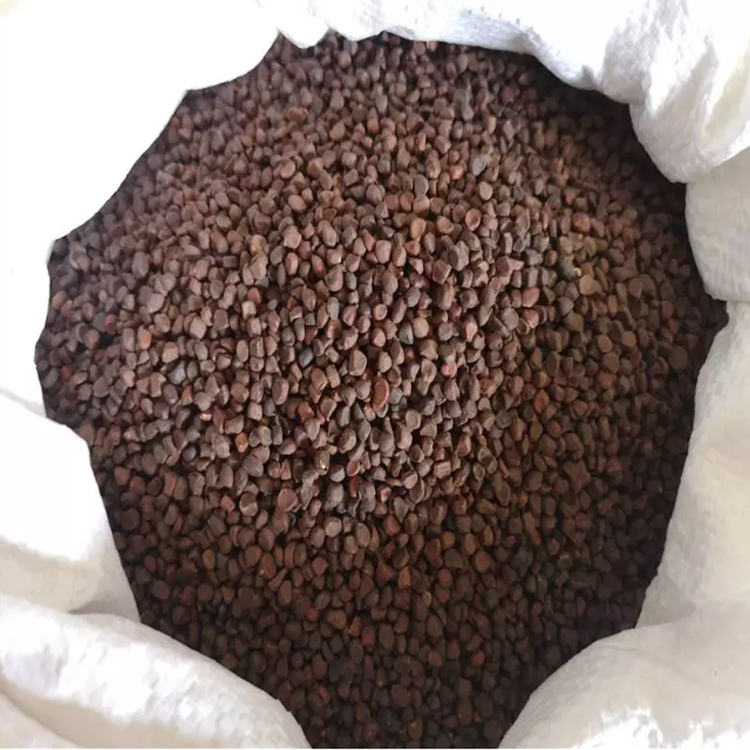














IrisIris tectorum Maxim.Iris genus of the Iridaceae family, a perennial herb with thick rhizomes; flowers are blue-purple, the top swelling into a trumpet shape, with outer petals circular or broadly ovate; leaves are basally placed, yellow-green, slightly curved, in a wide-sword shape; capsules are elongated or ovoid; seeds are dark brown, pear-shaped; flowering period4—5Month; Fruiting Season6—8The Iris, named for its petals resembling the tail of a kite, blooms in May.
Iris is native to central China and Japan, now primarily distributed in central and southern China, and mainly found in the northern temperate zones worldwide. Iris thrives in sunny, cool climates, is hardy, prefers moderate moisture, well-drained soil, rich in humus, slightly alkaline, and clayey loam. It often grows in marshy or shallow water soils. Iris is commonly propagated by division and sowing methods.
The "Shennong's Materia Medica" records the Iris.Iris, bitter in taste and neutral in nature. Iris has the effects of resolving abdominal lumps and removing dampness, primarily used to treat serious infectious diseases such as snakebite and ghost boils. The iris leaves are bright green and crisp, with large and unique flowers resembling fluttering butterflies, making it one of the important flowers in the courtyard. Iris flowers are mainly in a blue-violet color, known as the "Enchantress in Blue." Due to the delicate fragrance of iris, it can be used in perfume blending. In China, iris is commonly used to symbolize love and friendship. In love, iris represents the messenger of romance, and its flower language signifies enduring longing.