





1 Overview
Boilers of various types require continuous and periodic discharge of wastewater with high TDS values and harmful impurities from the boiler drum's bottom to ensure steam quality and safety during normal operation. For the treatment of boiler wastewater, the common practice currently is to introduce the continuously discharged wastewater into a continuous drain expansion vessel, flash-evaporate a small amount of steam into an oxygen-removing unit for reuse, and then discharge the remaining majority of wastewater, which is still relatively hot, along with the periodic drain wastewater into a fixed drain expansion vessel for pressure reduction. The small amount of steam flashed off is directly released into the atmosphere, and the remaining wastewater at around 100° is mixed with cold water to cool it down before discharge.
Or directly into the drain. Due to the working pressure of deaerators being relatively high, especially for high-pressure deaerators, the discharge water temperature from the continuous drain expansion tank is higher. This not only wastes a large amount of heat energy and high-quality water resources but also causes significant white steam pollution and noise pollution to the surrounding environment due to the large amount of steam discharged from the top of the fixed drain.
2. Boiler Exhaust Water Energy Recovery Device Working Principle and Technical Advantages
To address the issues of energy waste and environmental pollution inherent in existing technologies, Lianyungang Huaneng Power Auxiliary Equipment Co., Ltd. has successfully developed the fifth-generation "Boiler Sewage Energy Recovery Device."
A single set of this device can completely replace the conventional system configuration, including in-line expanders, fixed-line expanders, in-line energy collectors, and fixed-line energy collectors. It can also eliminate the steam pipeline connecting the in-line expanders to the separator in the conventional system, significantly reducing the on-site footprint, pipeline connections, and control valves. This, in turn, greatly lowers the infrastructure investment and installation costs for the system.
3. Boiler effluent energy recovery unit classifications
To cater to the diverse needs of our clients, we have developed over 100 models of boiler effluent recovery units with four structural types, three pressure grades, and ten specifications. We also offer customized special specification models according to specific client requirements.
3.1 By structural type
Structural forms include: built-in cooler with condenser (NN), built-in cooler without condenser (NW), external cooler with condenser (WN), and external cooler without condenser, among four main categories.
The main purpose of non-condensate units is for systems that require the secondary steam to be output as a heat source, such as systems that need to introduce the secondary steam into a deaerator as heating steam. The rest are generally recommended to use boiler blowdown energy recovery devices with built-in condensate units to ensure no steam emissions.
3.2 By Pressure Grade Classification
Pressure ratings include Vacuum Type (ZK design pressure -0.1MPa), Atmospheric Type (CY design pressure 0.1MPa), and Pressure Type (YL design pressure 0.8MPa) in three levels.
3.3 Model Numbering Description

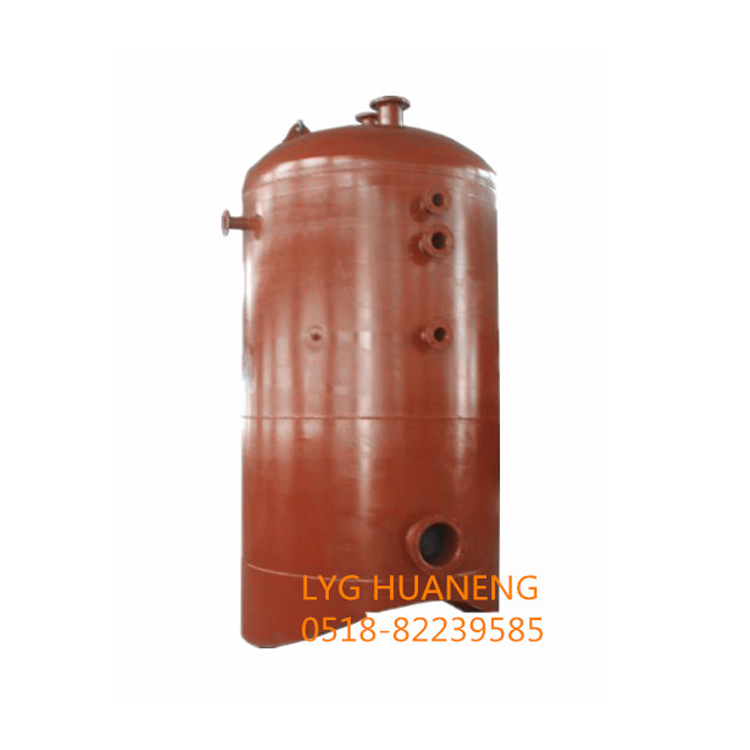
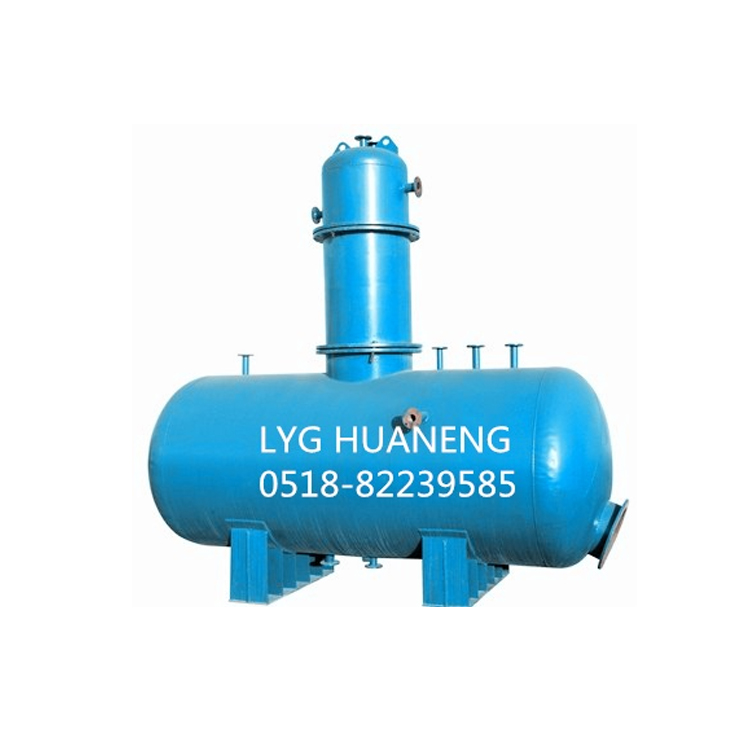
4. Boiler waste water recovery unit exterior diagram


5. Technical Details Required for Order Discussion
To ensure that the supply equipment meets the actual operating conditions of the process system while offering high cost-effectiveness, it is best to accurately provide the following process parameters and expectations of the equipment's performance when placing an order:
5.1 Wastewater Process Parameters
Provide the pressure, temperature, and flow rate of each wastewater stream to be treated, as well as the required pressure and temperature of the treated wastewater.
5.2 Cold Source Process Parameters
Provide import pressure, temperature, and available volume of the chilled source (usually demineralized water) to be heated, as well as requirements for the chilled source outlet pressure and temperature.
5.3 Requirements for Second-Stage Steam Parameters
If secondary steam is required, please specify the desired temperature and quantity.
5.4 Other Requirements for the Equipment
Should you have any requirements, please feel free to specify the type of process system combination, main volume, structural type, design pressure, design temperature, main material, heat exchanger tube material, outer dimensions, pipe end dimensions and orientation, as well as display and control requirements. Our professional team can tailor-make products and services that closely align with your expectations.