








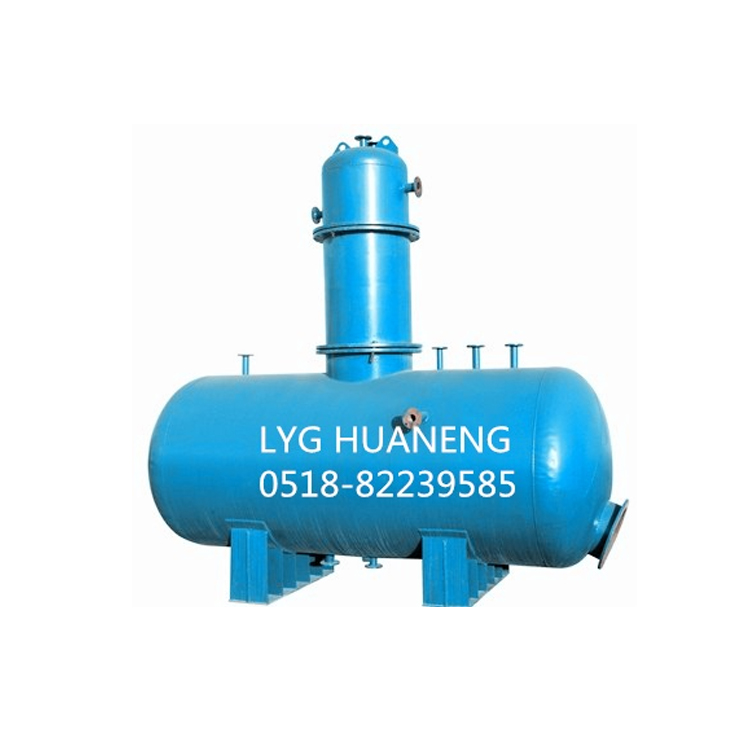
Advanced Technology: Corrosion-resistant Flue Gas Waste Heat Recovery System for Acid Dewpoint!
The function of the flue gas waste heat recovery system:
1. Feed water for heating boiler, increase the water temperature for the deaerator
Increase the import air temperature of the air preheater while assisting in adjusting the heating of demineralized water.
3. Used to heat desulfurized flue gas, to increase the flue gas temperature.
4. Matching heat pump system, providing heating and cooling for the thermal system and office area
II. Advantages of Flue Gas Waste Heat Recovery System:
1. Reliable – Installed on the boiler bypass flue, the energy-saving system can be independently controlled without affecting the normal operation of the boiler.
2. Energy-saving – Reduces energy consumption, improves the steam production rate per ton of coal, and increases the boiler output, which can stabilize the furnace thermal efficiency increase by over 1.5%.
3. Water Conservation – While recovering heat energy, it reduces the exhaust gas temperature of the downstream desulfurization system, which can save a significant amount of water used in the desulfurization process.
4. Corrosion Resistance – Adjustable and controllable metal wall temperatures not below the condensation point of sulfuric acid vapor (acid dew point), fundamentally solving the equipment acid dew corrosion issue.
5. Reducing energy consumption is the most significant form of emission reduction, as it effectively decreases CO2 and NOx emissions while also lowering dust emissions.
III. Principle of Flue Gas Waste Heat Recovery System:
The heat exchange inside the tubes is phase change heat exchange, while the heat exchange outside the tubes is by convection. Compared to the convection heat exchange coefficient, the phase change heat exchange coefficient is significantly higher, so the wall temperature is primarily influenced by the medium inside the tube, not by the medium outside.
Phase change heat exchange technology utilizes the principle of phase change heat exchange in heat pipe technology, creating the concept of "phase change section." The concept of the "phase change section" is to creatively construct an integrated heat pipe from the originally independent heat pipes in a heat exchanger; it ensures that the heat exchange surface of the "phase change section" has only a minimal temperature gradient drop, while also appropriately increasing the temperature of the heated medium (such as air, water, etc.) using the "phase change section." It proposes a new concept using "wall temperature" as the primary design parameter for heat exchange, altering the functional relationship between flue gas temperature and metal wall temperature, and keeping the metal wall temperature of the heat exchanger in a controllable and adjustable state. Preheated air and water can ensure the safety of downstream equipment, solve the problem of low-temperature corrosion; and recover waste heat from the heated medium, achieving energy-saving objectives.
So, by controlling the saturation temperature of the internal medium, the wall temperature of the phase change flue gas waste heat recovery system can be made controllable and adjustable.
IV. Energy-saving Calculation of the Phase Change Flue Gas Waste Heat Recovery System
1. Heat Recovery Calculation Formula
Equation: Vg – Flue gas flow rate, Unit: Nm3/h
pg - smoke capacity, at 1.295 kq/Nm³
Cpg - Flue gas specific heat, 1.12 J/(kcal.C)
ΔT – Temperature difference between front and rear smoke temperatures before and after the application of the composite phase change heat exchanger, unit: °C;
φ — Boiler heat retention coefficient
Q - Heat exchanger for heat recovery, unit: KW
2. Calculation Formula for Equivalent Coal Consumption
In the formula: Q - the recovered heat of the phase change heat exchanger, unit: KW;
HR - Annual Operating Hours of Boiler:
Qnet - Coal calorific value, unit: kCal/kg
ηBoiler Efficiency
860 - Conversion Coefficient for "Horsepower" and "Kilowatt-hour" Units
Gc - Annual coal saving from boiler
Specs and Parameters: