









Principle of stainless steel laser cutting
Laser cutting machines for stainless steel sheets play a significant role in industrial production. The main difference between stainless steel and low-carbon copper lies in their composition, and the cutting mechanism also varies. Stainless steel, containing 1% to 20% chromium, tends to disrupt the oxidation process.
During cutting, the iron in stainless steel reacts with oxygen to release heat, with the oxidation of chromium having the property of preventing oxygen from entering the molten material, thereby reducing the oxygen content in the melting layer and preventing incomplete oxidation of the layer, which reduces the reaction rate and slows down the cutting speed. Compared to low-carbon steel, cutting stainless steel requires higher laser power and oxygen pressure. Although stainless steel cutting achieves a satisfactory result, it is difficult to obtain a completely slag-free cut. Using inert gas as an assist gas for cutting stainless steel can yield non-oxidized edges, suitable for direct welding, but the cutting speed is about 10% slower than when oxygen is used as the assist gas.
Quality Control for Stainless Steel Laser Cutting
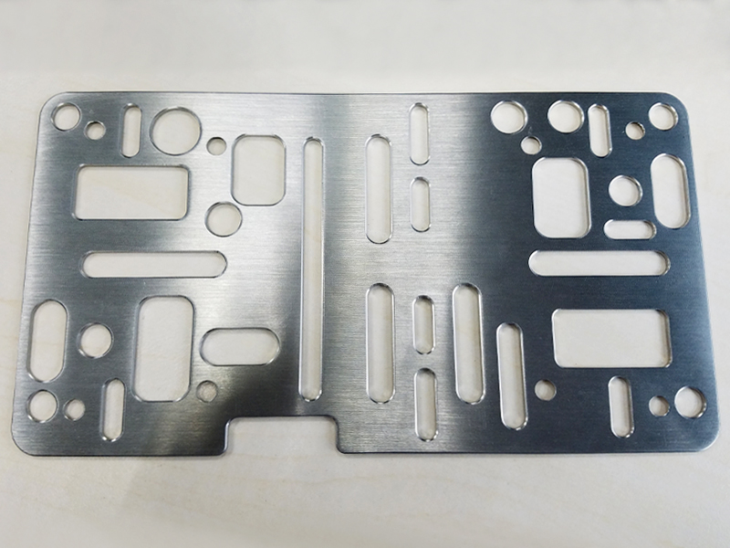
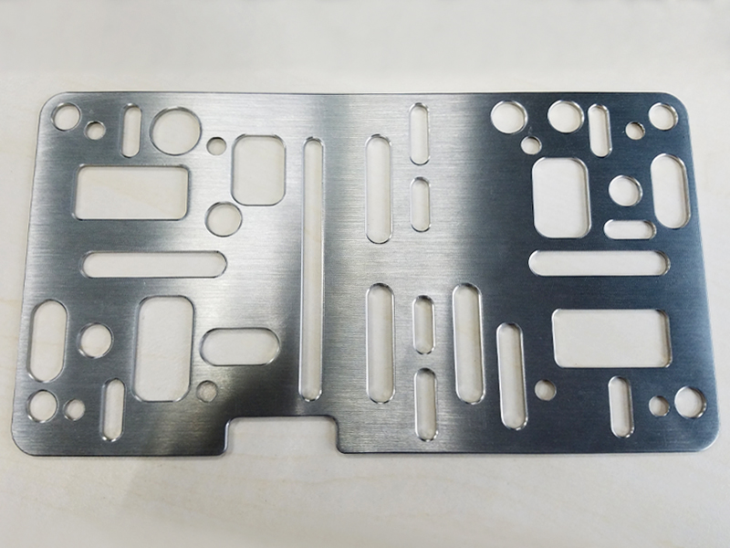
Stainless steel laser cutting is more expensive than wire cutting in terms of cost, and it doesn't have the same precision. However, it's twice as fast and can handle large-scale production. After cutting, it can process non-metallic materials, achieving intelligent processing and replacing multiple machines with one, becoming the core of processing equipment. Clearly, stainless steel laser cutting is a quick and effective method, but controlling the quality of the cut is crucial.
When laser cutting mirror finish stainless steel, to prevent the sheet from being severely scorched, it is necessary to apply a laser film! Although protected by the film, there will still be some scorching at the edges. At this point, it is essential to strictly control the laser cutting process parameters during the manufacturing process to maintain the good corrosion resistance of this material. The key process parameters affecting the quality of stainless steel cutting are cutting speed, laser power, oxygen pressure, and focal point.