












A heat treatment process in which metal materials are heated to an appropriate temperature, held for a certain period of time, and then slowly cooled. Common annealing processes include recrystallization annealing, stress relief annealing, spheroidization annealing, complete annealing, etc. The purpose of annealing is mainly to reduce the hardness of metal materials, improve plasticity, facilitate cutting or pressure processing, reduce residual stress, improve the uniformity of structure and composition, or prepare the structure for subsequent heat treatment.
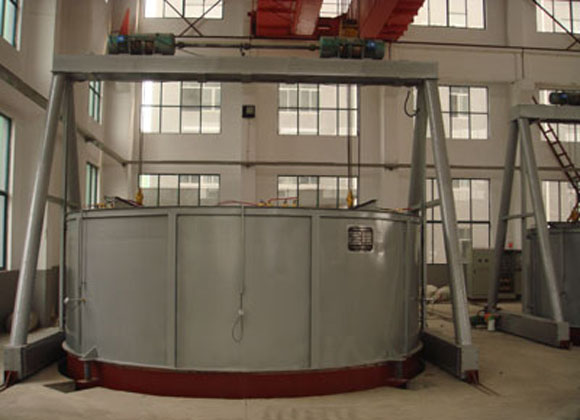
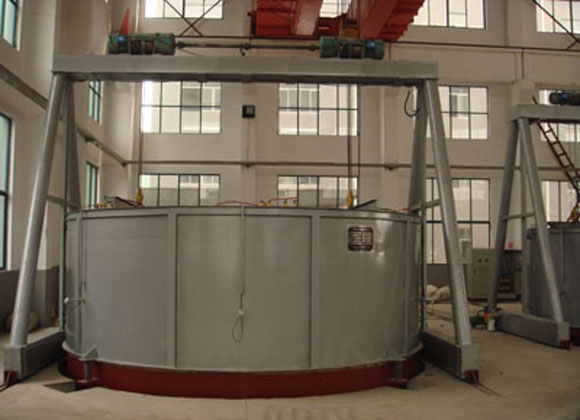
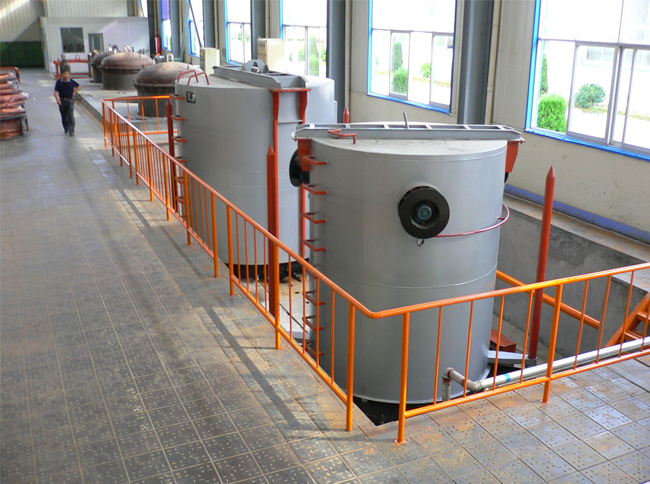
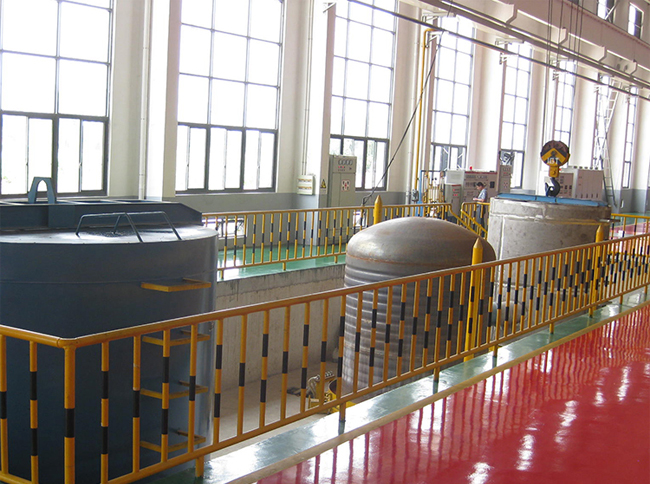
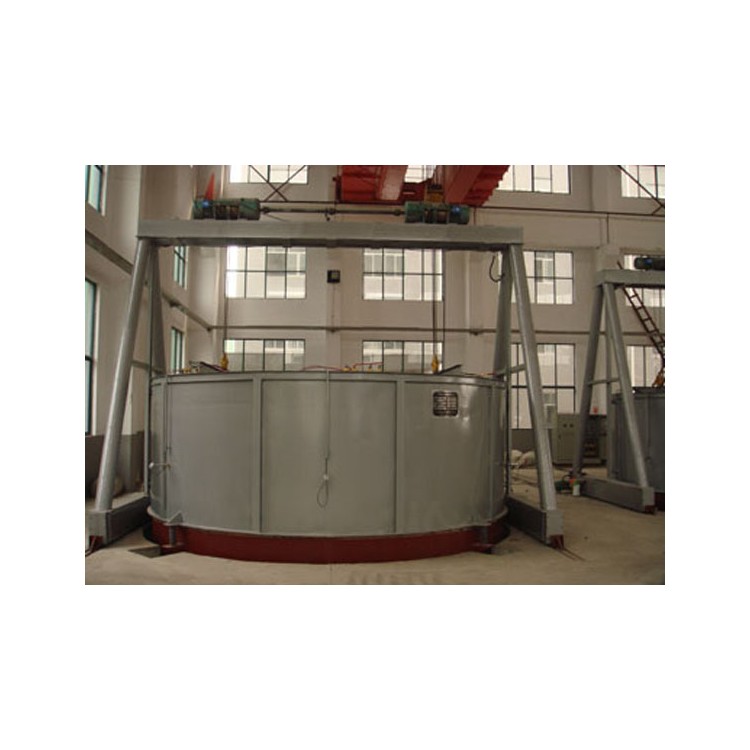
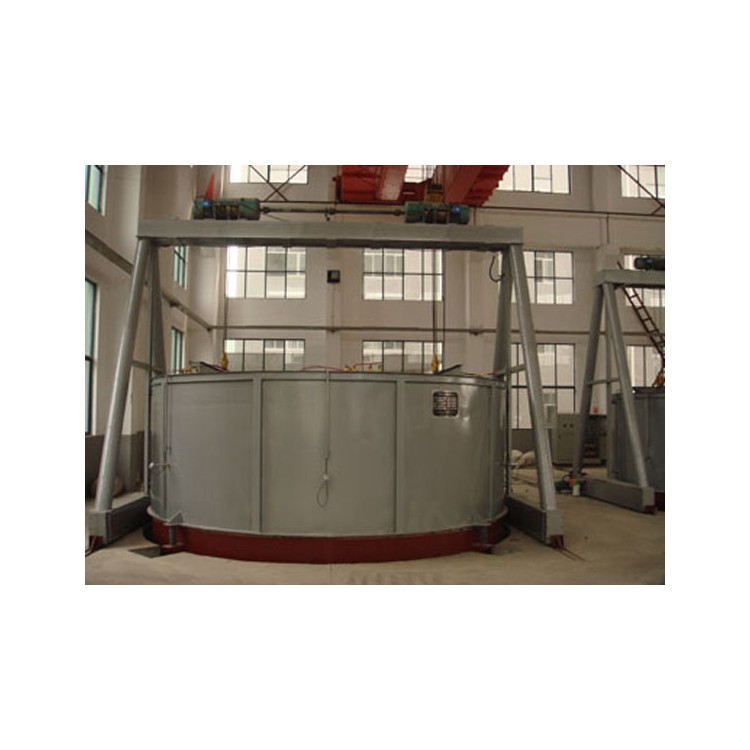
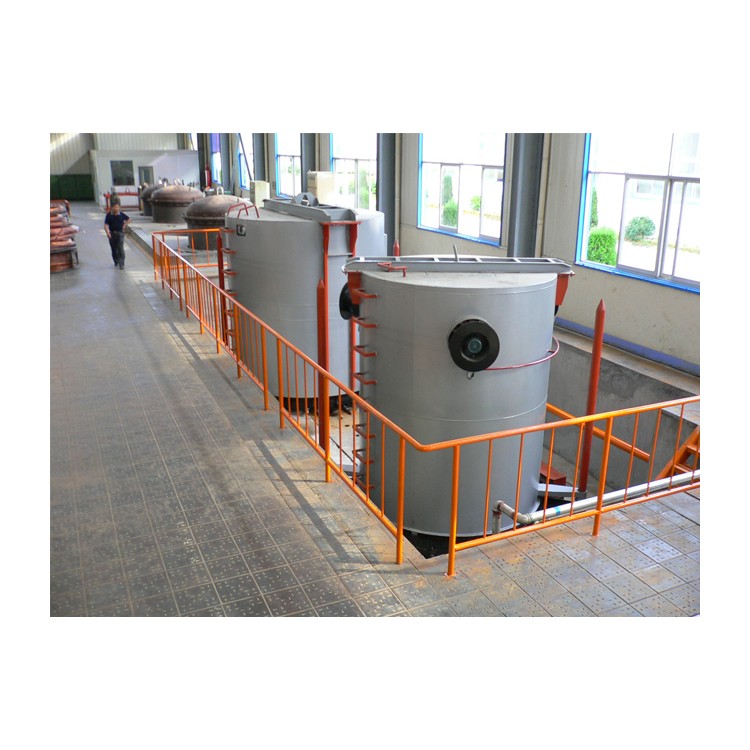
Each annealing furnace set of RZ bell jar type electric furnace has 2 furnace platforms, 2 inner covers, and 1 heating cover. One cooling hood and one furnace platform are used for heating and insulation, while the other furnace platform is used for cooling and unloading. Alternating heating of two furnace platforms with the same heating hood can save energy consumption and achieve continuous production.
1、 A brief introduction to the annealing process of the hood furnace
The main equipment of the hood type furnace includes annealing furnace table, heating hood, inner hood, cooling hood, valve station, etc. The furnace platform is the basic equipment of the entire hood furnace. The bottom of the furnace is equipped with motors and impellers that facilitate heat convection circulation. The furnace material is placed in the inner hood for annealing. The resistance wires inside the heating hood are evenly distributed in two zones. When heating, the hood is placed outside the inner hood, and after heating is completed, the cooling hood is replaced. The valve station consists of public and auxiliary pipelines, control valves, and instruments, used to provide input and output of various media such as nitrogen and water, as well as pressure and flow control.
The process is as follows: after loading the furnace material, fasten the inner cover and lock it with hydraulic pressure. The cooling circulation system inside the flange connecting the inner cover and the furnace platform starts working. After locking the inner cover, confirm that the air valve, inner cover, furnace platform, circulating fan, and exhaust pipeline are well sealed. Then vacuum the furnace and reduce the pressure to -90kPa; Start automatic nitrogen purging, replace the air inside the inner hood to reduce the oxygen content in the furnace to below 1%, fill with protective gas, and lift the heating hood onto the furnace platform. Start heating and insulation according to the set annealing curve, and the furnace material is annealed under full gas. Before the insulation stage is completed, automatically perform a leak detection on the inner hood of the furnace platform. After safety inspection, the heating hood can be lifted away, and then the cooling hood can be lifted onto the furnace platform. The cooling fan is started, and the temperature of the inner hood t is cooled to (t ℃=(273+t) K), and automatic water cooling begins until the furnace material reaches the discharge temperature. Nitrogen is blown to replace the inner hood gas with nitrogen. After the replacement is completed, the circulating fan stops working, the cooling hood is lifted away, the inner hood is released, and the furnace material is discharged from the furnace, preparing for the next cycle of production. Annealing process as shown in the figure:
2、 System configuration
The annealing process of the hood type annealing furnace is complex, with numerous logical interlocks. Using S7-300 PLC as the controller can meet the control requirements. A set of PLC is used to control two furnace tables. The PLC master station includes a power module and a communication module. The on-site valve station of the furnace is equipped with four digital input/output modules, which are used to process the actions of various switch quantities such as gas valves and switches. Two analog input modules are mainly used to collect various analog signals such as furnace pressure and gas flow rate. The frequency converter controls the furnace table circulating fan. The PLC master station establishes a Profibus field control network through the DP interface on the CPU, connecting the furnace fan frequency converter and the field slave station. The touch screen is a TFT LCD screen of MCGS, which can meet the usage requirements by connecting to Ethernet.
There are a total of 12 furnaces in the train room, which are controlled by six PLCs. By using a photoelectric switch, all PLCs and upper computers are combined into an industrial Ethernet, enabling real-time communication and data exchange between multiple PLCs and between PLCs and upper computers, ensuring real-time data transmission. The upper computer consists of two industrial control computers, which are used as an engineer station and an operation station respectively, and are equipped with UPS and printers. As the management layer of network communication, the upper computer is equipped with industrial configuration software to centrally monitor the production process.
Each control system is equipped with an XMA-5000 series temperature control instrument with intelligent PID function. The XMA-5000 instrument itself has communication function, and the communication interface complies with the RS485 standard. Multiple XMA-5000 instruments are connected to the serial port of the upper computer through an RS485 communication converter. As the lower computer of the system, XMA-5000 instrument measures and adjusts the on-site furnace temperature based on the process parameters given by the upper computer. When there is a network failure, the XMA-5000 instrument can also complete tasks separately from the upper computer.
The XMA-5000 instrument adjusts the heating power through periodic zero crossing triggering. The inner cover is equipped with dual input K-type thermocouples, one of which is sent to the temperature control meter for closed-loop temperature control, and the other is sent to the upper computer for temperature curve recording and over temperature alarm. The XMA-5000 instrument has PID parameter self-tuning function. After the temperature curve is set, the instrument is started to enable self-tuning. In addition to PID, self-tuning parameters also include output limiting parameters and anti overshoot fitting parameters. The instrument output control quantity is 4-20mA, and the output power of the thyristor regulator is adjusted in real time.
The system adopts the control concept of centralized management and decentralized control, with sequential control, data acquisition, and fault handling completed by PLC, temperature control completed by intelligent instrument XMA-5000, and the upper computer responsible for monitoring and configuration management of the entire annealing process. The control tasks of the system are decentralized, but the information of each measurement and control unit is open and can exchange data with each other, working together to complete the control process of the entire system.
3、 Upper computer control system and configuration software
The upper computer is mainly composed of two industrial control computers and peripheral devices such as printers. The upper computer configuration software used implements a human-machine interface, including functions such as overall on-site conditions, alarm prompt recording, data display and recording, and execution of operation commands.
In actual production, due to different product specifications and process requirements, the annealing curve in the annealing process often requires frequent parameter changes. The parameter settings and modifications of traditional manual operation instruments are cumbersome. The application of upper computer configuration software can quickly and directly set system parameters or modify process curves through computer keyboards. At the same time, the configuration software can achieve centralized monitoring of the furnace group and individual monitoring of each heating furnace, and can display the working status and real-time data of each heating equipment in real time. When the system malfunctions, the control cabinet emits a buzzing alarm prompt, while the upper computer interface displays the alarm prompt and provides the function of fault query and corresponding processing and solution measures. In terms of management, the heat treatment automation software has the function of setting administrator permissions. According to the usage needs of different levels of administrators and operators, multiple user login permissions can be set, and other users can have more operation and viewing permissions. Similarly, frontline operators have limited operation permissions to ensure production safety.