








AOBS6000 StandardWeighing Instrument
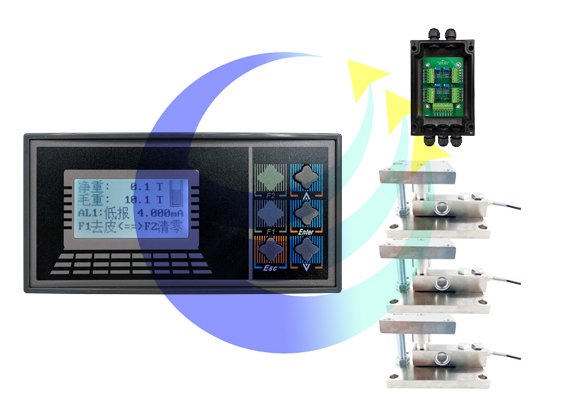
The table is designed with industrial-grade components, features an LCD display, is manufactured using surface mount technology, incorporates multiple anti-interference measures, and utilizes several new research achievements in single-chip microcontrollers.
Features include powerful functionality, compact size, high reliability, and strong adaptability. The application of numerous technologies ensures the instrument's reliability and flexibility in use.
It boasts outstanding advantages in aspects such as vitality and ease of operation.
Feature Highlights
1. Operating Power: 24VDC, 220VAC (optional power supply voltage).
2. Weight Detection: Resolution of 16 bits, input sensitivity of 0.2-1.0μV/d (as per factory-set gain), error less than 0.01%.
3. Instrumental Comprehensive Error: Less than 0.02%.
4. Display: LCD Liquid Crystal Display, Resolution: 128*64, Size: 29mm*57mm, capable of displaying 32 Chinese characters and 64 characters.
5. Analog Input Channels: 16-bit, 2CH, with adjustable gain. CH1 can be directly connected to a load sensor, and the meter provides a 10V/200mA power supply for the sensor; CH2 input signal is 0-20mA or 4-20mA current signal.
A weighing sensor is a device that converts mass signals into measurable electrical signals for output.
The conversion methods are categorized into eight types: photoelectric, hydraulic, electromagnetic force, capacitive, magnetic pole transformation, vibration, gyroscope, and resistive strain, with the resistive strain type being widely used.
Resistive strain gauges primarily come in several styles, including S-type, cantilever, spoke, annular, diaphragm, bridge, and column筒.
Weight Sensor Module [Note: Explosion-proof options available]
Sensor + adjustment shims + locking device + anti-tilt bolts + bushes + top mounting mating plate + bottom mounting mating plate assembly
The difference between peeling and zeroing:
Gross Weight = Tare Weight + Net Weight
Zeroing: Set installation complete
After the empty drums (platform, hopper) are handled, the operation is similar to our pressure changeover completed and the PV reset (equipment zeroing).
Peeling: Necessary for actual production processes, as some require the gross and net weight values. Typically, operations are conducted in the state of tare weight.
The scale will display both gross weight and net weight. (Zeroing of the process)