















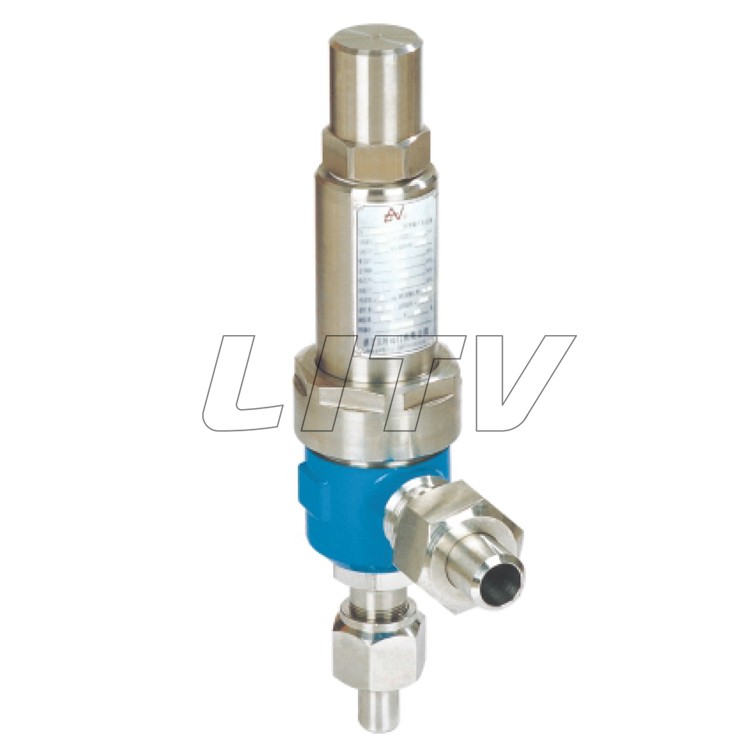
Introduction:
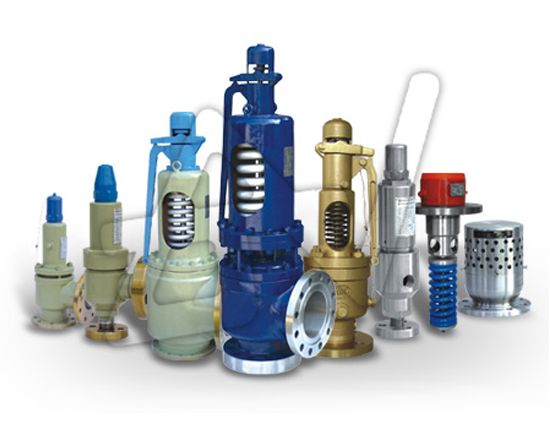
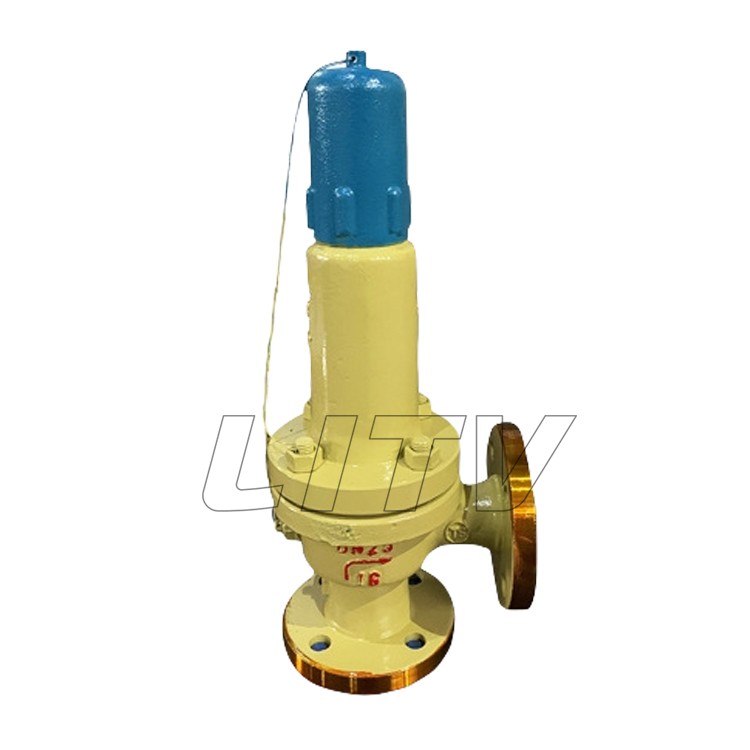
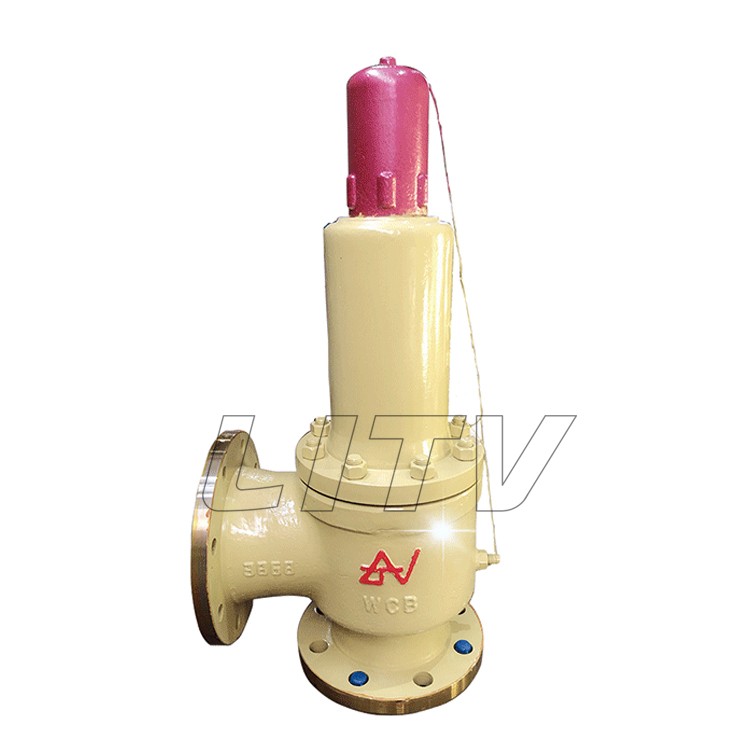
A pilot-operated safety valve is a novel type of safety valve. It is primarily used in industries such as oil and gas, chemicals, power, metallurgy, and urban gas, serving as an excellent overpressure protection device for pressure equipment, vessels, or pipelines. Its main advantages include converting the direct action of the spring to an indirect action through the pilot valve, which enhances the sensitivity of operation. The main valve employs a sleeve-piston design and a double-sealed valve seat structure, ensuring high action accuracy, good repeatability, quick re-seating, no leakage, high back pressure discharge capability, long service life, stable operation, and reliability. It can also be adjusted online, and after repeated opening and discharge, it can still automatically re-seal tightly, with easy operation and maintenance.
Category:
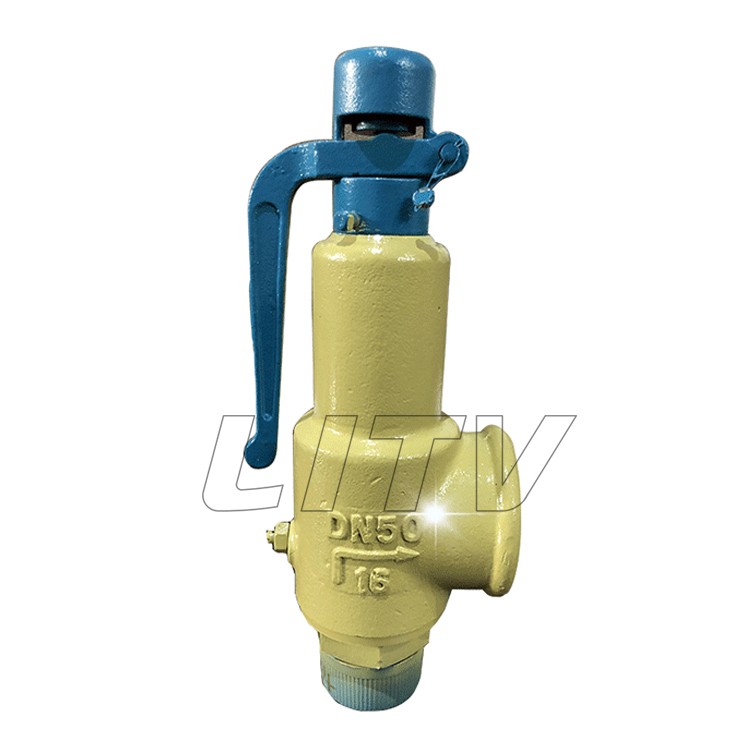
Leading safety valves are classified by structural type into drop-weight, lever, spring, and pilot (pulsed) types; and by valve body construction, into sealed and unsealed types. Sealed safety valves prevent the released medium from escaping, directing all to the discharge point; they are commonly used in toxic and corrosive media. For safety valves used with air and steam, unsealed types are more prevalent. When selecting safety valve products, the actual sealing pressure should be determined. For spring-loaded safety valves, within a specific nominal pressure (PN) range, various working pressure-level springs are available. When placing an order, in addition to specifying the safety valve model, name, medium, and temperature, the valve body sealing pressure should also be noted; otherwise, supply will be based on the sealing pressure.
Leading-type safety valve features:
The pilot-operated safety valve is suitable for high-pressure and large-diameter applications. It boasts excellent sealing performance and, additionally, its operation is minimally affected by back pressure. The drawback of this safety valve is that its reliability is dependent on the main valve and pilot valve, making its operation less swift and reliable compared to direct-acting safety valves, and its structure is more complex.
Priming Safety Valve Operation Principle:
When the protected system is operating normally, the sliding valve within the guide valve cavity is in the open position. The system pressure passes from the main valve inlet through the lower conduit, the guide valve cavity, and the upper conduit into the upper gas chamber above the main valve valve disc (piston). At this point, the gas pressure in the upper gas chamber is equal to the system pressure at the main valve inlet. The guide valve sealing surface is in a sealed state, ensuring that the gas in the upper gas chamber of the main valve cannot be discharged through the guide valve vent. Due to the larger piston area compared to the valve disc sealing surface area, the system pressure generates a downward resultant force on the main valve disc, keeping the main valve in a closed and sealed state.
When the system pressure increases to the set pressure, the gas lifts the valve core at the guide valve sealing surface, putting the sealing surface in an open position. Simultaneously, the slider within the guide valve cavity moves upwards, sealing the over-ventilation channel of the guide valve cavity. The medium in the gas chamber above the main valve disc is exhausted through the open guide valve sealing surface, reducing the pressure above the main valve disc. The main valve disc opens due to the push from the inlet pressure, thus relieving the system pressure.
As the system pressure drops to a certain level, the guide valve core returns to its seat downward under the action of the spring, closing the guide valve sealing surface. The slider in the guide valve cavity opens up, allowing the cavity to be clear, and the system pressure is once again transmitted through the guide valve cavity to the upper air chamber of the main valve valve plate, thereby pushing the main valve valve plate to close.
Attention for Pilot-operated Safety Valves:
1. All safety valves should be installed vertically.
2. The safety valve outlet should be free of resistance to prevent pressure build-up.
3. The safety valve should be tested separately before installation and its sealing property should be checked.
4. Regular inspections should be conducted on safety valves in use.
Pilot-operated safety valve installation requirements:
(1) Boilers with a rated evaporation capacity exceeding 0.5t/h must be equipped with at least two safety valves; boilers with a rated evaporation capacity of 0.5t/h or less must have at least one safety valve. Safety valves must be installed at the outlet of the separable economizer and at the outlet of the steam superheater.
(2) The safety valve should be vertically installed at a high position on the boiler and the header. There should be no outlet pipes and valves for extracting steam between the safety valve and the boiler drum or header.
(3) The pilot safety valve must have a device to prevent the heavy hammer from moving by itself and a guide rail to limit the lever from derailing. The spring-loaded safety valve should have a lifting handle and a device to prevent the adjustment screw from being loosened arbitrarily.
(4) For boilers with a rated steam pressure of 3.82MPa or less, the safety valve throat diameter should not be less than 25mm; for boilers with a rated steam pressure greater than 3.82MPa, the safety valve throat diameter should not be less than 20mm.
(5) The connecting pipe between the safety valve and the boiler should have an area not less than the inlet area of the safety valve. If multiple safety valves are installed together on a short pipe that is directly connected to the drum, the passage area of the short pipe should not be less than 1.25 times the total exhaust area of all the safety valves.
(6) Safety valves should generally be equipped with exhaust pipes, which should be directly connected to a safe location and have sufficient cross-sectional area to ensure smooth exhaust. The bottom of the safety valve exhaust pipe should have a chamber that appears to be connected to a drain pipe leading to a safe location. Valves should not be installed on either the exhaust pipe or the drain pipe.