














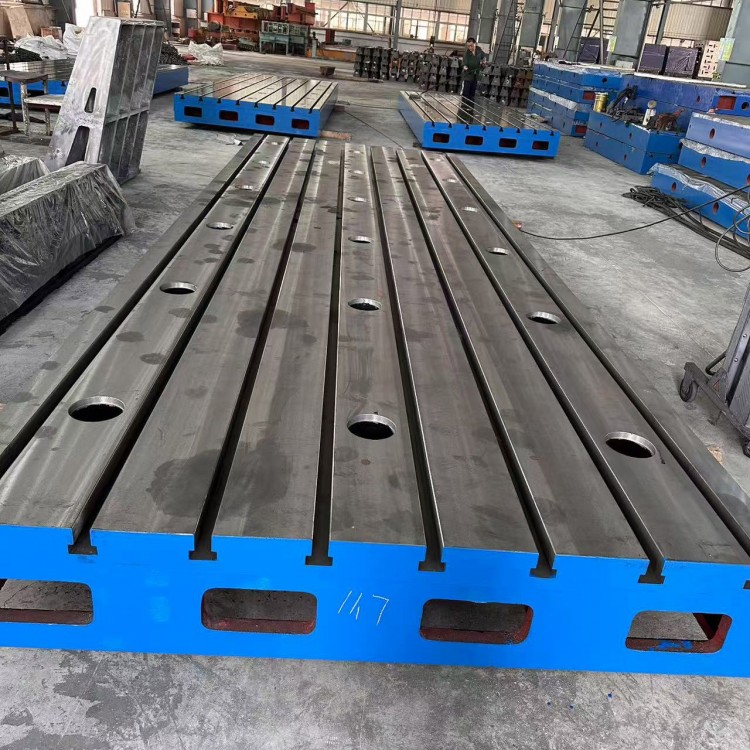
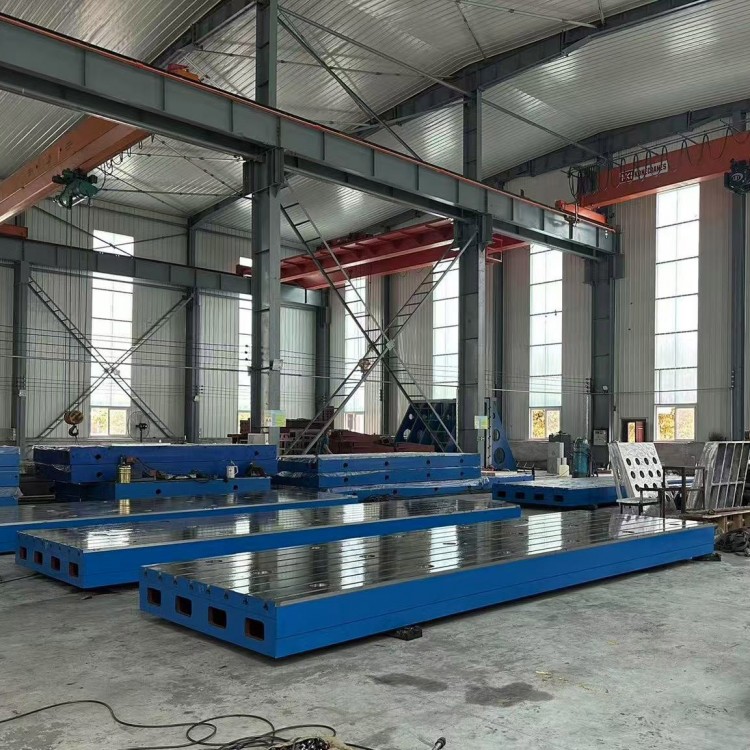


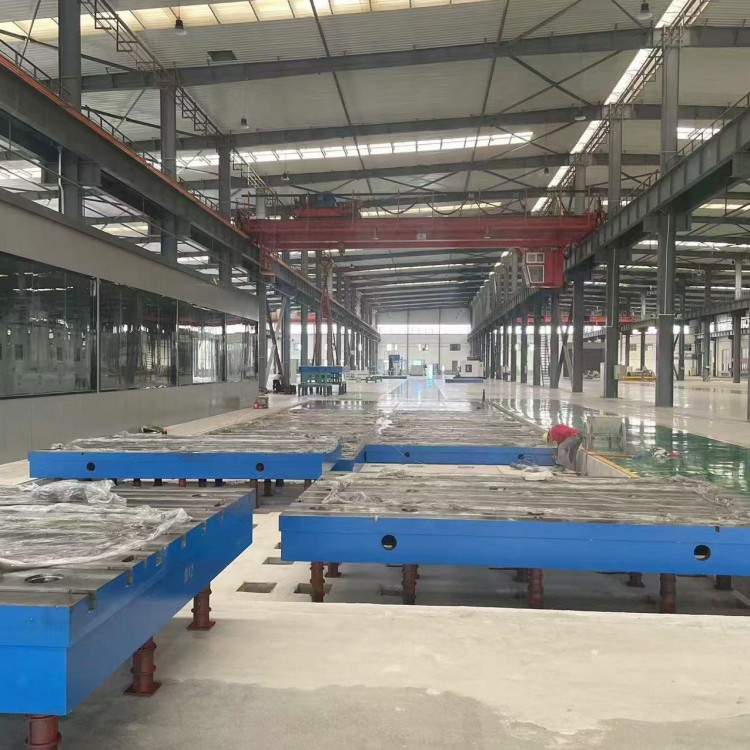
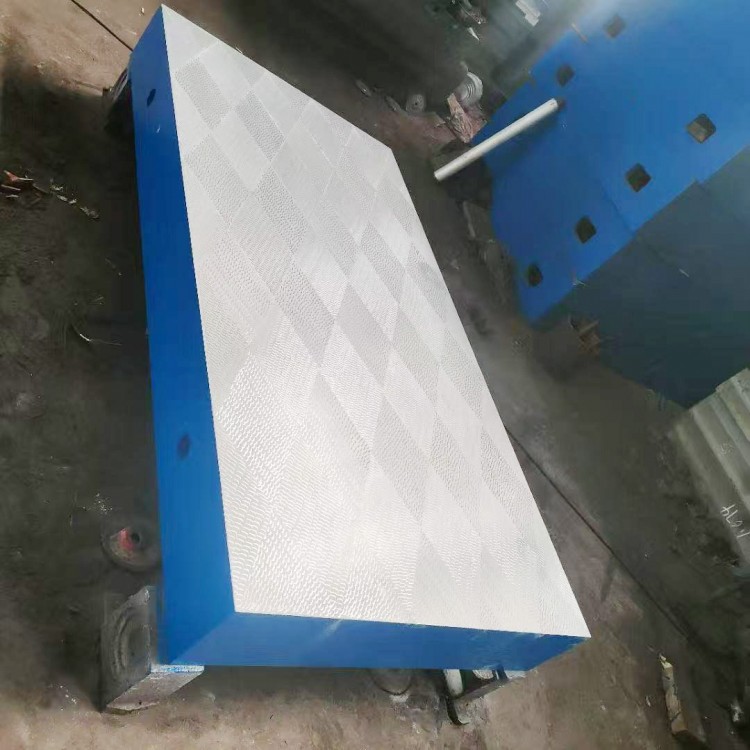
The bed castings of machine tools are primarily produced using sand casting due to its cost-effectiveness, simple production process, and short production cycle compared to other casting methods. When wet mold casting is not sufficient, consider using clay sand surface dry sand molds, dry sand molds, or other sand molds. The bed castings of machine tools are manufactured according to the standard GB9439-88. Resin sand molds offer good rigidity, allowing for the utilization of the graphitization expansion during the solidification process of cast iron, thereby minimizing shrinkage cavities and shrinkage porosity, achieving low and no riser casting for gray cast iron and nodular cast iron components.
Features of casting for machine tool bed casting
① The bed casting has good vibration damping. Since graphite in cast iron is beneficial for lubrication and oil storage, it is advantageous. Similarly, due to the presence of graphite, gray cast iron has better vibration damping properties than steel.
② Good process performance. Due to the high carbon content of gray cast iron, which is close to eutectic composition, it has a relatively low melting point, good fluidity, and low shrinkage rate, making it suitable for casting complex structures or thin-walled bed castings. The blank is generally manufactured through casting, and currently, most measuring tool castings use sand casting. For small measuring tool castings with high precision requirements, special casting methods like die casting, investment casting, and centrifugal casting can be employed. The selection of the blank is a crucial step in the machining of cast measuring tools, as it not only affects the processing technology and cost but also influences the machining process and quality. Therefore, close cooperation between the casting and machining professionals is required to reasonably determine the type and structural shape of the blank. The blanks for measuring tools are typically manufactured through casting. Currently, most measuring tool castings use sand casting. For small castings with high precision demands, special casting methods such as die casting, pressure casting, investment casting, and centrifugal casting can be used.
Features of Machining Machine Tool Bed Castings
(1) Excellent vibration dampening. Cast iron's graphite is beneficial for lubrication and oil retention, hence the advantage. Similarly, due to the presence of graphite, gray cast iron has better vibration dampening properties than steel.
(2) Good process performance. Due to the high carbon content in gray cast iron, which is close to eutectic composition, the melting point is relatively low, the fluidity is good, and the shrinkage rate is small, making it suitable for casting complex structures or thin-walled castings. Additionally, because the graphite makes it easier to form chip fragments during cutting, the machinability of gray cast iron is better than that of steel. The relationship between hardness and tensile strength: There is a corresponding relationship between the hardness and tensile strength of gray cast iron, and its empirical formula is as follows: a) When O≥196N/mm2, HB = RH(Fe00 + 0.4380b) (B1); b) When O≥796N/mm2, HB = RH(44 + O 7240b) (B2). The relative hardness (RH) value is mainly determined by the raw material, melting process, treatment process, and the cooling speed of the casting.
Advantages of Machining Machine Tool Bed Casting
Resin sand molds offer excellent rigidity, allowing for the exploitation of the graphite expansion during the iron solidification process in the early stages of casting, thereby reducing defects like shrinkage cavities and shrinkage porosity, achieving low or no riser casting for gray cast iron and ductile iron parts. Large molds like CNC machine bed castings have significant advantages over traditional sand molds; they not only eliminate the costly wood mold expenses but also facilitate operation, shorten production cycles, enhance production efficiency, and boast advantages such as small dimensional tolerances, minimal machining allowances, and excellent surface quality.


















