














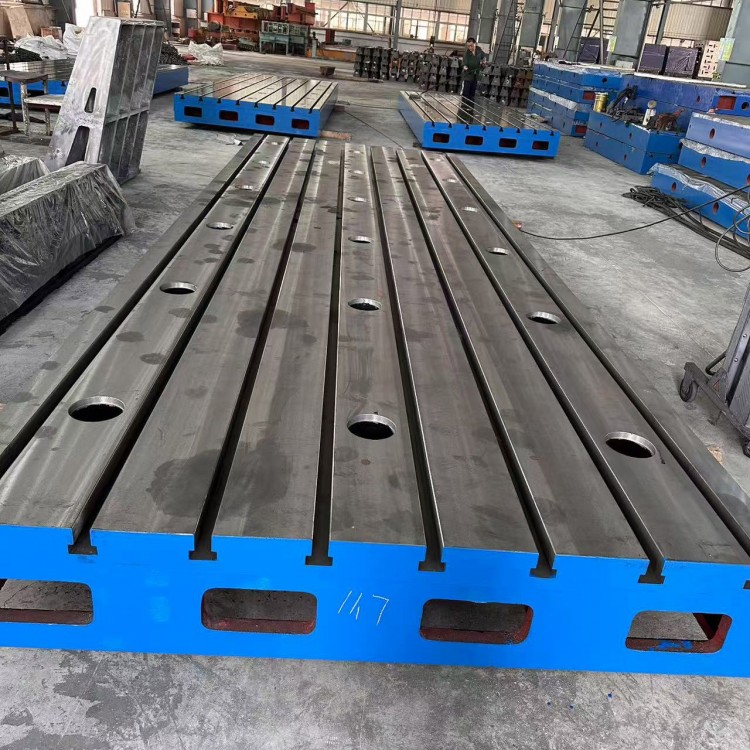
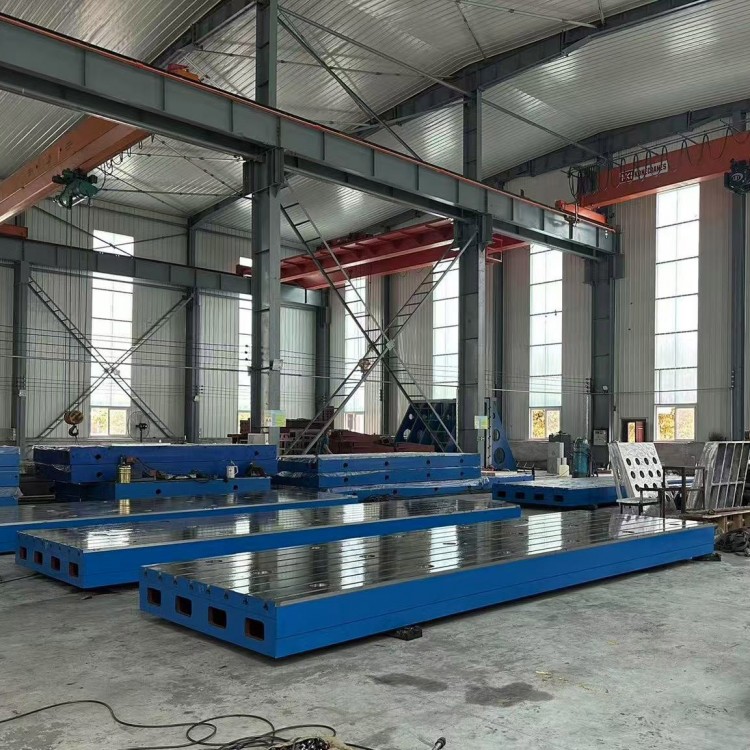


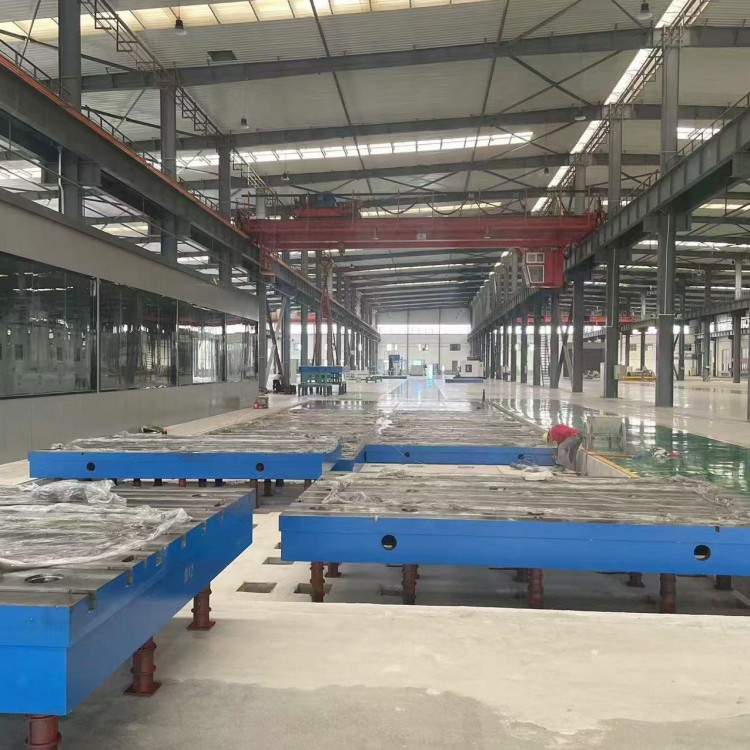
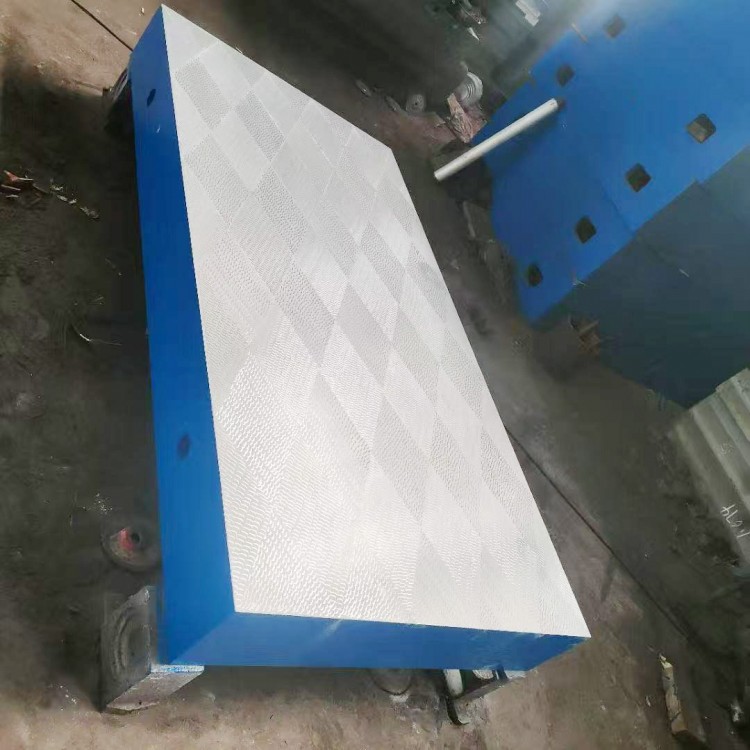
Cast Iron PlateGB/T22095-2008A flat reference tool used for part inspection or marking.
Cast iron plates have a wide range of applications, used in industries such as machinery manufacturing, chemical industry, hardware, aerospace, petroleum, automotive manufacturing, and instrument manufacturing. Cast Iron Plate: Primarily used as a reference for inspecting workpiece errors, inspection plate/The inspection platform plays a crucial role in the mechanical manufacturing process. It is essential for inspecting each workpiece before it leaves the factory. Basic benchmark tools.
Cast iron plates are categorized into ribbed and box types based on their structure, while rock plates are divided into flanged and unflanged types.
Cast iron plates are categorized by their use into types such as inspection plates, marking plates, assembly plates, riveting plates, welding plates, and sand pressing plates, etc. They are also classified by their accuracy grade into...1、2、3Grade flat plate, rock flat plate available000Grade, where2Level A and above are inspection tablets.3Grade marked underlined flat.
Cast iron plates can be re-ground after wear to restore their precision.
Cast iron plates can be used to inspect the flatness of parts with the coloring method, offering advantages of accuracy, intuitiveness, and convenience. Moving the gauge support and workpiece over the ground cast iron plate is smooth without any feeling of stickiness, facilitating measurement and improving accuracy.
The quality of cast iron and heat treatment in cast iron plates significantly affects their performance: it may cause deformation of the working surface due to residual high internal stress; may lead to loss of precision due to insufficient damage resistance; or may result in roughness with a larger value due to difficult scraping. Therefore, using cast iron plates Pay attention to the selection of cast iron materials, and employ methods such as aging treatment to reduce the residual stresses in cast iron plates.
Technical Requirements for Cast Iron Plates
1The flat working surface must not have defects such as sand holes, blow holes, cracks, inclusions, shrinkage, scratches, dents, or rust spots that significantly affect appearance or performance.
2The casting surface of the tablet should be free of sand and smooth, with paint that is firmly adhered.
3Precision grade:0Grade~3On a grade flat work surface, diameter less than15mmThe sand holes can be plugged with the same material, but their hardness should be less than that of the surrounding material. The number of sand holes plugged in the working surface should not exceed4Each, and the distance between sand holes should not be less than80mm。
4Flat panels should be used. Manufactured from fine gray cast iron and other materials, the working surface hardness should be170~240HB。
5The flat working surface is typically processed using scraping technology. For parts that undergo scraping processing,3Grade flat working surface, with a surface roughnessRaAllowable values5μm。
6The tablet should undergo demagnetization and stability treatment.
7The flat should have threaded holes (or cylindrical holes) for installation handles or lifting rings on the two side surfaces, and the design of the mounting position should aim to minimize deformation caused by handling.
8If threaded holes (or grooves) are set on the tablet's working surface, their location should not exceed the height of the working surface.
Caution for Cast Iron Plates
The tablet requires installation and debugging during use. Then, clean the working surface of the tablet and use it only after confirming there are no issues. During operation, be cautious to avoid aggressive collisions between the workpiece and the tablet's working surface to prevent damage to the tablet; the weight of the workpiece Do not exceed the tablet's rated load; otherwise, it may reduce work quality and potentially damage the tablet's structure, leading to deformation and rendering it unusable.
How to evaluate the scraping contact spots on cast iron plates during verification
Cast iron plates are an essential tool widely used in the mechanical industry for testing, inspection, and marking. To extend the service life of cast iron plates, use precision.The surface finish of the lapping contact spots is an important technical specification for cast iron plates.
Maintaining Cast Iron Plates
1To prevent deformation of the cast iron plate, when lifting the cast iron plate, use four identical-length steel cables to simultaneously secure the four lifting holes on the cast iron plate, and stabilizely hoist the cast iron plate onto the transport vehicle.
2Ensure the cast iron flat plate is properly and evenly supported, with each support point bearing equal force, resulting in a stable overall surface.
3Ensure that the cast iron plate's support points are properly and firmly padded with adjustment pads during installation, and then adjust the cast iron plate to the qualified precision by a technician.
4Handle workpieces gently on the cast iron flat plate; avoid moving rough workpieces to prevent磕碰 and scratches that may damage the working surface.
5To prevent the cast iron plate from warping as a whole, after use, the workpiece should be removed from the cast iron plate to avoid long-term pressure on the cast iron plate by the workpiece, which can cause deformation.
6When not in use, clean the working surface of the cast iron plate promptly, apply a layer of rust-preventive oil, cover it with rust-proof paper, and seal it with the outer packaging of the cast iron plate to prevent accidental damage to the working surface.
7Cast iron plates should be installed in a well-ventilated, dry environment, and kept away from heat sources, corrosive gases, and corrosive liquids.
8Cast iron flat plate The standard is subject to regular weekly inspections, with the inspection cycle varying according to specific circumstances.6-12Months.
Used for mechanical engine power tests and equipment adjustments. Features good flat stability and toughness. Surface withTFormed slots. Primarily used for securing workpieces. They are the fundamental work surfaces for fitters to adjust equipment, assemble platforms, and repair machinery.


















