


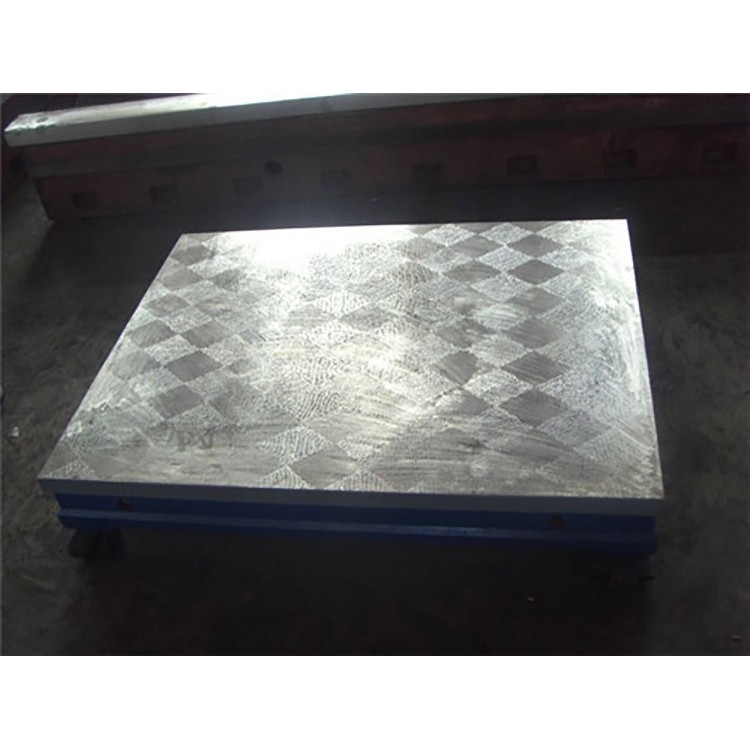













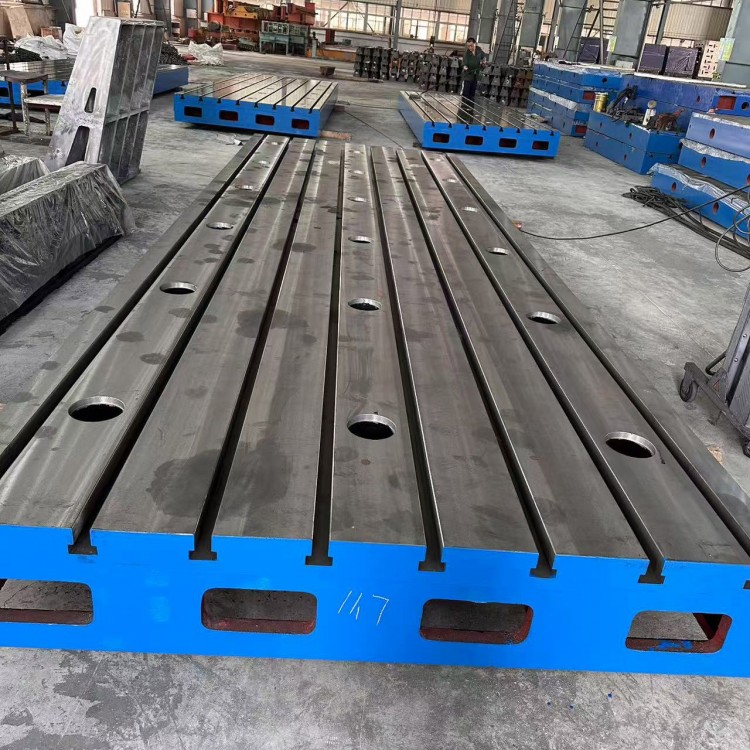
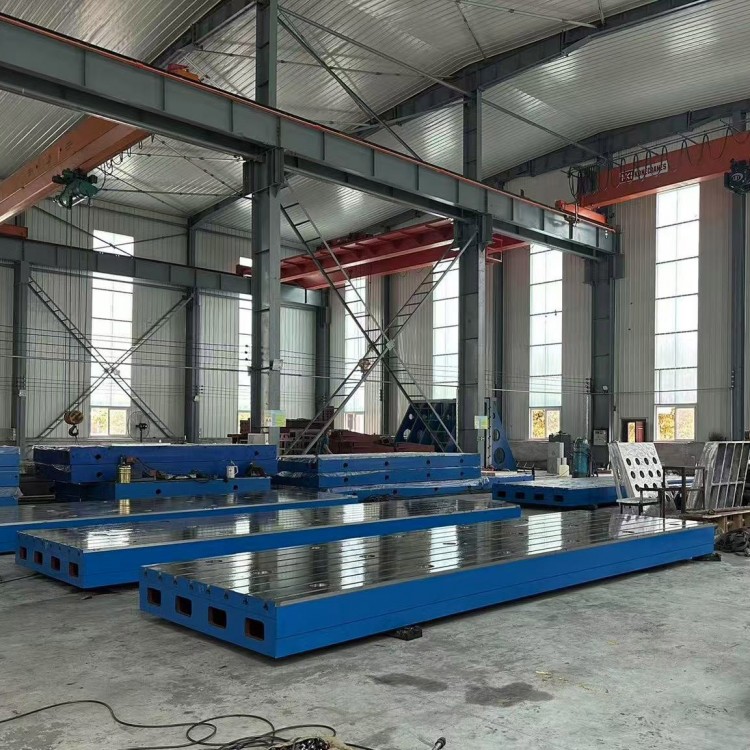


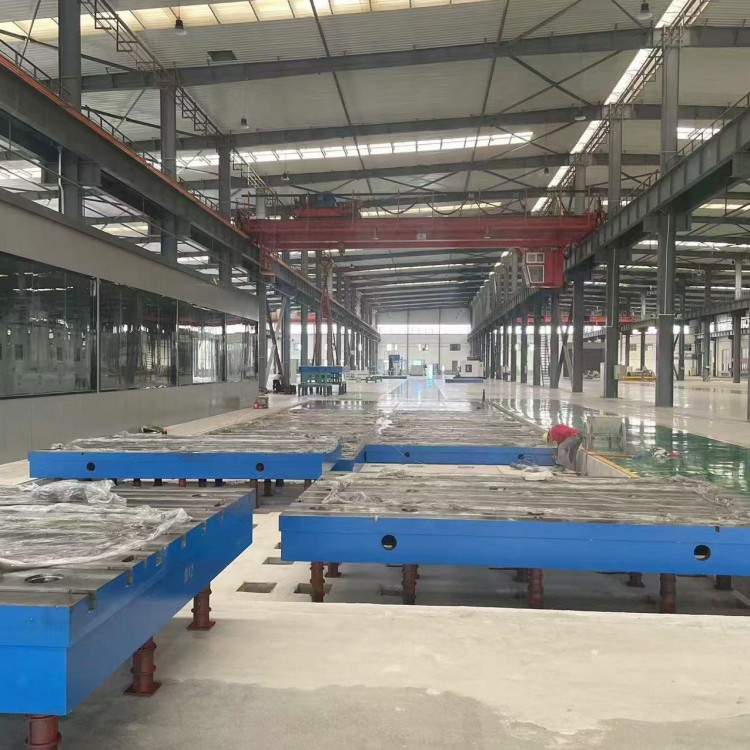
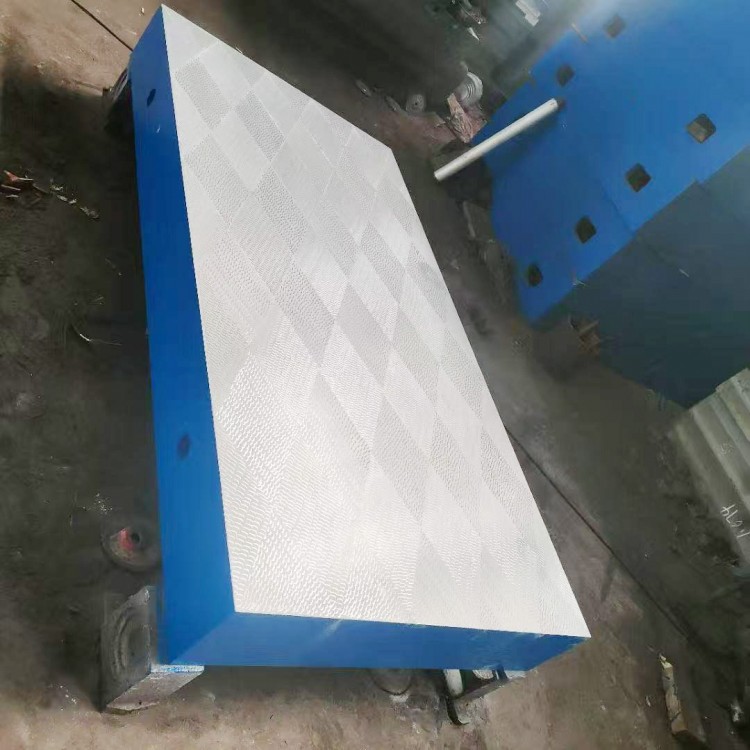
The cast iron leveling plate must be installed and adjusted before use. Working on an uninstalled and unadjusted cast iron plate is futile. Unauthorized installation and adjustment of the cast iron plate is prohibited, as it may damage the structure of the plate, causing deformation and rendering it unusable. Therefore, only authorized personnel should perform the installation and adjustment of the cast iron plate, and unauthorized adjustments are strictly not allowed.
How to Use Cast Iron Drafting Tables
After installation and debugging, clean the working surface of the cast iron base plate. Use it only after confirming there are no issues. During use, be cautious to avoid excessive collisions between the workpiece and the working surface of the cast iron base plate to prevent damage to the surface; the weight of the workpiece Do not exceed the rated load of the cast iron plate, as this may reduce work quality and potentially damage the structure of the cast iron plate, even causing deformation and rendering it unusable.
Cast iron plates are used for a variety of inspection tasks, such as reference planes for measurement, inspection and measurement of various machine tools, checking the size accuracy and position deviation of parts, and making markings. Cast iron plates are essential for machine tools, mechanical manufacturing, electronic production, and more.20A wide range of products across various industries.
Cast iron plates are essential workbenches for marking, measuring, riveting, and fixture processes. They can also serve as mechanical testing tables, and more.
The production process for cast iron layout platforms generally requires strict adherence to the "Mechanical Industry Standard of the People's Republic of China."JB/T 7974—2000Processing and production. However, sometimes it's necessary to design according to the local conditions and the specific task. Cast iron flat plates. When there are discrepancies between standard and enterprise standards and the requirements for cast iron plates, the design can be tailored to the actual needs for cast iron plates. The philosophy in designing cast iron plates should be to achieve the desired performance at a cost-effective price, ensuring mutual benefits for both production and usage parties.
Cast iron marking platform production process must be strictly adhered to Standard implementation, inspection standards follow the "Mechanical Industry Standards of the People's Republic of China"JB/T 7974—1999Inspection typically involves two stages: rough casting inspection and finished product inspection. The rough casting inspection of cast iron plates focuses on whether the appearance and specifications meet technical requirements, as well as the presence of any internal defects. The mechanical processing inspection of cast iron plates checks for sand holes, gas holes, cracks, inclusions, shrinkage porosity, and machining errors. The finished product inspection of cast iron plates primarily assesses the flatness, appearance, and specifications to ensure they meet usage requirements.
Cast iron marking platform design technical requirements are generally based on the "Mechanical Industry Standard of the People's Republic of China."JB/T 7974—2000Design. Additionally, technical requirements for cast iron flat plates should be drafted based on actual needs. In the usage requirements for standard and enterprise standards as well as cast iron plates, technical requirements can be proposed based on the actual need for cast iron plates. The technical requirements for designing cast iron plates are based on the cost-effectiveness principle.
During the production process of cast iron leveling platforms, some theoretical weight deviation may occur. It is important to note whether the deviation of the cast iron plate affects its usability. Generally, the design of cast iron plates should take into account casting errors and machining errors. The weight deviation of cast iron plates should generally not exceed...10%, over10%At this point, we need to conduct a further quality assessment of the cast iron plate to determine if it is suitable for use.
During the production process of cast iron leveling platforms, some product defects may arise, which can be remedied through proper methods. The defects on the working surface of cast iron plates are crucial and cannot be overlooked. The main defects of cast iron plates include: blow holes, sand holes, inclusions of sand, shrinkage porosity, etc. The defects of cast iron plates are addressed in the "Mechanical Industry Standard of the People's Republic of China."JB/T 7974—2000There are detailed regulations for handling. The service life and defects of cast iron plates are closely related. Therefore, when dealing with defects in cast iron plates, strict adherence to the process requirements is essential.
The production process of cast iron layout platforms generally consists of:
One, Cast Iron Pattern Plate Blank: Draw technical drawings according to requirements, make wooden molds, mix materials, shape, dry, cast, sand off, clean, and inspect all parts of the blank.
Section 2: Cast Iron Drafting Tables Machining: Appearance inspection and marking, machining, inspection.
3. Cast iron marking platform workpiece leveling, manual scraping and finishing, inspection department inspection.
Four: Cast iron marking platform's surface treatment, painting, packaging, and inventory storage.
The precision of cast iron leveling platforms, also known as the flatness of cast iron plates, can generally be categorized into:0Grade1Grade2Grade3Grade. The precision standard for cast iron plates is in the "Mechanical Industry Standard of the People's Republic of China"JB/T 7974—2000You can find them. When selecting the precision standard, it is generally determined based on the usage.3Cast iron plates with a grade of precision above are used for inspection, marking, assembly, etc.4Cast iron plates with an accuracy below a certain level are generally used for riveting and welding purposes.
Cast iron leveling platform load requirements: The load-bearing capacity of cast iron plates refers to the deformation deflection of cast iron plates per unit area after bearing a certain weight. For easier understanding, we can consider it as the pressure that the cast iron plate can withstand after placing the workpiece, without affecting normal use.
Production of cast iron scribing platforms may encounter some product defects, which can be corrected with proper methods. The defects on the working surface of the scribing plate are crucial and cannot be overlooked. The main defects of the scribing plate include: blowholes, sand holes, inclusions, shrinkage cavities, etc. The service life of the scribing plate is closely related to its defects. Therefore, defects on the scribing plate must be handled strictly according to process requirements.
(1Flat Cast Iron Drafting Table?After marking on a plane of the workpiece, the processing boundaries can be clearly indicated, similar to the plane drawing method.2The three-dimensional line-drawing flat plate is a composite of flat line drawing, where lines are etched on several surfaces of the workpiece that are mutually at different angles (usually perpendicular to each other), meaning lines are drawn in all three dimensions: length, width, and height.1.2.2The tools with underlines and their usage: Underline tools are categorized by their purpose into basic tools, support fixtures, direct marking tools, and swing gages, etc.
Benchmark Tool?The underlined flat plate is made of cast iron, with the base plane being the reference plane for the underlines. It requires to be extremely flat and smooth.
Cast iron layout platform usage注意事项:1Place flat and securely; ensure the upper surface remains level.2The underlined tablet should not be subjected to collisions or hammering to avoid reducing its precision.3When not in use for an extended period, oil should be applied to prevent rust, and a protective cover should be placed on top.
What are the uses of cast iron platforms?
Cast iron platform applications: Suitable for various inspection tasks, as a datum plane for measurement, used as a measuring reference for machine tools, to check the size accuracy or shape deviation of parts, and for marking. It is also a basic tool in mechanical manufacturing.
Categories: The platform, also known as a flat plate, is categorized into cast iron platforms and granite flat plates based on material.,Inspection Platforms, Marking Platforms, Measuring Platforms,Assembly PlatformGrinding Platforms, Welding Platforms, Riveting Welding Platforms, Foundation Platforms, Work Platforms, 3-Axis Measurement Platforms, etc.
Material: Material: Cast IronHT200-250Working surface hardness:HB160—210.After two treatments (artificial annealing)600?----700?With natural aging2---3 Year, ensures the product's precision remains stable, performing well.
Accuracy: As per Standard metrological verification procedures are implemented, respectively.0,1,2,3Four grades.
Tablet/Surface quality of the platform:
Specs:200mm×200mm—2000mm×4000mmSpecifications can be made according to the buyer's drawings or agreed upon by both parties for production and processing.
Inspection Standards:Inspect using the coloring method.
0Grade1Grade flat platform on each side25Within a range of mm², not less than25Dot.
2Grade flat platform on each side for25Within a range of mm², not less than20Dot.


















