



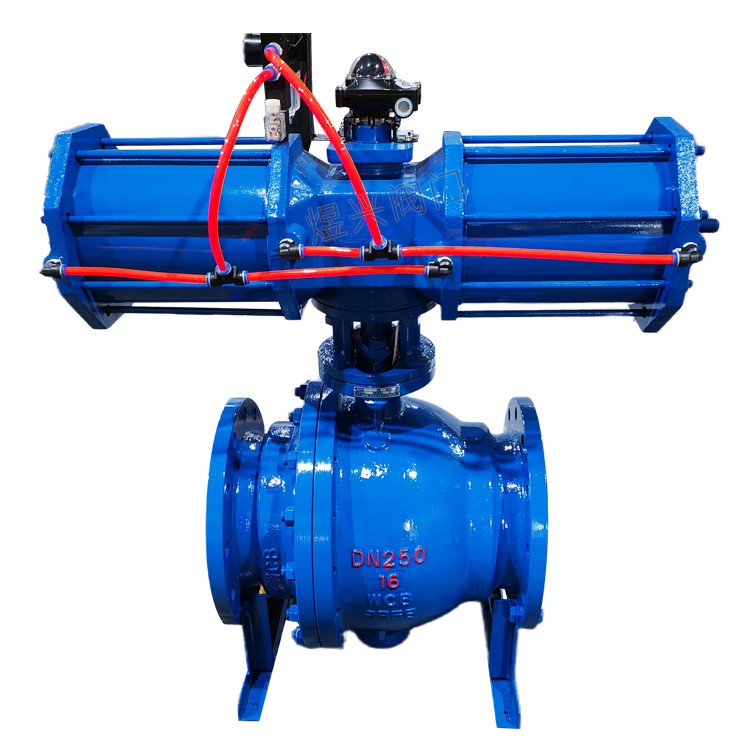













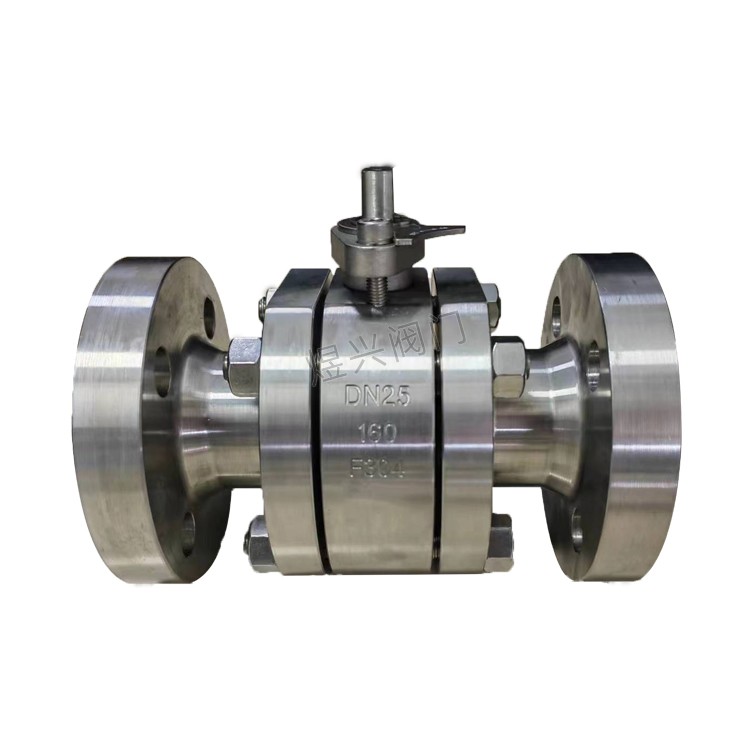
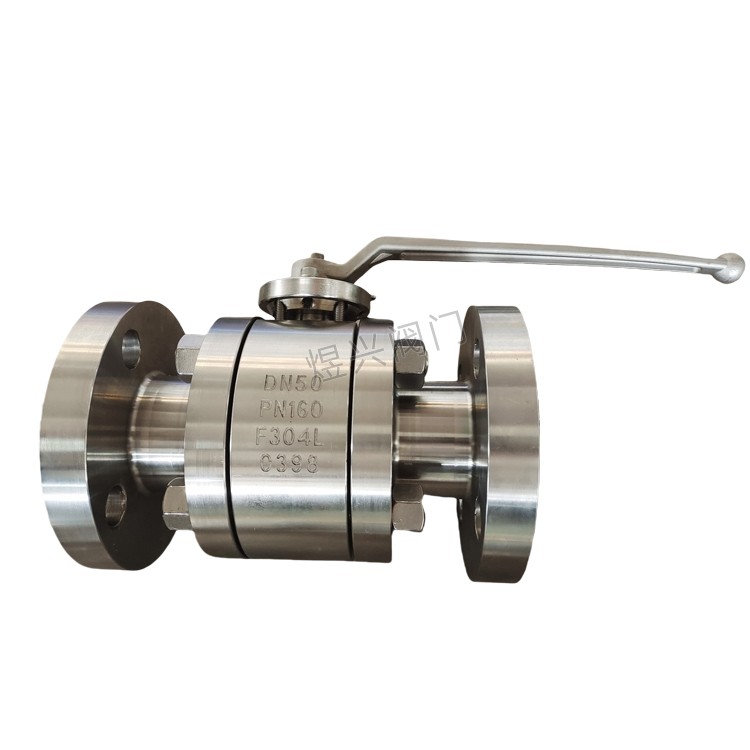
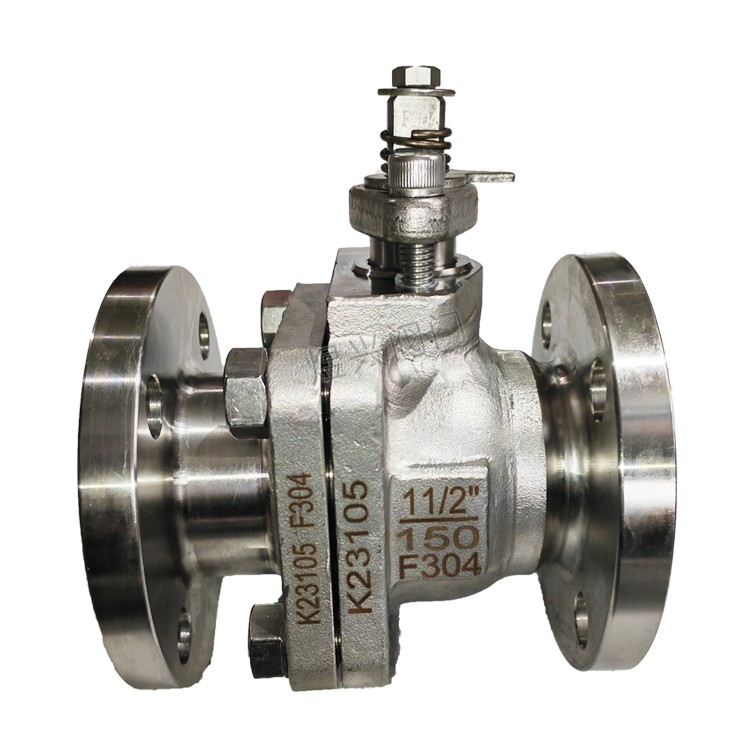


Pneumatic Fixed Ball Valve is a new generation high-performance ball valve, primarily composed of components such as the ball, valve seat, valve stem, and pneumatic actuator. Its operating principle involves the pneumatic actuator receiving a control signal, which then drives the valve stem to rotate the ball, thereby opening or closing the valve. When the valve is closed, a tight seal is formed between the ball and the sealing ring, effectively preventing medium leakage; when the valve is open, the ball rotates to a certain angle, allowing the medium to pass through the valve smoothly.
Structural Features
The ball of the pneumatic fixed ball valve is stationary; during operation, the force exerted by the fluid pressure in front of the valve is fully transferred to the bearing, preventing the ball from moving towards the valve seat. As a result, the valve seat experiences minimal deformation, maintains stable sealing performance, and has a long service life. Its structure is simple, operation is easy, and the pneumatic actuator features rapid response and high reliability, allowing for quick valve operation.
Advantages and Application Fields
Pneumatic fixed ball valves offer the following advantages:
Sealed performance stable: Due to the fixed sphere, the valve seat deformation is minimal, ensuring stable sealed performance and a long service life.
Wide Application Range: Suitable for high-pressure and large-diameter applications, as well as various corrosive and non-corrosive media.
Operation Easy: Pneumatic actuators feature fast response and high reliability, making valve operation simple and quick.
Easy Maintenance: Simple structure, with most seals being removable and replaceable with ease.
Pneumatic fixed ball valves are widely used in long-distance pipelines, general industrial pipelines, and various applications requiring control of fluid direction or flow rate. Particularly in processes involving hazardous chemical handling, due to their excellent sealing properties and corrosion resistance. Additionally, they are extensively employed in industries such as food processing, water treatment, and petrochemicals.


















