


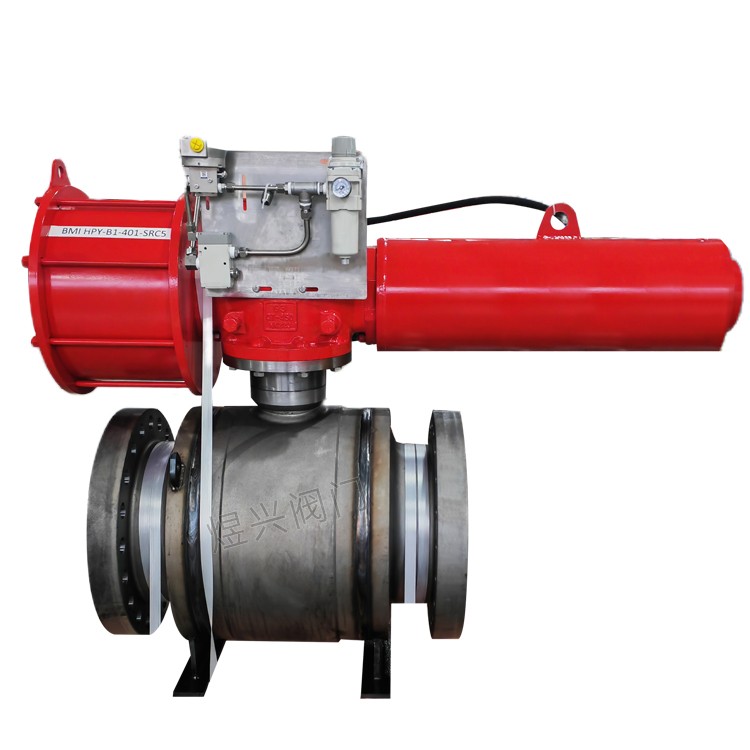

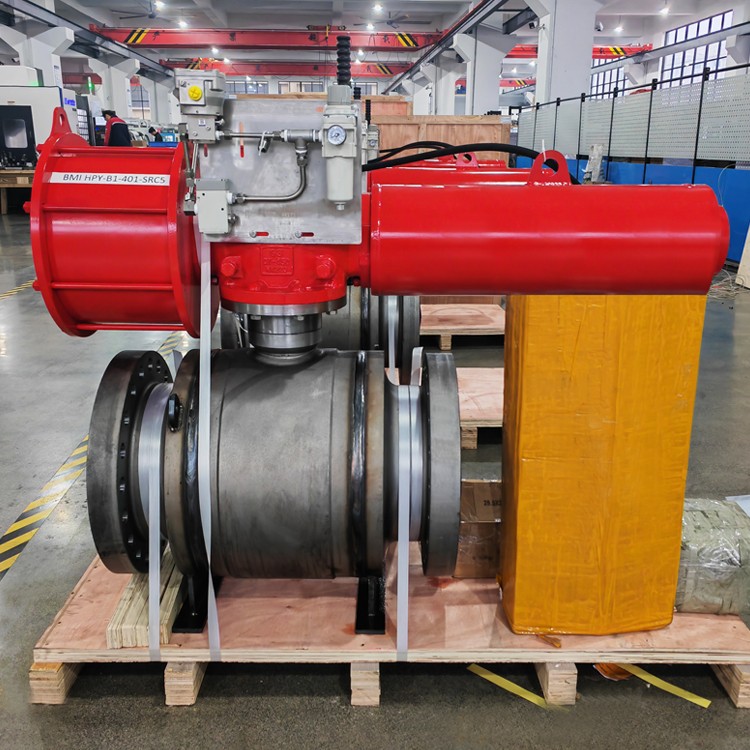
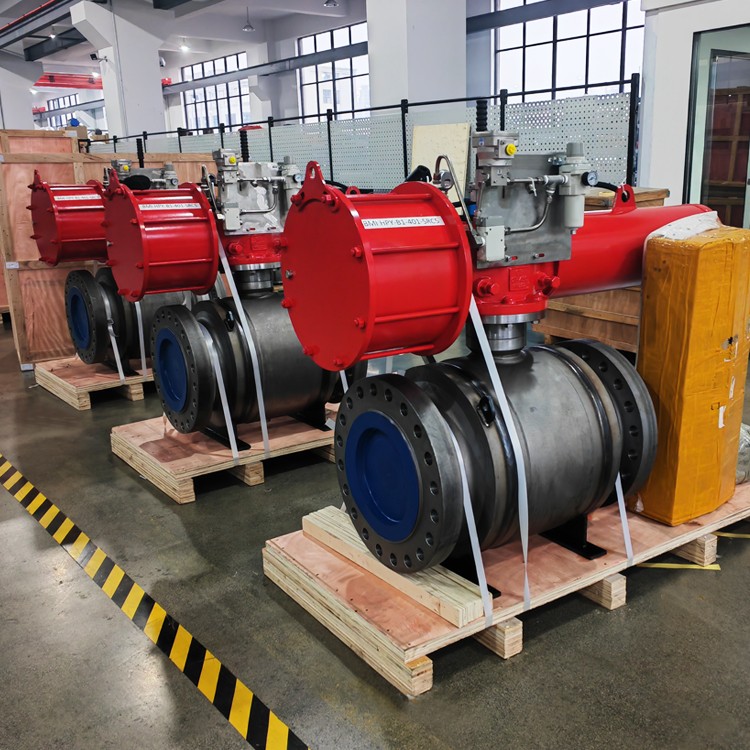













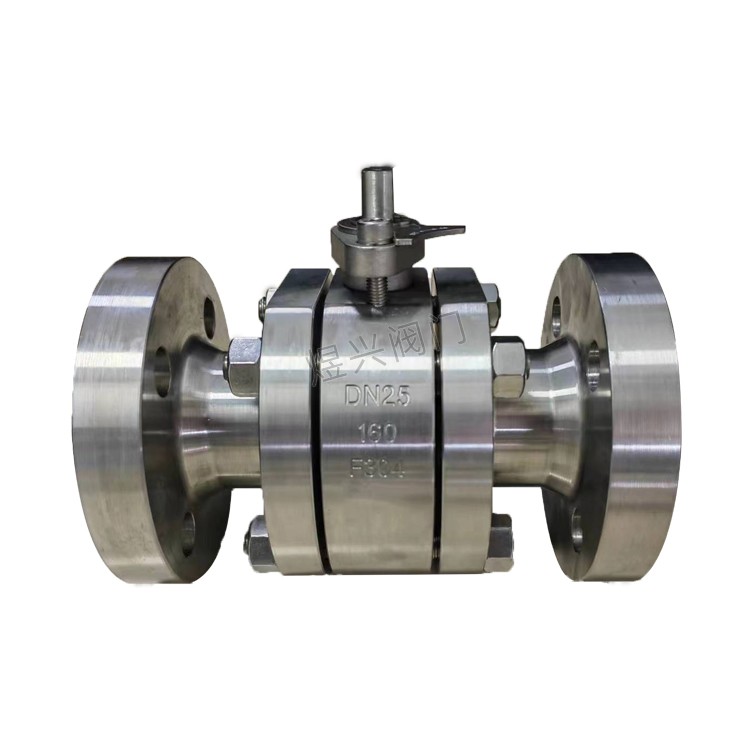
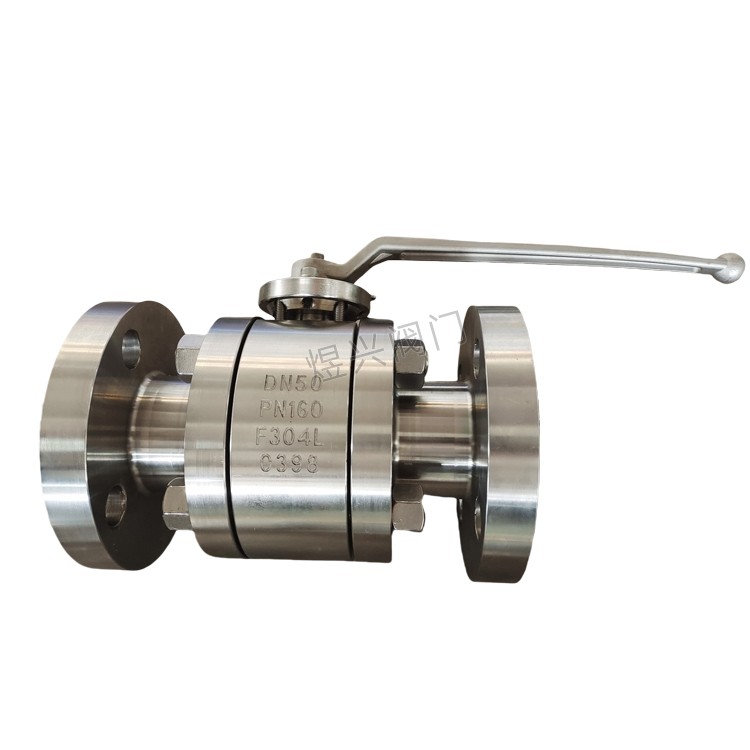
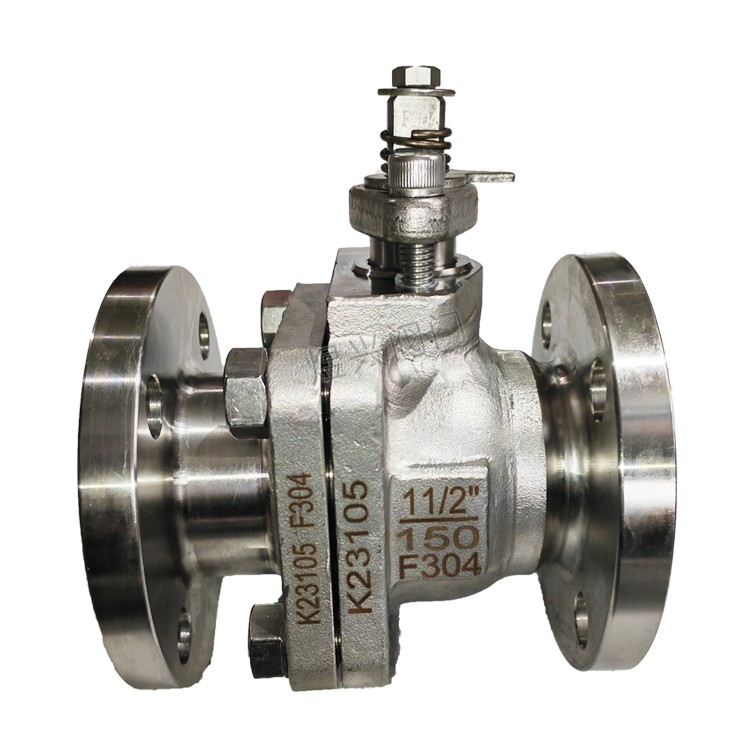


Air-operated Fixed forged steel ball valve is a high-performance ball valve, mainly composed of ball, seat, stem, and pneumatic actuator. The ball is fixed, and during operation, the force exerted on the ball by the fluid pressure in front of the valve is fully transferred to the bearing, preventing the ball from moving towards the seat. As a result, the seat deformation is minimal, the sealing performance is stable, the service life is long, and it is suitable for high-pressure and large-diameter applications.
Operating Principle
Pneumatic fixed forged steel ball valves receive control signals through pneumatic actuators, adjusting air pressure to drive the valve stem and rotate the ball, thereby achieving the opening and closing of the valve. When the valve is closed, a tight seal is formed between the ball and the sealing ring, effectively preventing medium leakage; when the valve is open, the ball rotates to a certain angle, allowing the medium to pass through the valve smoothly.
Structural Features
Fixed Design: The sphere remains stationary, does not move upon compression, and transfers pressure through bearings, reducing valve seat deformation and ensuring stable sealing performance._
High-strength materials: Typically made of forged steel, these materials offer high strength and pressure resistance, suitable for high-pressure and large-diameter applications.
Pneumatic Actuator: Driven by compressed air, easy to operate, and quick to respond, suitable for long-distance control.
Sealing Materials: Common sealing materials include PTFE (Polytetrafluoroethylene), PPL (Para-Phenylene), and metal seals (hard alloy), ensuring excellent sealing performance.
Application Fields
Pneumatic fixed forged steel ball valves are widely used in long-distance pipelines and general industrial pipelines, particularly suitable for high-pressure and large-diameter applications. Their excellent sealing performance and corrosion resistance make them extensively utilized in industries such as oil, chemicals, power, environmental protection, and water conservancy. Moreover, they are also applicable to various corrosive and non-corrosive media, such as water, steam, gas, and corrosive liquids.


















