


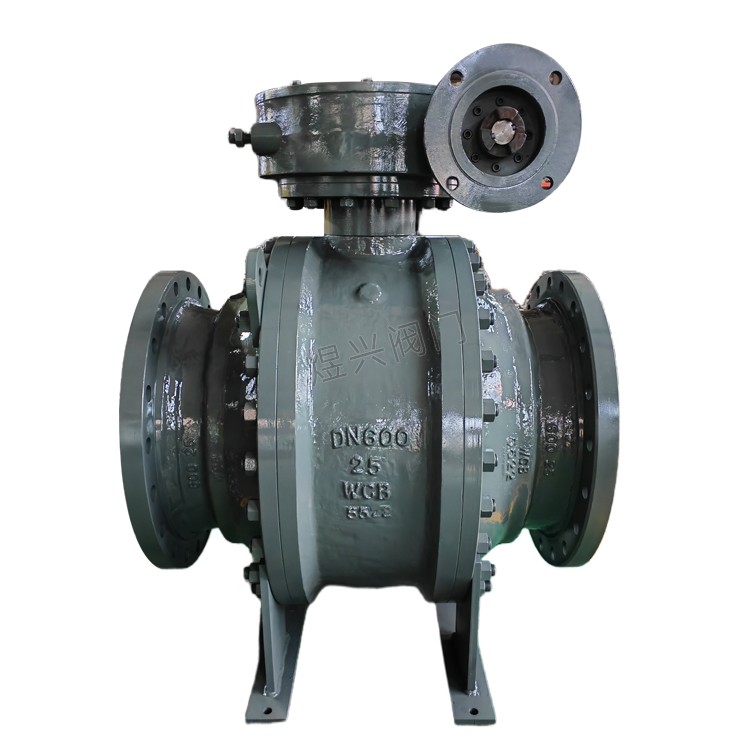













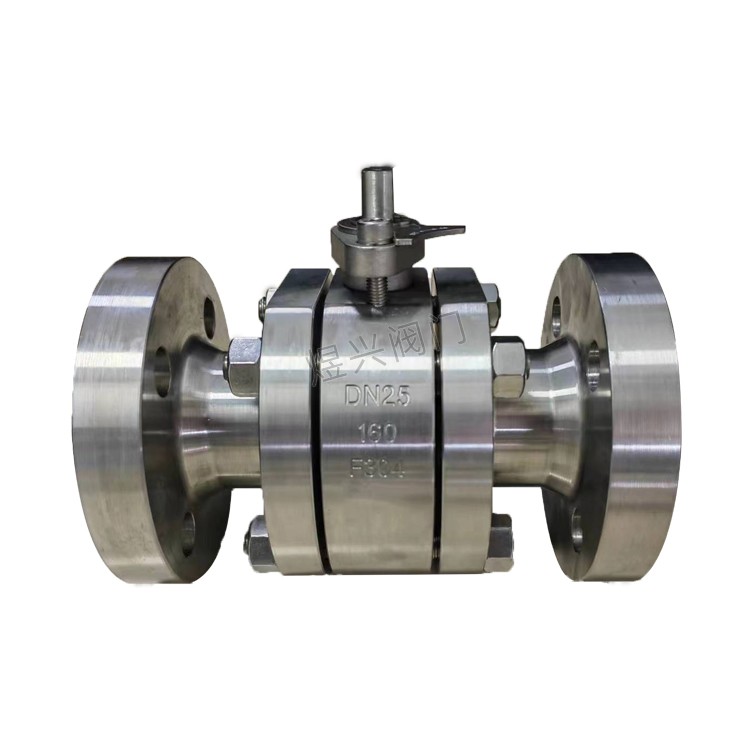
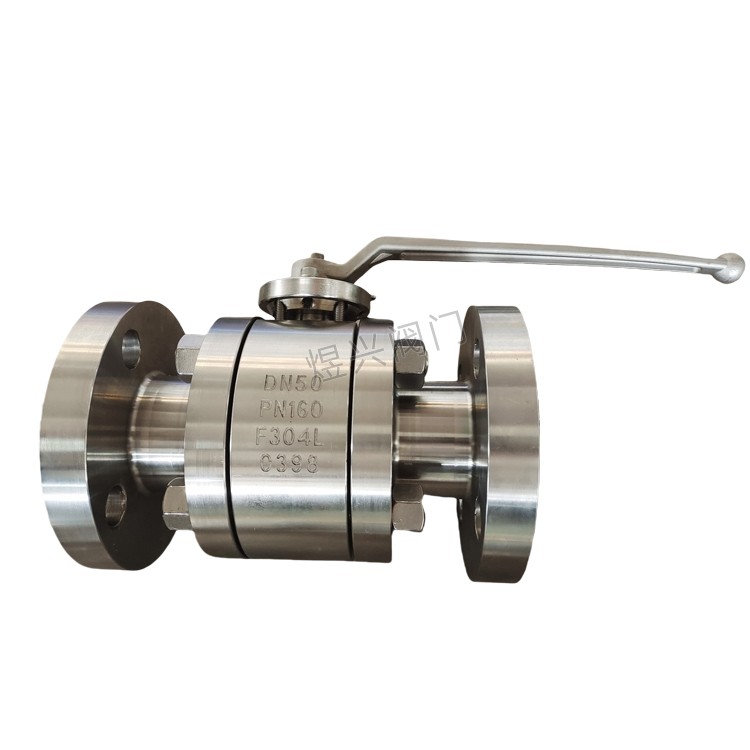
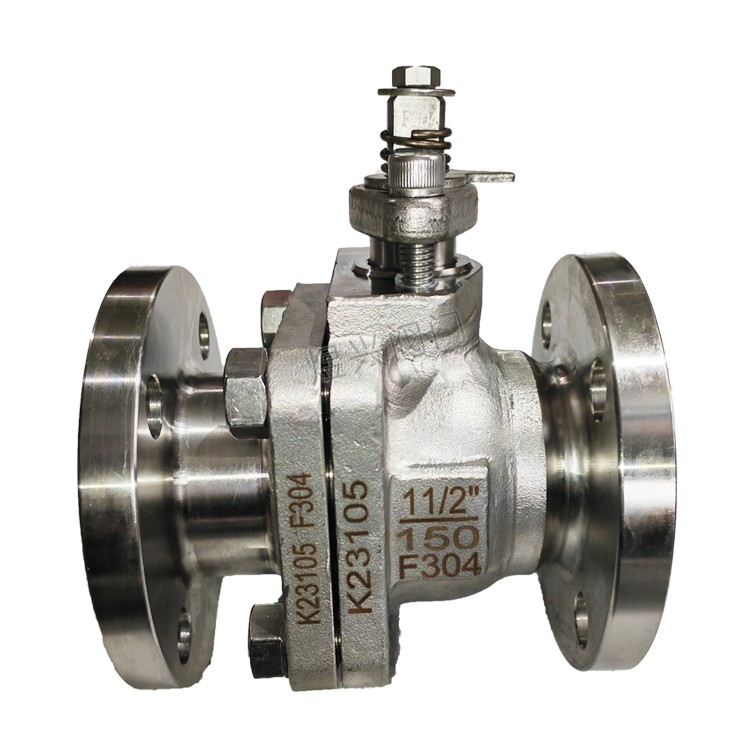


Fixed ball valves are high-performance ball valves with various advantages and wide application scenarios. Below is a detailed introduction to fixed ball valves:
Definition and Characteristics
The ball of a fixed ball valve is mounted in the valve body without moving with the medium pressure. Compared to a floating ball valve, during operation, the force exerted on the ball by the fluid pressure before the valve is fully transferred to the bearings in a fixed ball valve, preventing the ball from moving towards the valve seat. This means the valve seat does not bear excessive pressure. This feature makes the fixed ball valve have characteristics such as low torque, minimal seat deformation, stable sealing performance, and a long service life, making it particularly suitable for high-pressure and large-diameter applications.
Working Principle
The fixed ball valve controls the opening and closing of the valve by rotating the ball. The ball is fixed within the valve and, upon pressure, does not move but achieves sealing through the movement of the valve seat. When the ball valve rotates 90 degrees, both the inlet and outlet of the pipe are spherical surfaces, thus cutting off the fluid; conversely, when the ball valve reverses 90 degrees, both the inlet and outlet surfaces of the pipe are through-holes, allowing the fluid to pass through the valve.
Structural Features
The structural features of the fixed ball valve include:
Dual Valve Seat Design: Each valve has two seats, allowing for tight seals in both directions, hence the installation has no flow direction restriction and supports bidirectional flow.
Spring Pre-tension: The advanced spring pre-valve seat assembly features self-tightening characteristics for upstream sealing.
Sealing Materials: Sealing rings are typically made of PTFE material, embedded within stainless steel valve seats, with a spring at the end of the metal seat to ensure sufficient pre-tension for the sealing ring.
Performance Advantages
The performance advantages of fixed ball valves include:
Sealed Reliability: Maintains excellent sealing performance even when the sealing surface is worn.
Fireproof Structure: Equipped with a fireproof sealing ring to prevent the sealing ring from being burnt due to sudden heat or fire.
Automatic Pressure Relief: When the medium pressure in the valve cavity becomes abnormally high, the valve seat retracts and separates from the ball, achieving the effect of automatic pressure relief. After pressure release, the valve seat automatically resets.
Easy Maintenance: The ball valve structure is simple, and the seals are generally movable, making them easy to disassemble and replace._
Application Scenario
Fixed ball valves, due to their superior performance and wide range of applications, have become valves of choice in many industries. Typical application scenarios include:
Petroleum Refining: Used for long-distance pipelines and general industrial pipelines.


















