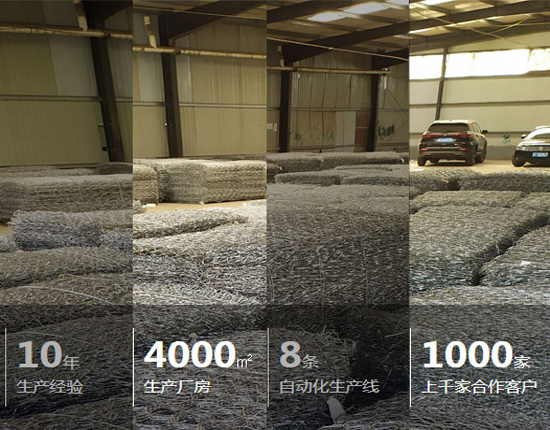










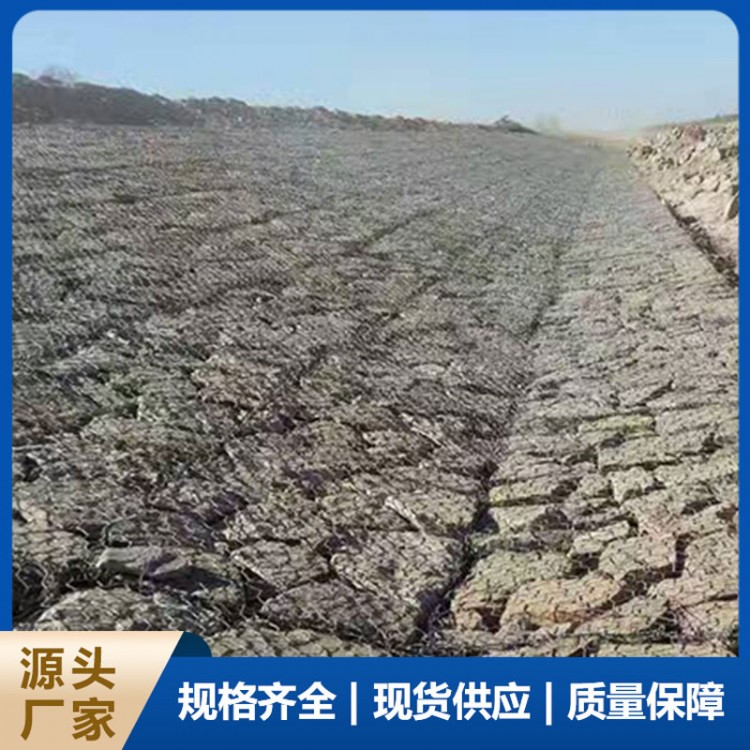
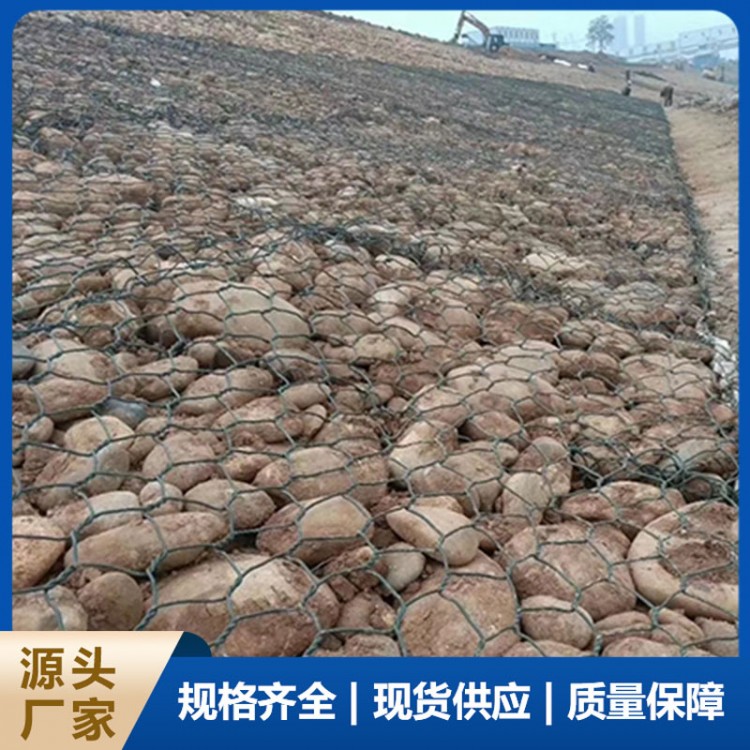
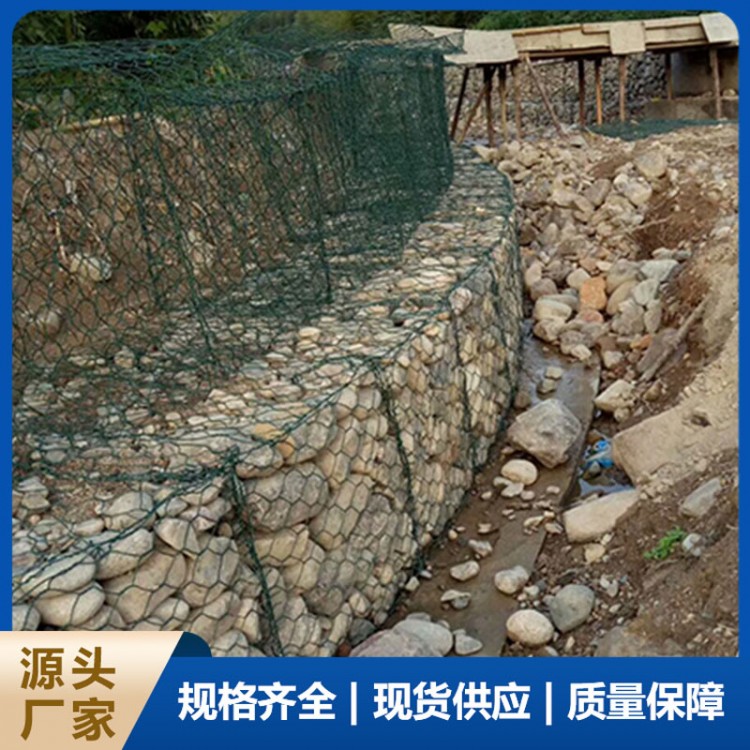
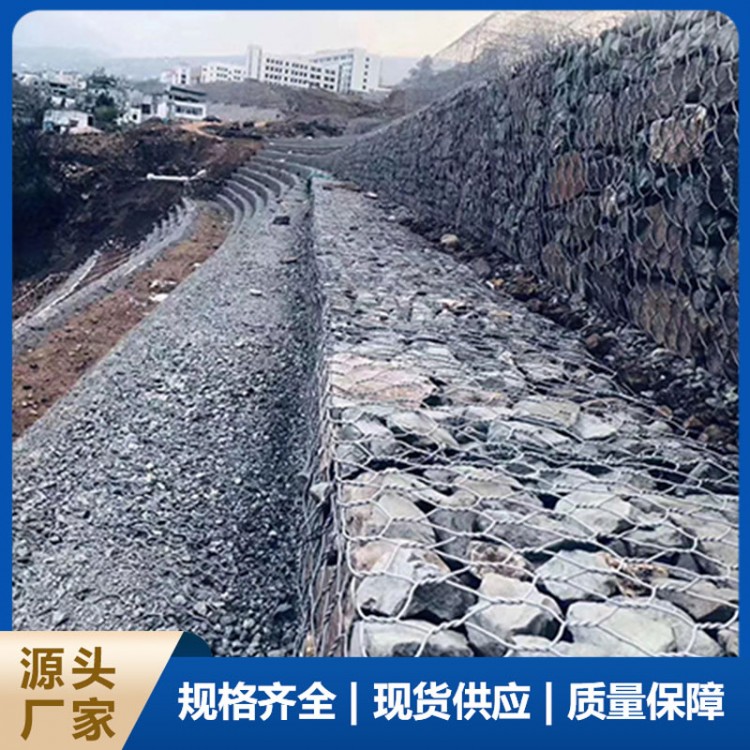
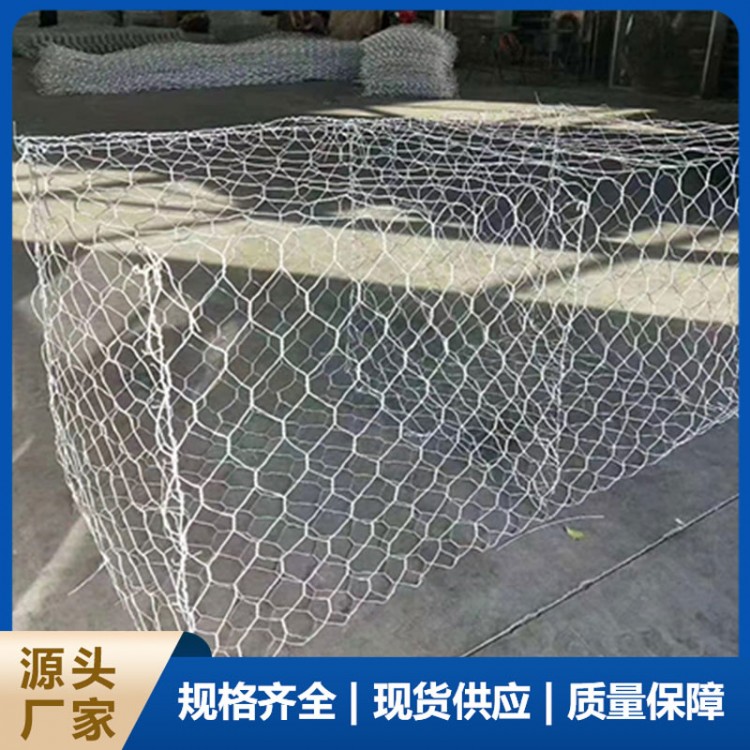
Road reinforcement mesh is a deep-processed form based on stone笼mesh, with its production principle being that during the weaving of a heavy-duty hexagonal mesh on a hexagonal mesh machine, a transverse reinforcing rod is inserted and twisted through the center of the wire at an interval of 16 centimeters. It features high tensile strength and high elongation at yield of the mesh. Road reinforcement mesh is generally woven from zinc-aluminum alloy wire or hot-dip galvanized wire with high corrosion resistance, with the diameter of the reinforcing wire generally not less than that of the edge wire, most commonly being 3.4 millimeters, 3.2 millimeters, and internationally, the mesh size is 80.100 mesh, the finished product is transported in rolls, with a standard width of 3-4 meters. Due to the repetitive production process and lower daily output, the reinforced road mesh is more expensive compared to regular gabion mesh!
Road Reinforcement Mesh Structure: The steel wire mesh is made of high-strength, ductile steel wire, which is either hot-dipped galvanized or hot-dipped Galfan for rust prevention. It features a mechanical braid double twisted hexagonal mesh structure. The common specifications are 8cm x 10cm mesh size with wire diameters ranging from 2.0mm to 2.7mm. The transverse reinforcing wires, made of the same material as the mesh but thicker, are woven into the mesh at 16cm intervals (adding a reinforcing wire every other mesh). For ease of installation, the wire mesh is often produced in widths of 1 to 4 meters and lengths of 50 meters, rolled and packaged, ready for direct laying on construction sites. The mesh width and length can be cut to size as needed either at the factory or on-site.
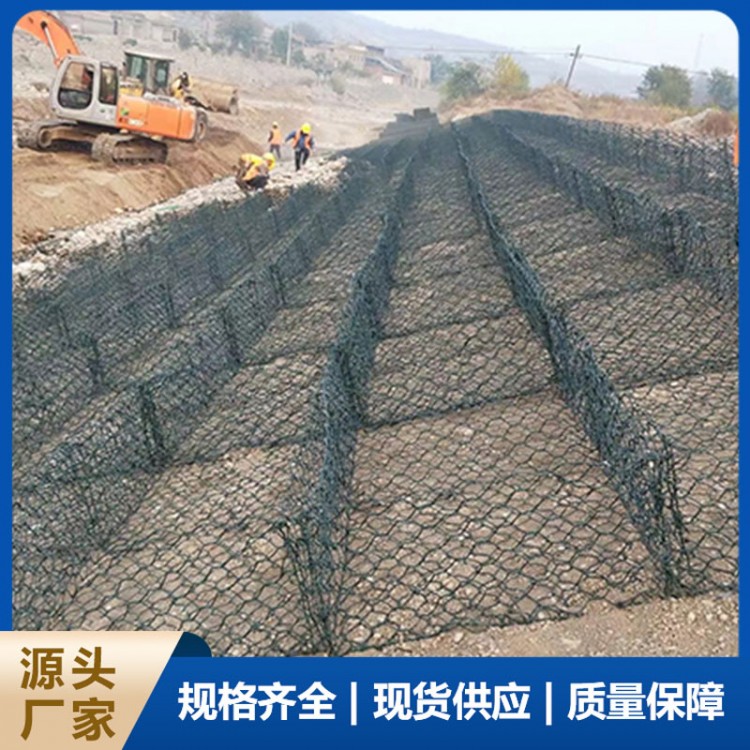
Road Reinforcement Mesh Function: It is designed to reduce the non-uniform settlement of old and new subgrades during road reconstruction and expansion, which causes reflective cracks on the road surface. Laying a metal reinforcement mesh on the asphalt sublayer at the junction of old and new subgrades can effectively minimize the possibility of longitudinal cracks in the asphalt pavement. This metal reinforcement mesh, named after its use and structural shape, is referred to as road reinforcement mesh, double twisted road reinforcement mesh, road reinforcement mesh, reinforced gabion mesh, highway reinforcement mesh, and road metal mesh, etc. The double twisted steel wire mesh employs a unique bidirectional load-enhanced three-dimensional structure, featuring high modulus, high strength, low creep, and resistance to brittle cracking. The purpose of laying steel wire mesh between the subgrade and surface layer at the junction of new and old roads is to allow the asphalt mixture to wrap around and interlock with the steel wire mesh, quickly and accurately transferring the stress from the asphalt aggregates to the reinforced layer. This helps to reduce road rutting cracks and reflective cracks, minimize the non-uniform settlement of old and new subgrades, and extend the service life of the road.
Road Reinforcement Mesh Application: Primarily used in road widening and asphalt pavement construction projects, the asphalt pavement employs the method of laying road reinforcement mesh to meet the load-bearing capacity requirements with minimal investment. The road reinforcement mesh can effectively resist differential settlement cracks caused by uneven differences in the subgrade and pavement during road widening, delay the spread of cracks, reduce bending deformation, and enhance the pavement's resistance to reflective, temperature, and fatigue cracks. Additionally, it effectively reduces the rutting and movement effects caused by vehicle loads, strengthening the pavement's load-bearing capacity. Consequently, it improves the pavement's condition and extends its service life.
WeChat Official Account

Scan to follow Official Account