


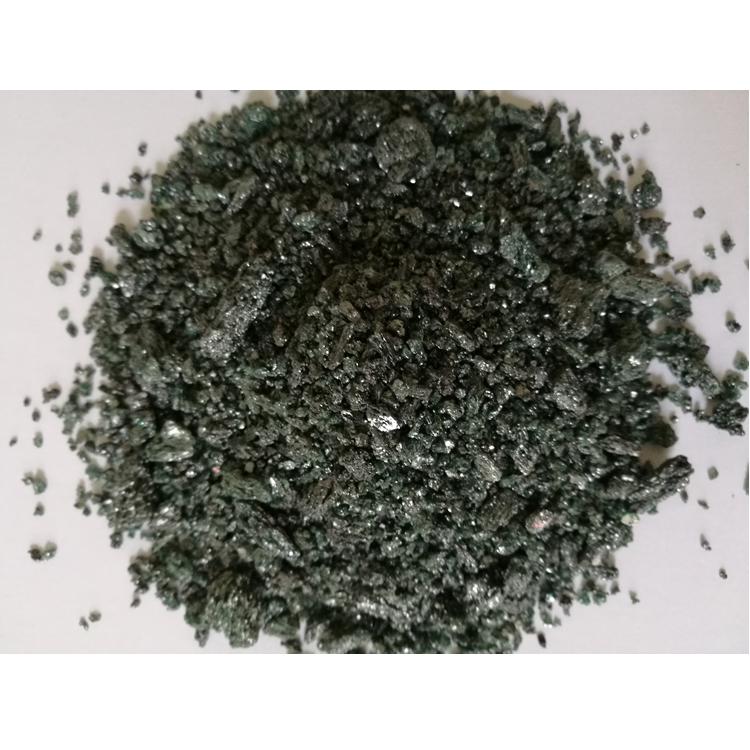

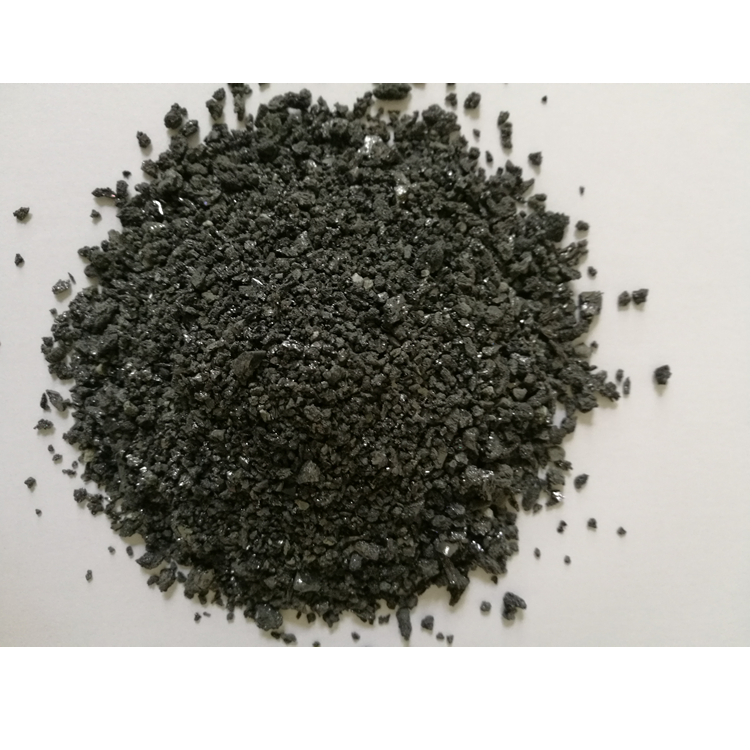













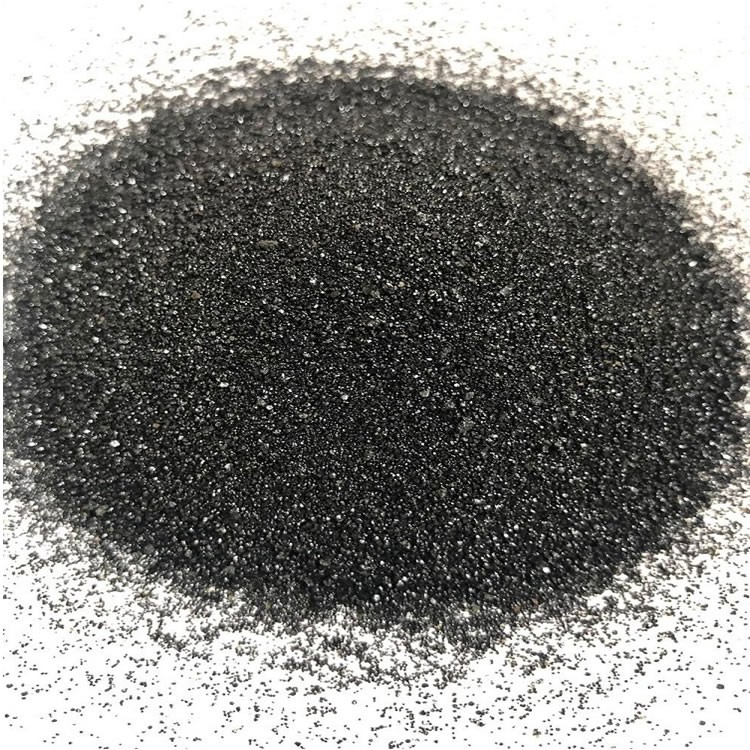
Silicon Carbide Pretreatment Agent for Casting
SICUsage Instructions & Dosage
1.Mid-frequency (High-frequency) Furnace (for casting iron production)
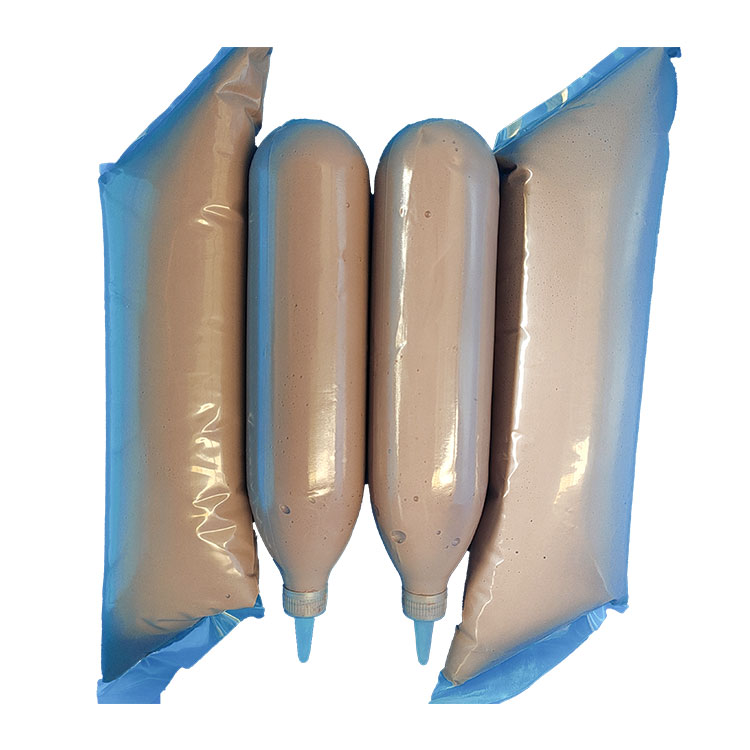
(1) Initial Melting Stage: After the first 1/3 of the materials have melted, directly drop the bag into the furnace or use a shovel
Invest, then add other materials on top.
(2) During continuous operation: Add iron with an iron shovel or directly add to the top of the remaining iron water.
Quantitative SIC, with additional materials added on top.
(3) Silicon carbide (SIC) sources and carbon sources that can be formed, therefore for the added SIC this
Some parts may not require the addition of ferrosilicon and carbon additives again.
(4) The silicon and carbon in the aforementioned parts can be calculated at 97% each.
(5) Dosage: 0.6-1.0%
2L-Type Electric Furnace (Steelmaking)
(1) After the oxygen blowing process, the SIC is distributed onto the molten steel using a jet method for optimal effect.
Notable.
(2) Directly scattered on the molten steel surface.
(3) Add air flow during steelmaking to induce reaction.
SICPowerful deoxygenation structure
Silicon carbide (SiC) decomposes into Si and C at high temperatures, and after decomposition, it is in a highly reactive state.
Silicon and carbon during the life cycle will form a strong deoxygenation effect, as shown in the following formula:
SiC—Si+C
Si+2FeO=2Fe+SiO2
2C+2Fe0=2Fe+2CO
C+O2=CO2
The silicate formed from the above reaction is stable and will not act as a non-metallic inclusion in the iron melt.
The presence ensures that the steel composition is very pure.
SICThe effect of extending the lifespan of electric furnace walls
Due to the aforementioned strong deoxidizing effect, SIC can reduce the FeO content in the molten iron.
Prevent the formation of iron oxide and silica (SiO2) that lower the melting point of the refractory lining.
The occurrence of eutectic material (2FeO?SiO2) suppressed the erosion of the furnace lining, serving as
Extends the lifespan of furnace walls.
SICOther Functions
(1) When using SIC as a slagging agent in an L-type electric furnace, during the addition of...
After SIC, lime (CaO) in the slag will react immediately, and within a short
Form calcium carbide (CaC2) and very high fluidity within the time frame
CaO?SiO2CaSiO2. These mixed slags possess strong desulfurization and descaling properties.
Oxygen effect, refining in short order, and shortening the reduction time.
(2) In cast iron:
Robust deoxygenation can reduce the amount of balling agent added.
Prevent the precipitation of carbides, which is conducive to increasing the ferrite content
Increase the number of crystalline cores, enhance the spheroidizing rate of cast iron.
Reduce white mouth, significantly improve cutting performance and mechanical properties, increase iron content
Water mobility, stabilizes the iron melt composition, prevents segregation
Reduce wall thickness sensitivity, well-organized dense structure, smooth cutting surface
SIC Composition, dosage
Si+C≥90%
SiApproximately 70% of the 90%.
CApproximately 30% of the 90%
Addition Amount: 0.6-1.0%
Use within package: 0.1-0.15%
CThe absorption rate of Si is calculated at 97%.


















