















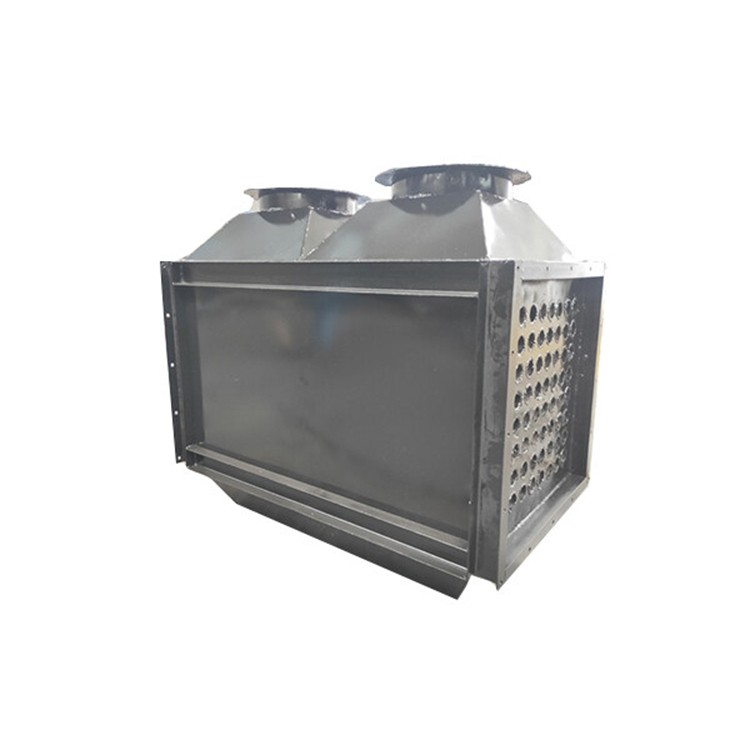
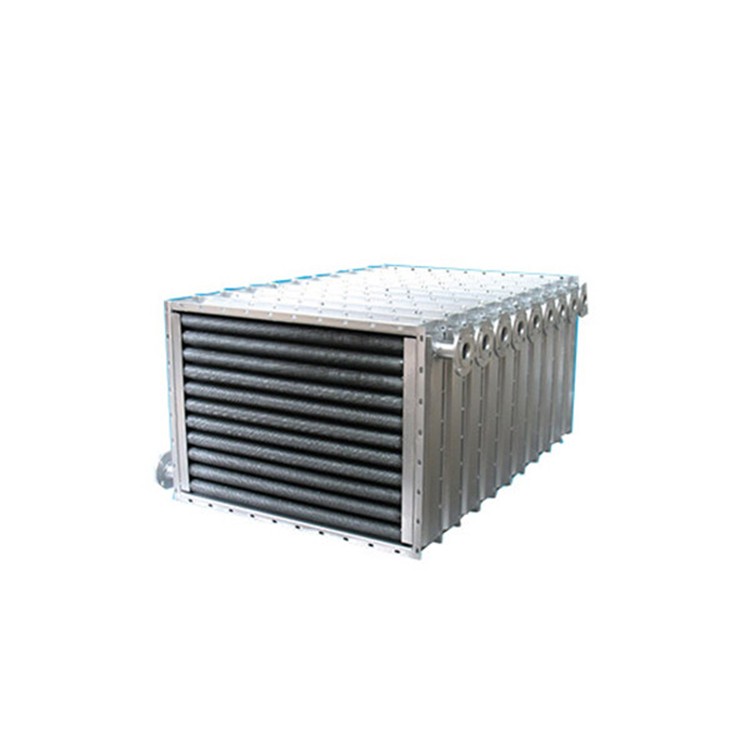

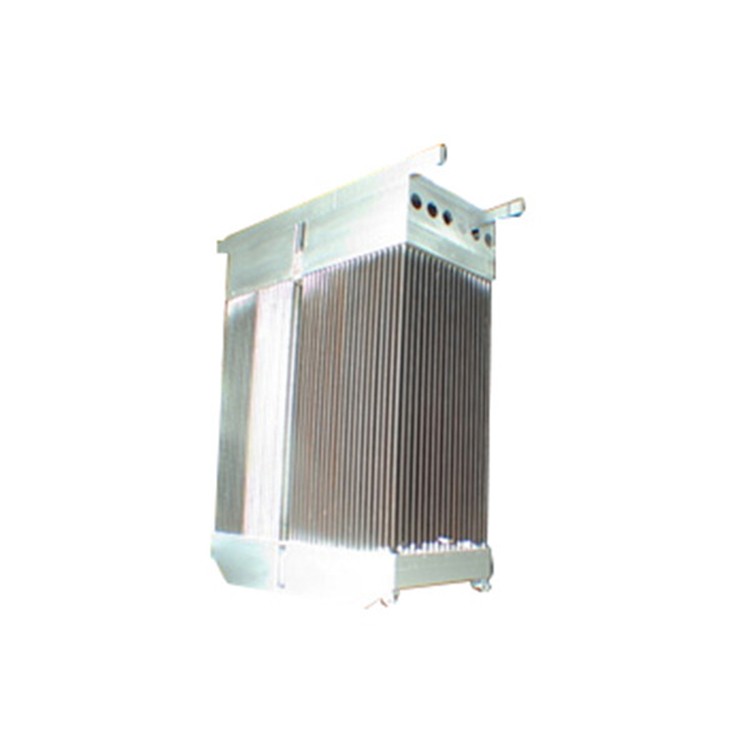

BR Plate-type CoolerIt is an instrument and equipment consisting of main components such as the frame, heat transfer plate assembly, and clamping bolts.
High thermal conductivity due to the alternating arrangement of the corrugated plates forming complex flow channels. This results in a three-dimensional rotational flow within the channels between the plates, enabling turbulence at lower Reynolds numbers (typically Re=50~200). Consequently, the thermal conductivity is high, generally up to 3~5 times that of a shell-and-tube design.
Large logarithmic average temperature difference, small end temperature differenceShell and Tube Heat ExchangerIn the shell-and-tube heat exchanger, the two fluids flow in the tube side and shell side respectively, generally in a crossflow pattern, with a small logarithmic mean temperature difference correction factor. In contrast, plate heat exchangers mostly operate in a co-current or counter-current flow, with a correction factor typically around 0.95. Moreover, the flow of cold and hot fluids in plate heat exchangers is parallel to the heat transfer surface, without bypass, resulting in a smaller temperature difference at the end of the plate heat exchanger, which can be less than 1°C for water heat exchange, whereas shell-and-tube heat exchangers usually have a 5°C temperature difference.
Low footprint; Plate heat exchangers have a compact structure, with a heat exchange area per unit volume up to 2-5 times that of shell-and-tube heat exchangers. Unlike shell-and-tube types, they do not require space for removing tube bundles for maintenance. Therefore, to achieve the same heat exchange capacity, plate heat exchangers occupy approximately 1/5 to 1/8 of the area of shell-and-tube heat exchangers.



















