



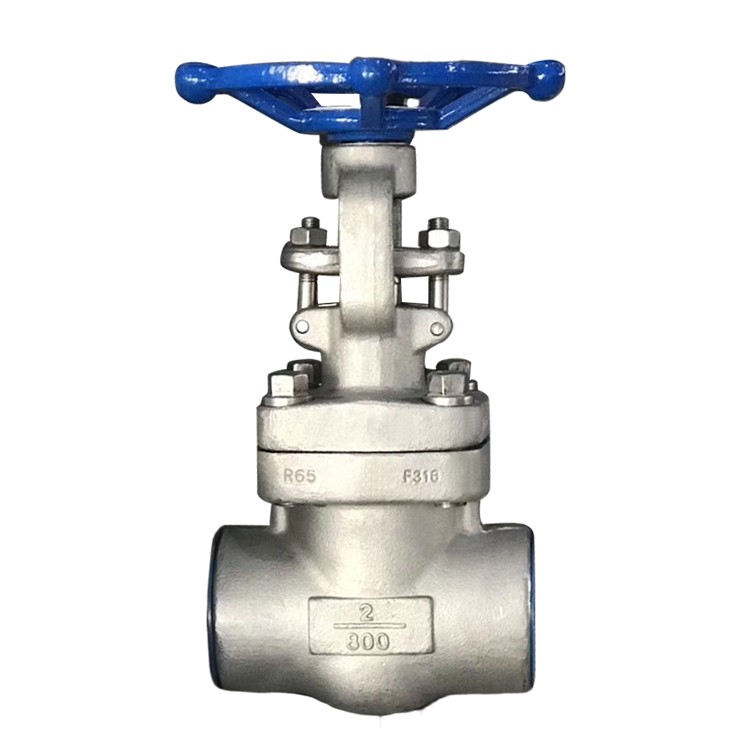

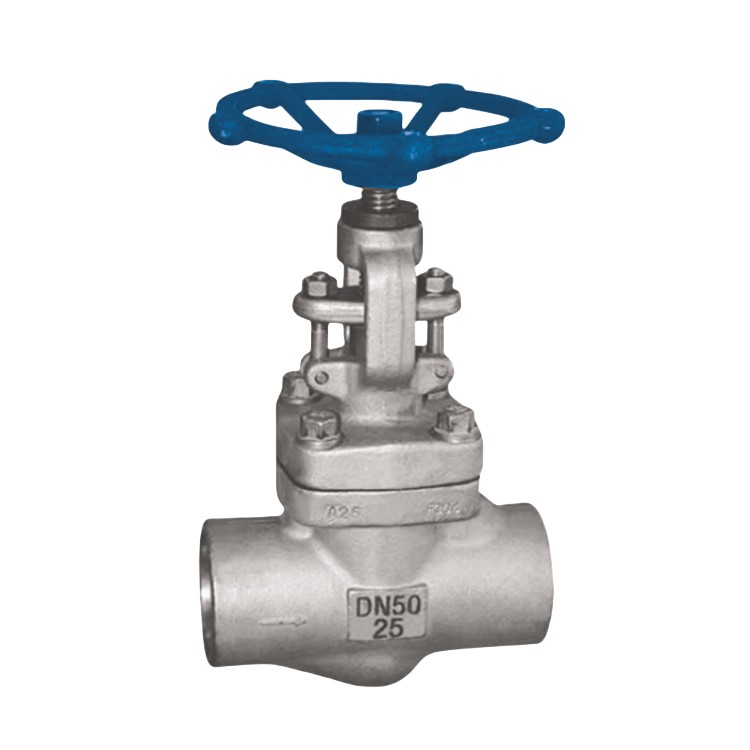















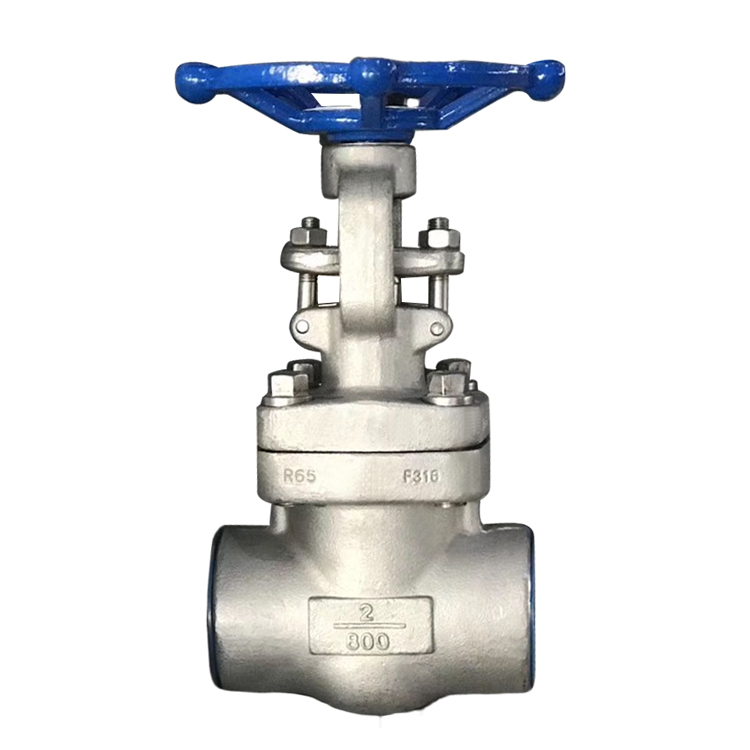
Welded forged steel gate valves are valves manufactured through forging processes, featuring high-strength forged steel materials for their main components. They possess characteristics of high-temperature resistance and corrosion resistance, making them suitable for environments with high temperatures, high pressures, and corrosive media.
Definition and Working Principle
Welded forged steel gate valves are valves where the closure element (gate) moves vertically along the centerline of the passage. The closure element is the gate, which moves perpendicular to the fluid direction and can only be fully open or fully closed; it cannot be used for regulation or throttling. When the valve is closed, a sealed space is formed between the gate and the valve seat, blocking the flow of the medium; when the valve is open, the space between the gate and the valve seat is opened, allowing the medium to flow freely. The opening and closing of the valve is achieved by rotating the valve stem, which drives the gate to move up and down, thereby controlling the flow of the medium.
Structure and Classification
Welded forged steel gate valves are mainly composed of the body, gate plate, stem, cover, and sealing surfaces. The gate plate has two sealing surfaces, commonly with the two sealing surfaces of a wedge gate valve forming a wedge shape, with the wedge angle varying with the valve parameters. They can be categorized as either wedge gate valves or parallel gate valves based on the sealing surface configuration; as manual, pneumatic, electric, or air-liquid actuated based on the driving mode; and as flanged gate valves,焊接 gate valves, or threaded gate valves (divided into internal and external threads). They are further classified into high-pressure gate valves and low (medium) pressure gate valves based on pressure class.
Features and Performance
Welded forged steel gate valves offer the following advantages:
Low fluid resistance: The sealing surface is less eroded by the working medium when fully open compared to a regulating valve.
The required external force for opening and closing is minimal: the flow direction of the medium is unrestricted.
High-pressure resistance: Capable of withstanding working requirements in high-pressure environments, ensuring stable operation under high temperature and pressure conditions.
Corrosion Resistance: Forged steel material boasts excellent corrosion resistance, suitable for a variety of media, including highly corrosive liquids and gases.
However, there are some drawbacks to welding forged steel gate valves:
Large exterior dimensions: requires more installation space.
Sealing Surface Friction: Relative friction between sealing surfaces during the opening and closing process can easily cause abrasion, requiring high operating torque. Additionally, it is prone to scratching on the gate and valve seat sealing surfaces, leading to valve leakage.


















