



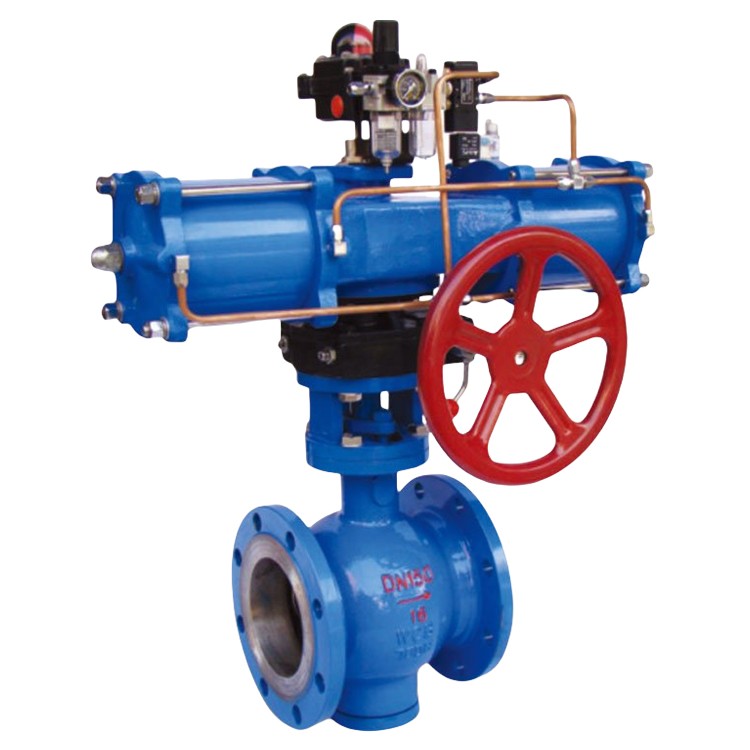















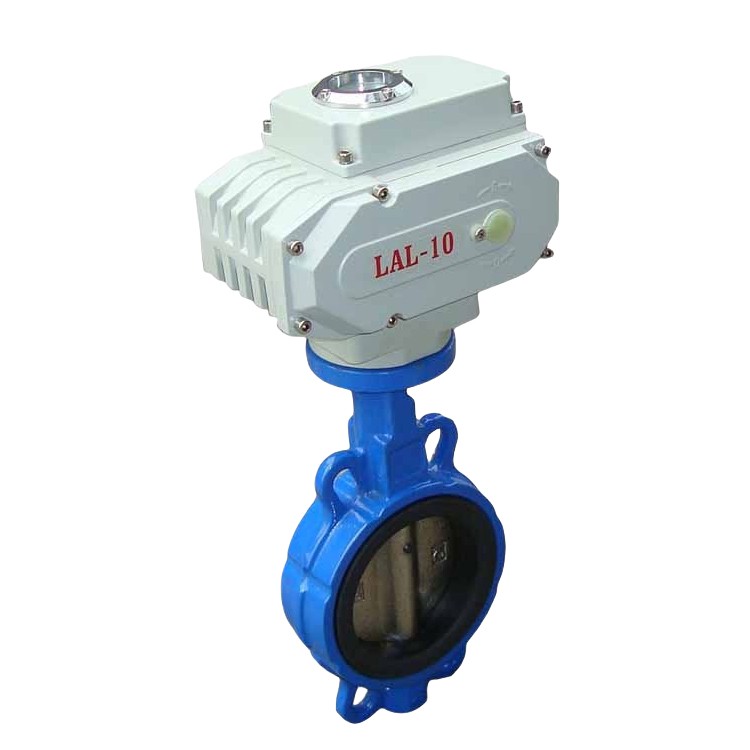
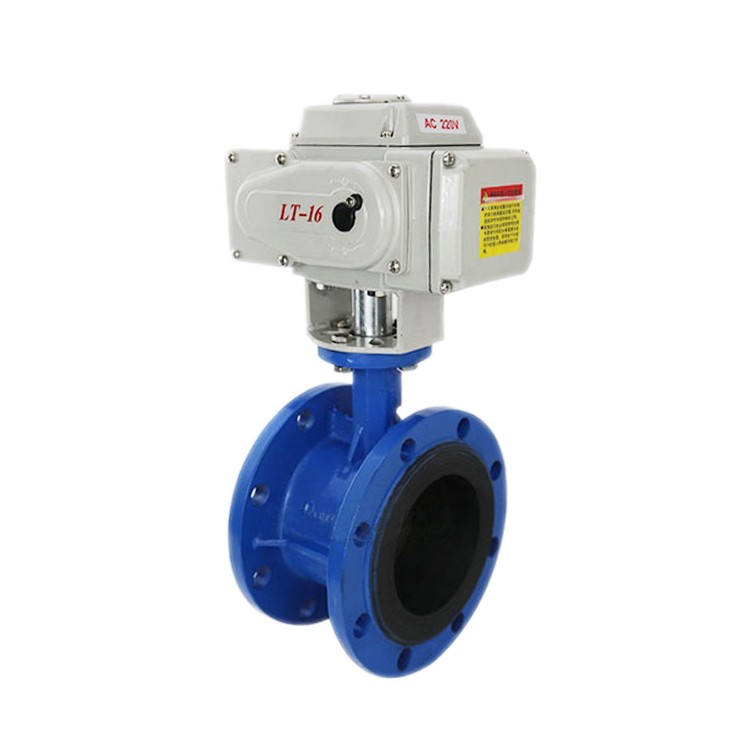
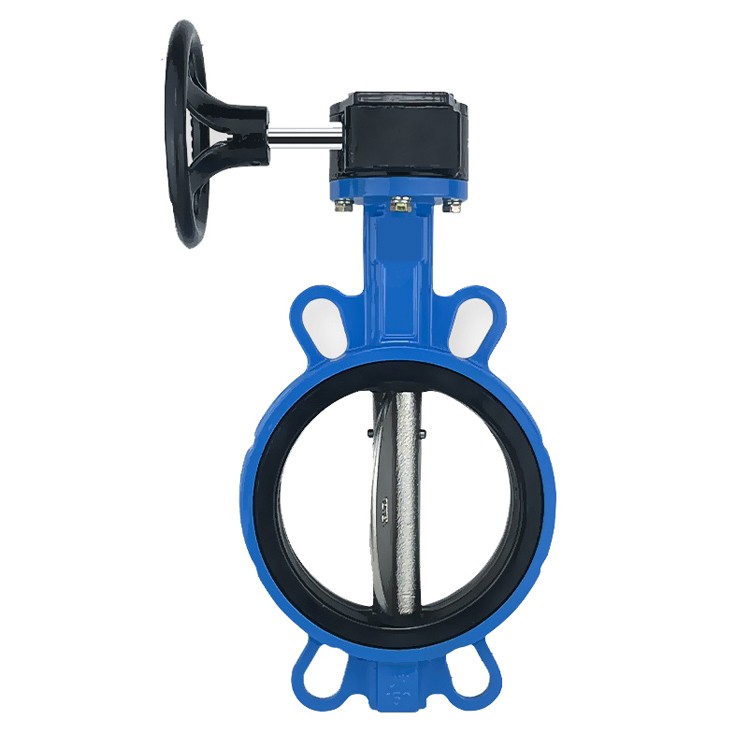

An pneumatic eccentric hemisphere valve is a valve that utilizes an eccentric valve body, eccentric ball, valve seat, and valve stem to achieve on/off control through rotational movement. Upon receiving a signal, the pneumatic actuator moves the valve core (eccentric hemisphere) back and forth within the valve body by the force of compressed air, thereby altering the clearance between the valve core and body to control the flow of fluid.
Working Principle
The operating principle of the pneumatic eccentric hemisphere valve is based on the eccentric design. The valve core surface is in the shape of an eccentric hemisphere, allowing the fluid to pass smoothly when the valve is closed, reducing flow resistance and energy consumption. When the valve is open, the valve core rotates away from the seat to avoid wear on the sealing surface; when closed, the valve core and seat tightly fit together, forming a reliable seal.
Structural Features
Off-center structure: The valve core surface is in an off-center hemispherical shape, reducing flow resistance, lowering energy consumption, and ensuring complete disengagement of the ball and the sealing surface of the valve seat during the opening and closing process, thereby avoiding wear._
Sealing Performance: The sealing pair of pneumatic eccentric hemisphere valves typically employs metal face gasket hard surface contact sealing, ensuring reliable sealing performance. The metal face of the valve seat is protected by a non-metallic elastic material, which extends its service life.
Easy Operation: Flexible operation, quick opening and closing, from fully open to fully closed in just 90° rotation, convenient for long-distance control._
Ease of Maintenance: Simple structure, easy disassembly and replacement of sealing rings, allowing for online inspection and repair, thus reducing maintenance costs._
Application Fields
Pneumatic eccentric hemisphere valves are widely used in industries such as petrochemicals, electricity, metallurgy, and papermaking. They are suitable for controlling high-pressure, high-temperature, high-viscosity, and strongly corrosive media. They possess strong flow capacity with minimal fluid resistance, making them ideal for various harsh operating conditions.


















