
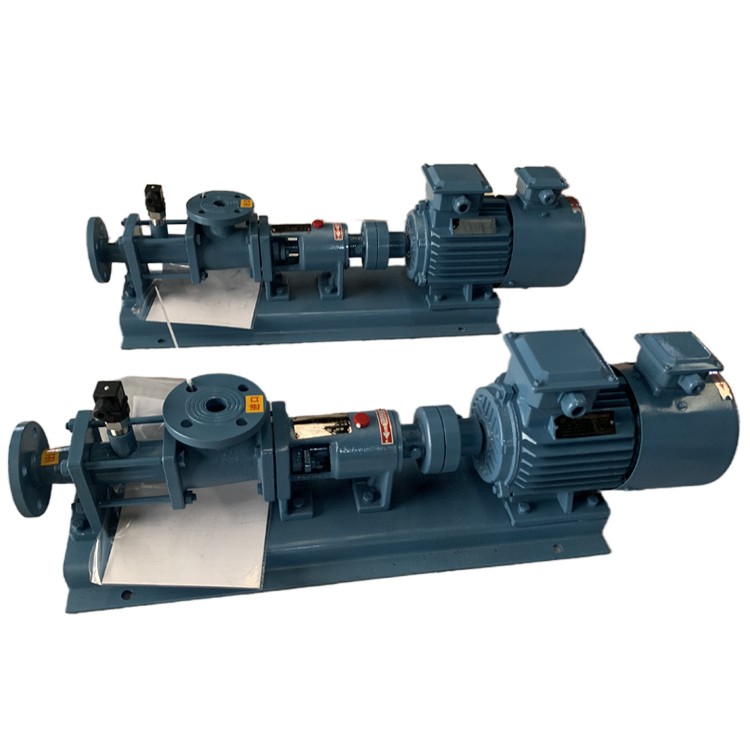

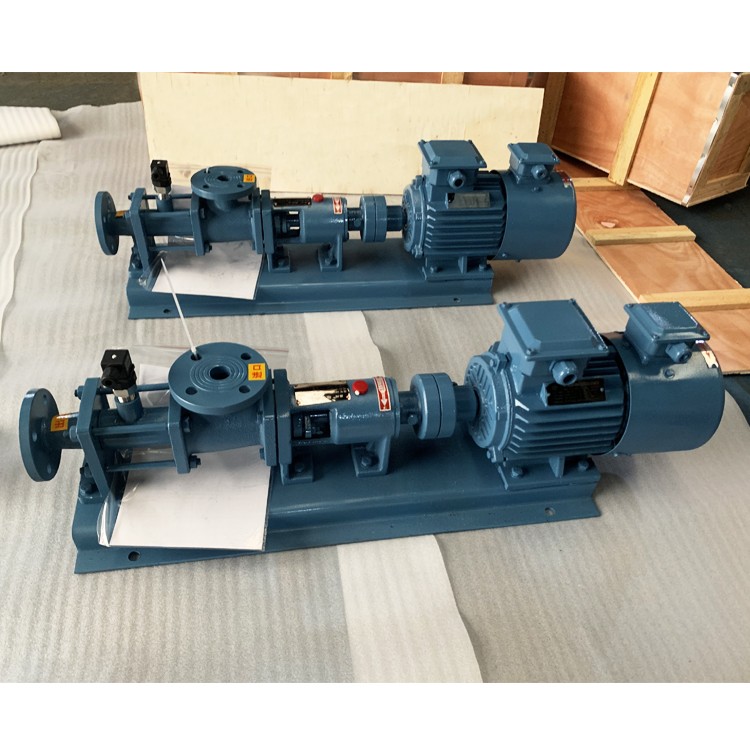













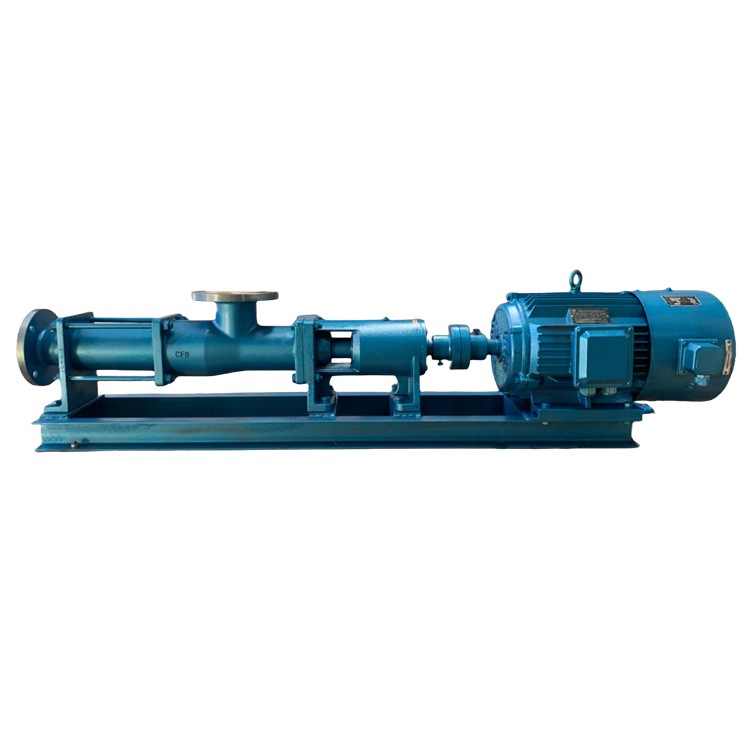
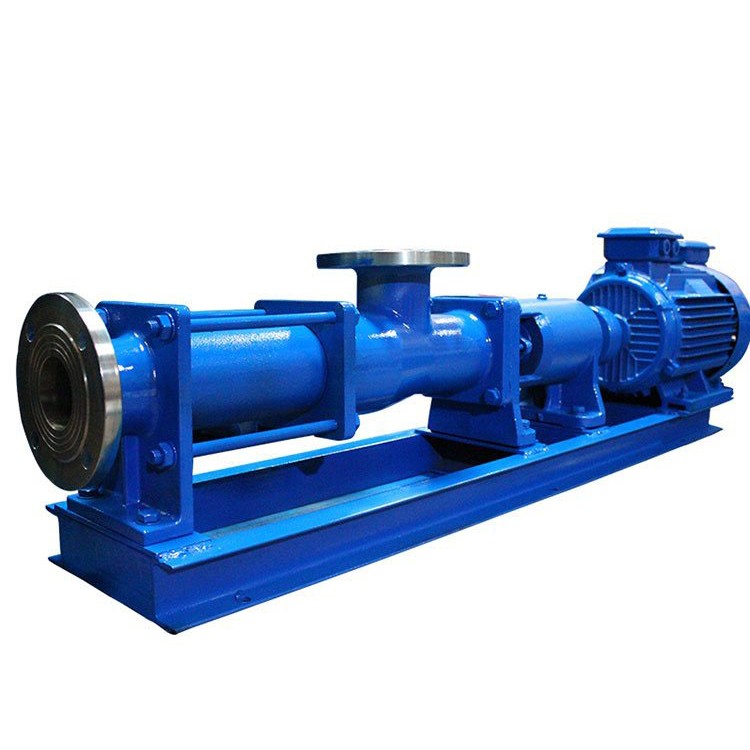
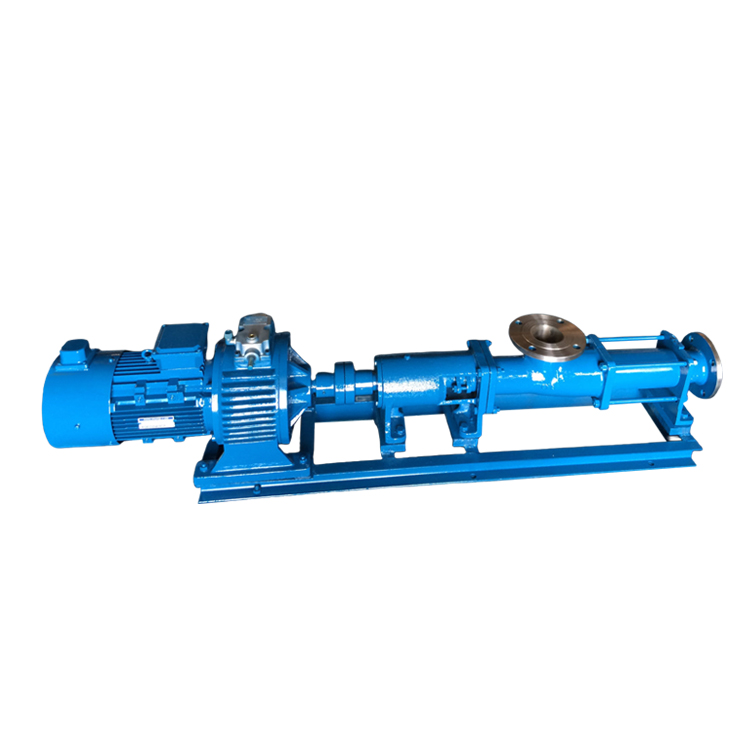
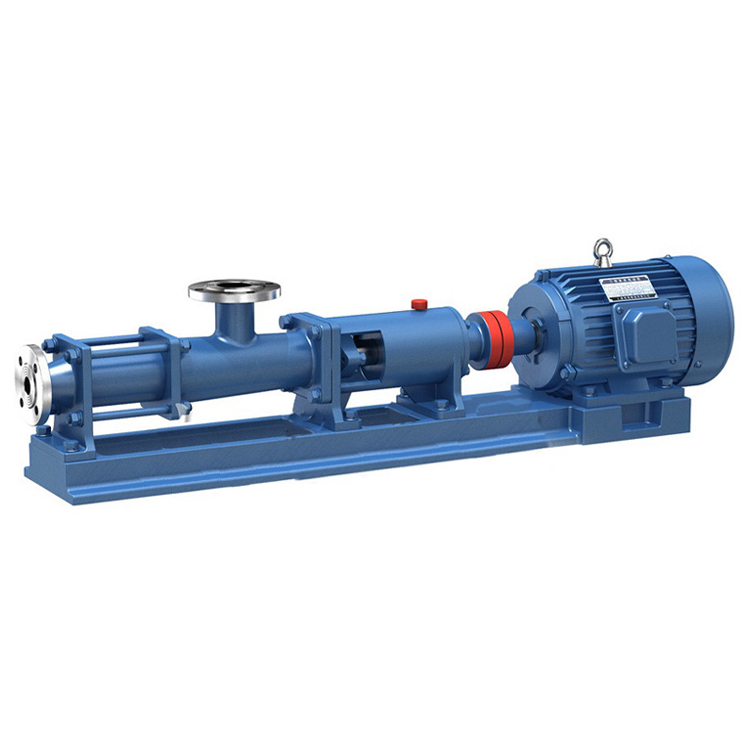
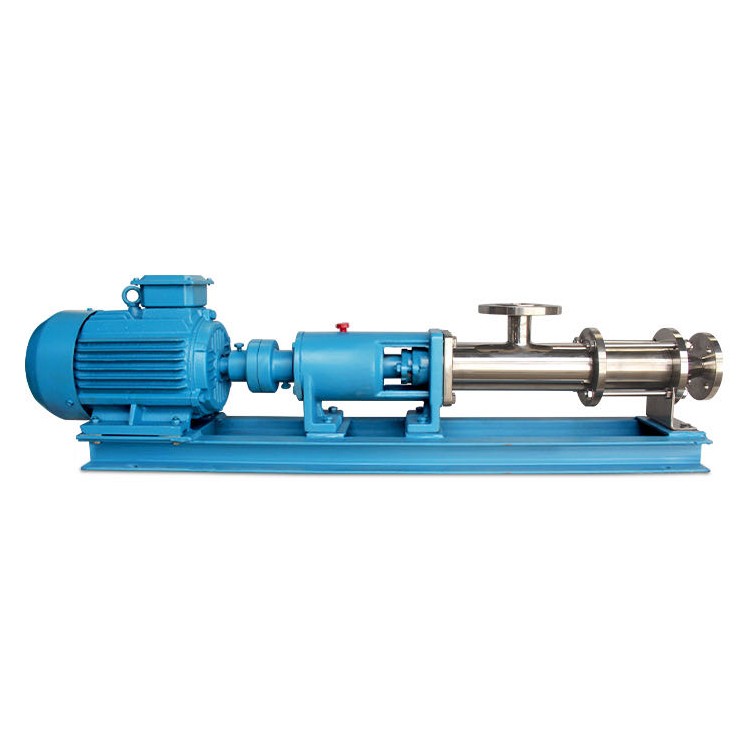
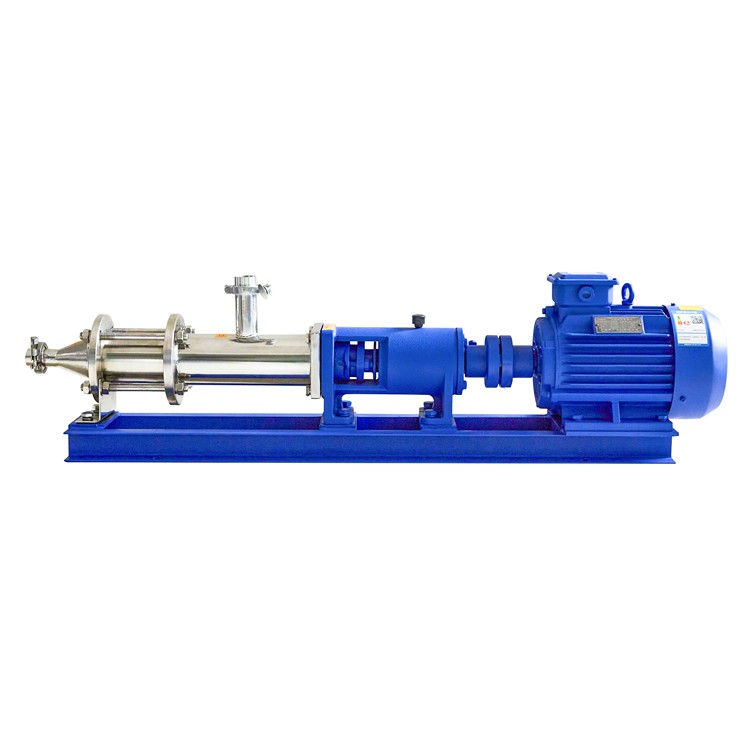

Sewage screw pumps are a type of pump that uses the rotation of screws to suction and discharge liquids, particularly suitable for transporting thick liquids like sludge and suspensions. Their working principle is based on the rotation of an eccentric single-screw within a double-screw sleeve, which moves the liquid along the spiral groove from the suction port to the discharge port.
Operating Principle
The main working components of the sludge screw pump include the eccentric helical screw (referred to as the rotor) and the screw sleeve with a double-threaded helical inner surface (referred to as the stator). As the motor drives the pump shaft to rotate, the screw rotates around its own axis while also rolling along the inner surface of the sleeve, forming a sealed chamber. With the continuous rotation of the screw, the liquid is pushed from one sealed chamber to another in a helical manner, extruded out of the pump body.
Structural Features
The sludge screw pump features a simple structure, safe and reliable operation, easy maintenance, and continuous, uniform discharge with stable pressure. It is suitable for transporting low-viscosity media, particularly suitable for suspensions containing solid particles or short fibers, as well as highly viscous media.
Application Scenario
Sludge screw pumps are widely used in sludge and wastewater treatment, effectively transporting and processing sludge and wastewater containing solids.