

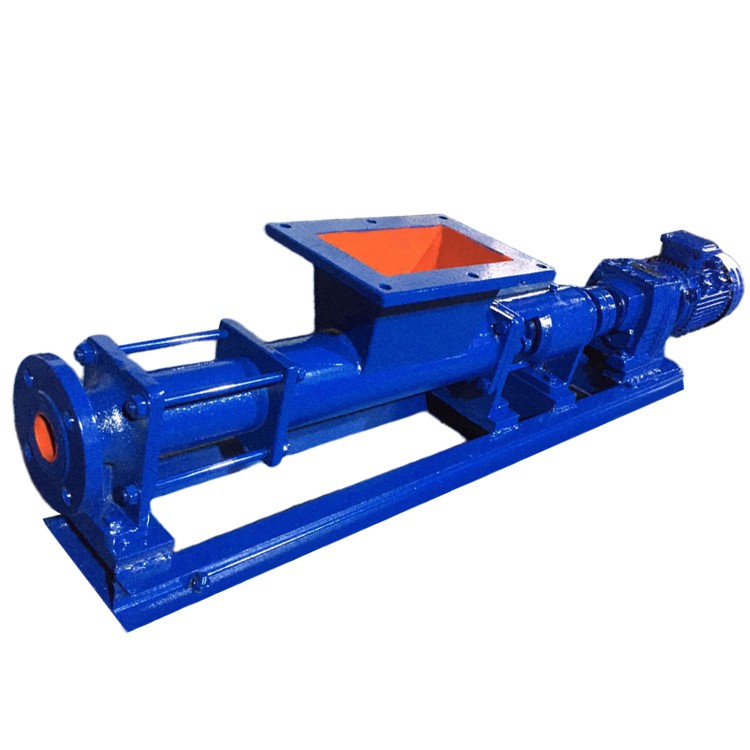













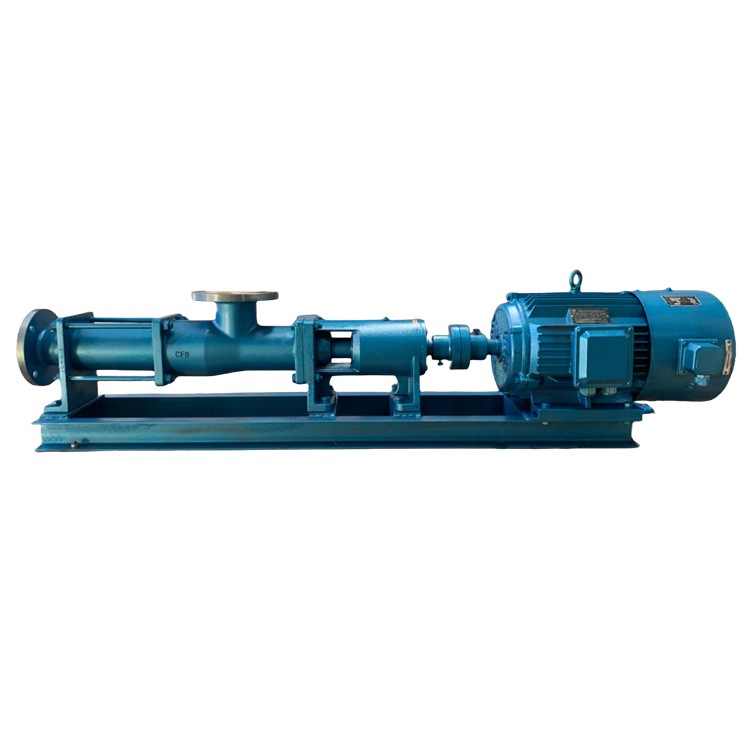
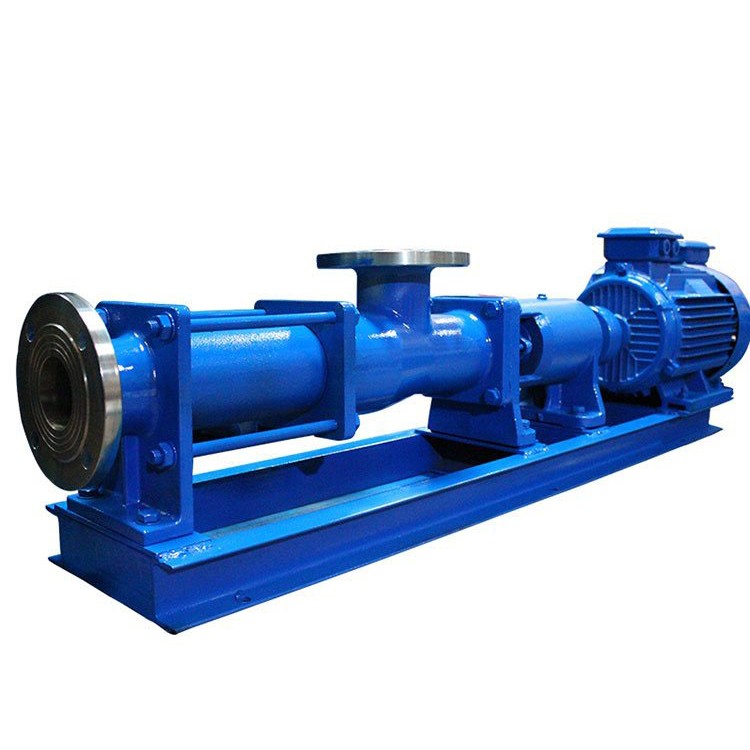
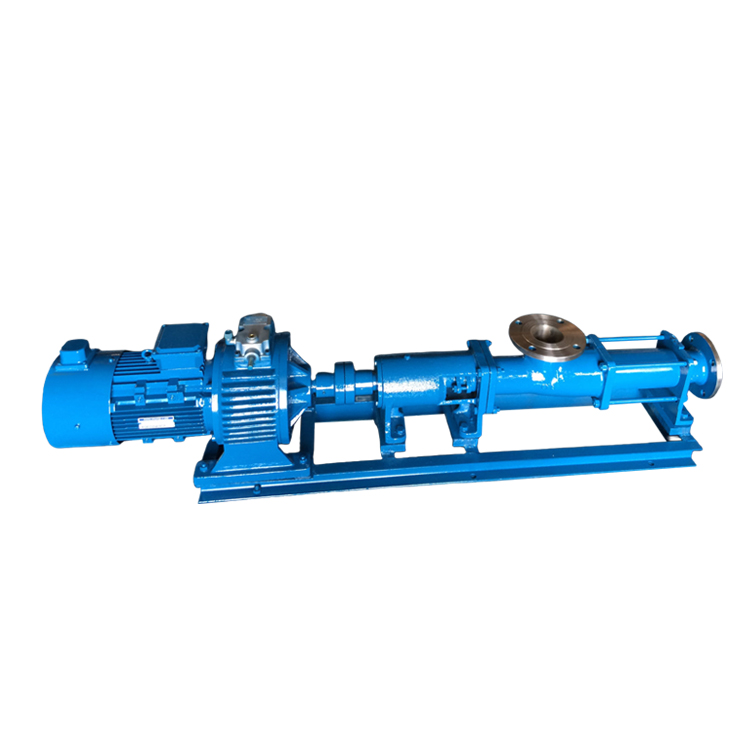
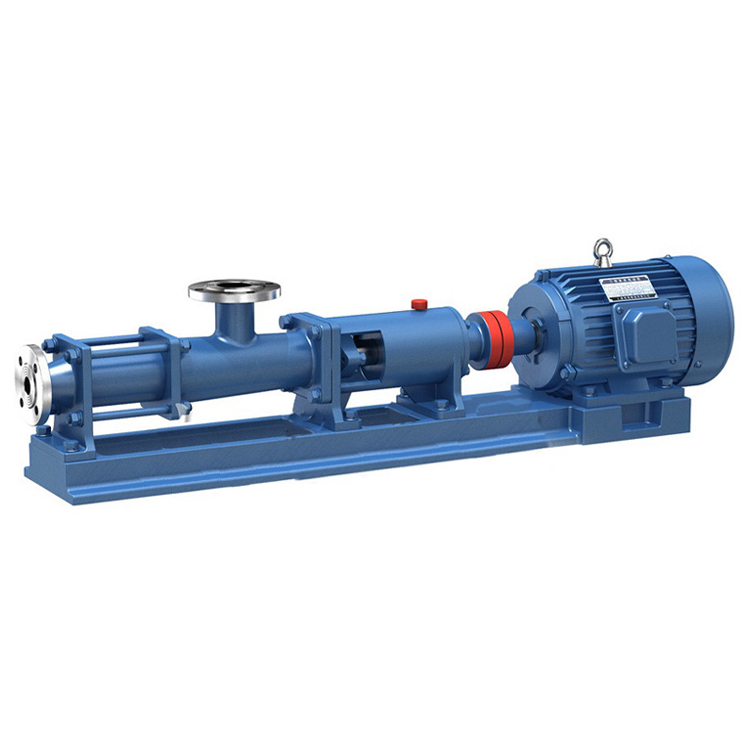
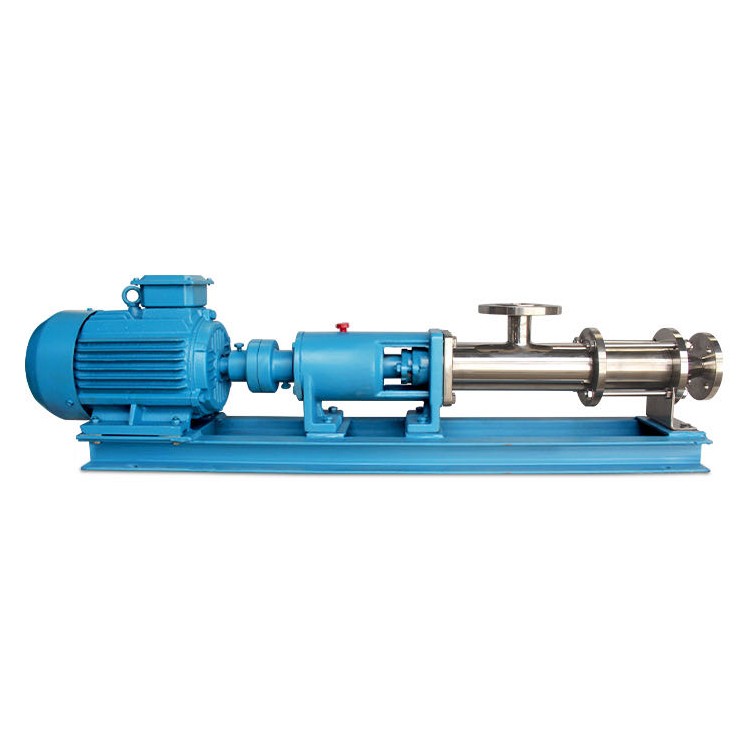
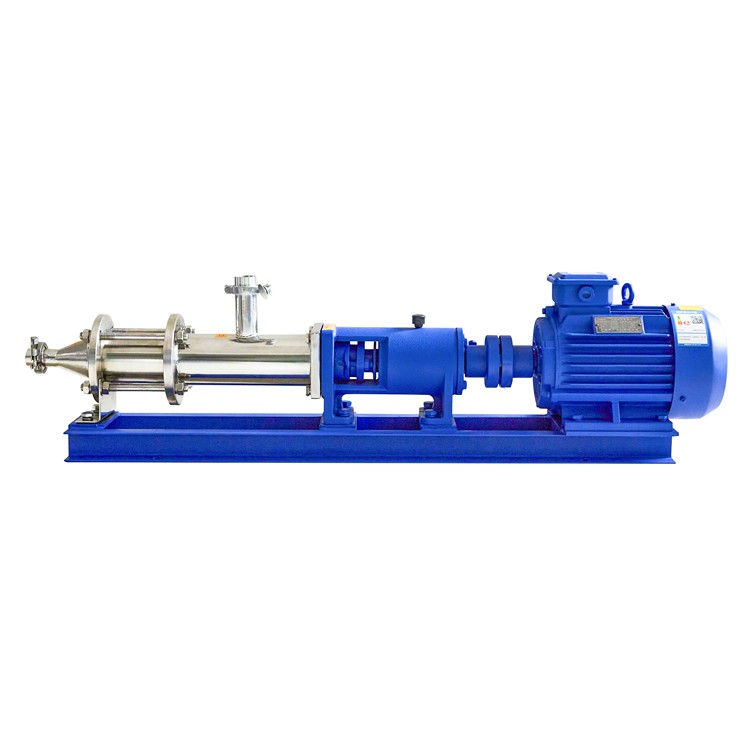

Bucket screw pump is a pump type that combines the advantages of screw pumps and buckets, mainly used for conveying high-viscosity, high-concentration, and solid-particle-containing media. Its working principle is based on the rotational movement of the screw within the pump body, propelling the material forward through the screw rotation. Due to the gap design between the screw and the pump body, the pump can accommodate the forward and backward movement of the material, while the sealing elements prevent material leakage and external air from entering the pump, thereby stably and continuously conveying various thick media.
Structural Features
The main structure of the hopper screw pump includes the inlet hopper, outlet joint, single screw, etc. The shape of the single screw and the clearance between the pump cavity are critical design parameters. The precise clearance design allows the single screw to form a sealed volume chamber as it rotates within the pump body, moving along with the rotation to transport the fluid. Additionally, the hopper screw pump can be equipped with various inlet and outlet options such as clamp quick-fit and flange types, and the pump body material can be selected from cast iron, stainless steel, and other materials based on the medium requirements.
Application Fields
Bucket screw pumps are widely used in various industrial fields:
Chemical Industry: Used for conveying various chemical raw materials, intermediates, finished products, etc.
Environmental Protection Industry: Used for conveying various sludge, wastewater, waste residue, etc., to achieve material transportation during the environmental protection treatment process.
Food Industry: Designed for conveying jam, syrup, juice, dairy products, and other thick media.
Industry: Used for conveying various liquid, paste, and powder mediums, ensuring safe and accurate material transport during pharmaceutical production.
Maintenance and Service
To ensure the long-term stable operation of the hopper screw pump, regular maintenance and upkeep are required, including:
Regular Inspections: Check for wear on components such as the pump housing, rotor, seals, etc., as well as the operating status of drive parts like the motor and reducer.
Cleaning and Lubrication: Regularly clean the pump housing and lubricate the bearings and seals to reduce wear and extend service life.