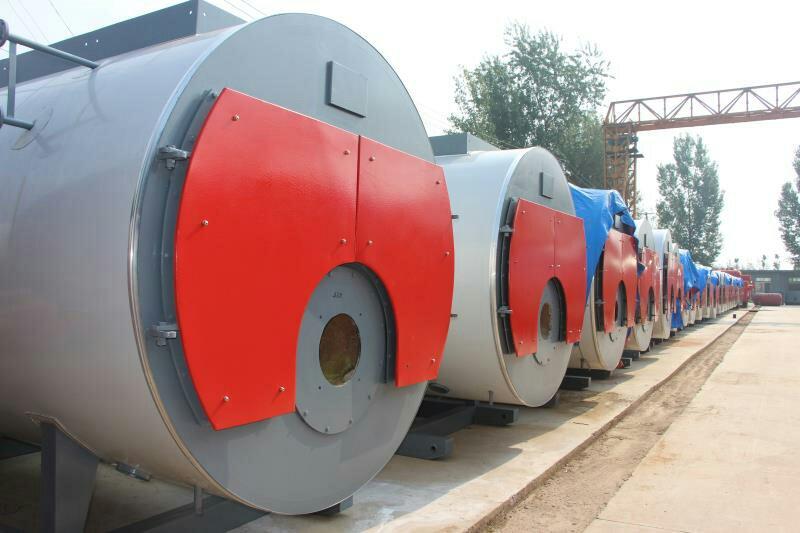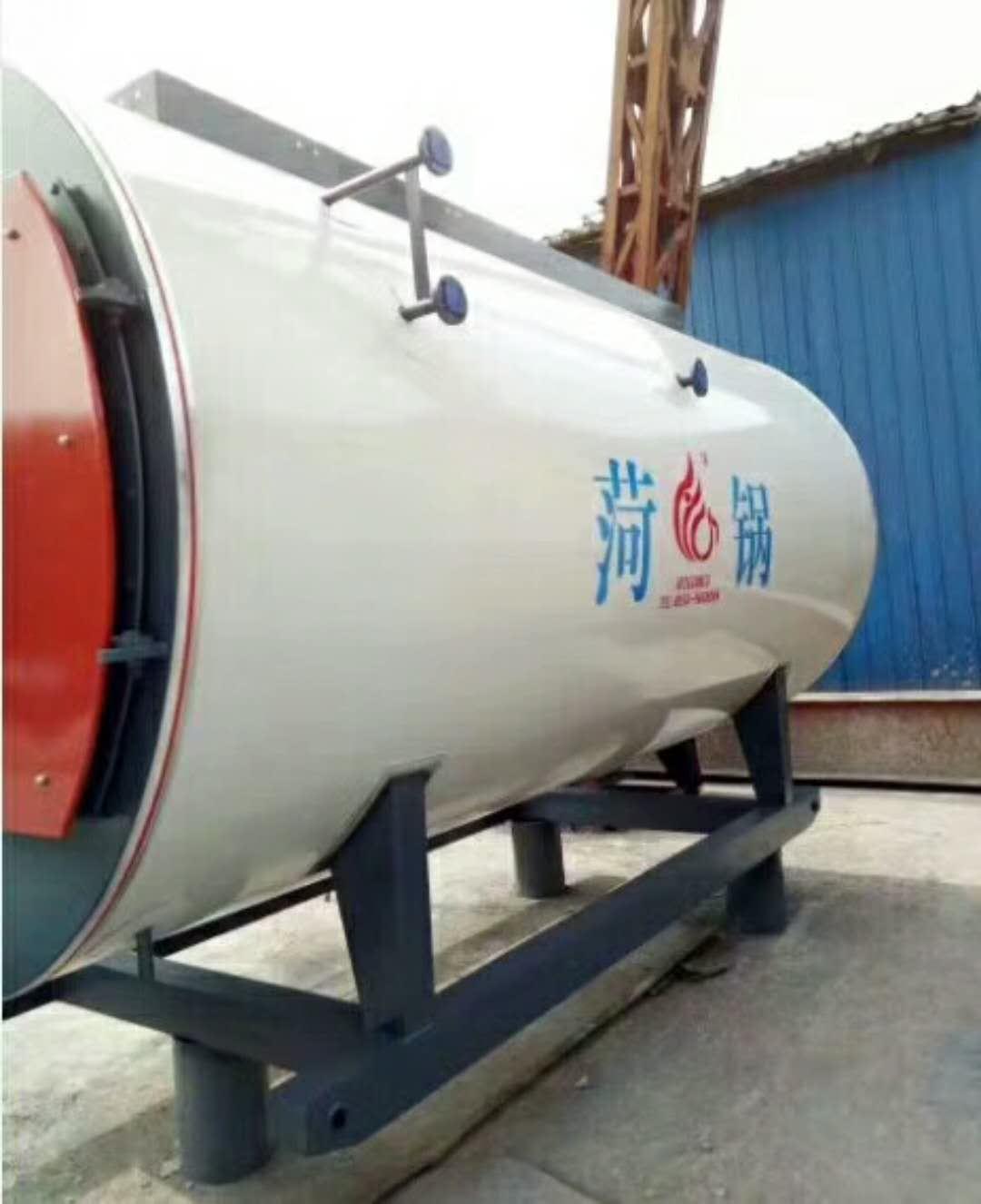



















Monoblock low nitrogen condensing boilers feature a large vapor space and an integrated high-efficiency steam-water separator, reducing steam humidity to below 3%; they employ advanced digital intelligent control technology for remote precise monitoring of the entire combustion process. Reliable imported electrical components ensure safe operation. Optional remote communication interfaces can be added to control multiple boilers in parallel, with real-time printing of boiler operation parameters. The computer memory system can record boiler faults and monitor its operation.

Comprehensive safety accessories for boilers, including water level control, pressure control, alarm devices, gas leak prevention, flame-out protection, over-temperature and over-pressure protection, explosion-proof door protection, etc. Multiple safety interlock protections ensure the equipment is free of safety hazards. The boiler is equipped with internationally advanced imported burners, ensuring complete combustion and harmful components in the flue gas below national standards, making it an environmentally friendly product.
Heze Boiler Factory Co., Ltd. is a professional manufacturer of boiler and pressure vessel equipment, and also the No.1 supplier of LPG storage tanks in China. Having evolved, it now encompasses Heze Boiler Factory Co., Ltd., Heze Boiler Factory Installation Branch, and Shandong Zhongke Neng Artificial Environment Co., Ltd.


Gas boilers include gas water boilers, gas hot water boilers, gas steam boilers, etc. The gas hot water boiler is also known as gas heating boiler and gas bathing boiler. Gas boilers, as the name implies, refer to boilers that use gas as fuel. Compared to oil-fired boilers and electric boilers, gas boilers are the most economical choice. Therefore, most people opt for gas boilers as equipment for steam, heating, and bathing.
Gas boilers include models such as the KS-Q Gas Hot Water Boiler, CLHS (CWNS) Gas Hot Water Boiler, and LHS (WNS) Gas Steam Boiler, among others. The gas hot water boilers encompass both gas heating boilers and gas bathing boilers. With the completion of the national "West Gas East Transport" project, gas boilers have gradually become the first choice for many.
The "Special Equipment Safety Supervision Regulations" define boilers as equipment that uses various fuels, electricity, or other energy sources to heat the contained liquid to certain parameters and output thermal energy. The scope includes pressure steam boilers with a volume of 30L or more; pressure hot water boilers with an outlet water pressure of 0.1MPa or more (gauge pressure) and a rated power of 0.1Mw or more; and organic heat carrier boilers. [1]
Burner
The construction of the gas burner consists of the following 5 systems:
1. Air Duct System
The function of the air supply system is to deliver air of a specific wind speed and volume into the combustion chamber. Its main components include: the housing, fan motor,
Fan impeller, air gun nozzle, air door controller, air door dampers, cam adjustment mechanism, diffuser disk.
2. Ignition System
The function of the ignition system is to ignite the air-fuel mixture, with main components including: ignition transformer, ignition electrode, and high-voltage ignition cable. A safer type of ignition system is the electronic pulse ignition, widely used by manufacturers like Zheye Energy Saving for gas boilers. It is convenient and time-saving, requiring only a finger press, and boasts high safety. It prevents accidents caused by unexpected extinguishing, as the control system can promptly close the solenoid valve and cut off the gas path if the flame goes out.
3. Monitoring System
The function of the monitoring system is to ensure the safe and stable operation of the burner, with main components including flame monitors, pressure monitors, and temperature monitors (as shown in the following figure).
4. Fuel System
The function of the fuel system is to ensure the fuel required for the burner's combustion. The fuel system of oil-burning burners mainly includes: fuel pipes and connectors, fuel pumps, solenoid valves, nozzles, heavy oil preheaters. Gas-burning burners mainly have filters, regulators, solenoid valve groups, ignition solenoid valve groups, and fuel butterfly valves.
5. Electric Control System
The electrical control system serves as the command and coordination center for all these systems, primarily utilizing programmable controllers. Different controllers are paired with different burners, with common types including the LFL series, LAL series, LOA series, and LGB series. The main difference among them lies in the varying time intervals of their program steps.