
























Babjehec Natural Gas Storage Tank - Shandong Hezhou Group
1.2.6 LNG Storage Tank Maintenance and Care Procedure
Operation technicians at liquefied natural gas stations must be familiar with the structure and principles of the storage tanks, and strictly follow the operational procedures for handling liquefied natural gas.
2. Operators of liquefied natural gas must be familiar with the performance and principles of storage tank accessories (pressure gauges, level gauges, temperature gauges, vacuum gauge valves).
3. LiquefiedNatural Gas Storage TankThe outer cylinder is a pressure-vacuum vessel, welding operations under vacuum are strictly prohibited.
4. Regularly inspect the outer cylinder of the storage tank for signs of icing. If icing is detected, promptly report to the on-duty supervisor and station manager. The on-duty supervisor or station manager should immediately contact the manufacturer to identify the cause and initiate immediate action. Closely monitor the changes in icing during the process. If there is a tendency for the incident to escalate, immediately proceed with tank draining or stop the filling operation, and close the relevant emergency cut-off valves at the inlets and outlets.
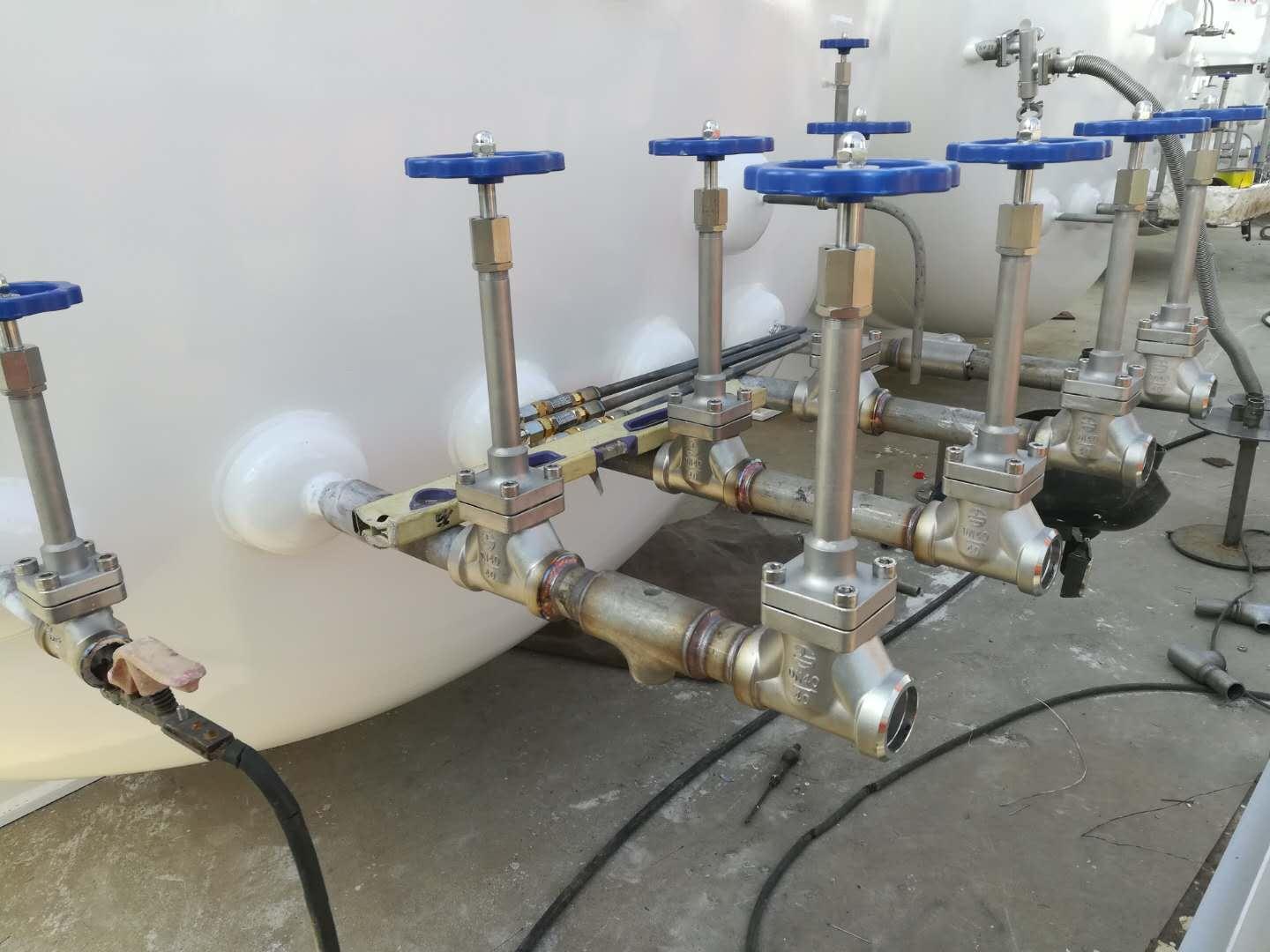
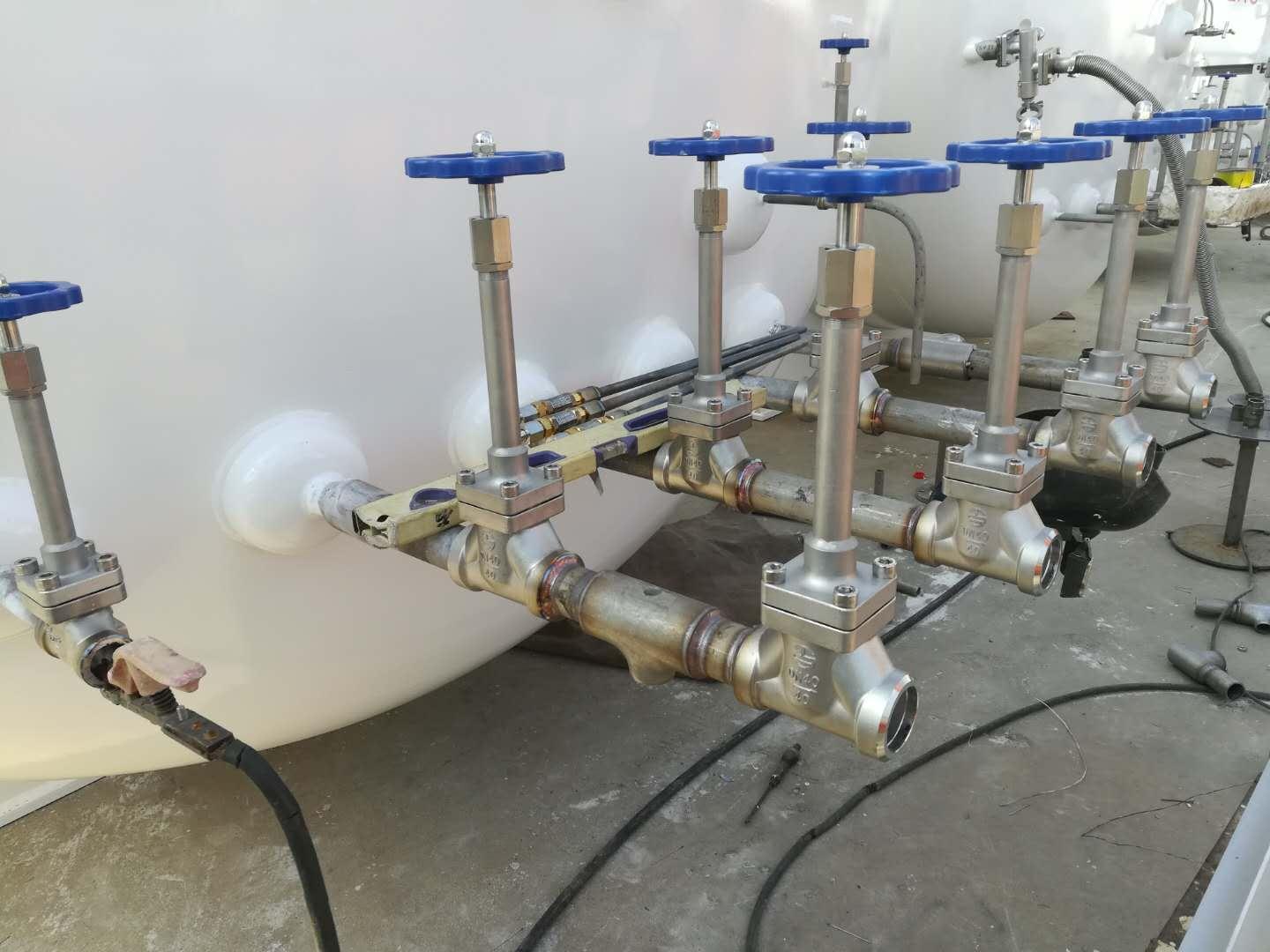
5. Regularly inspect the storage tank's connecting pipes and valves, observe for frost formation, and report any issues promptly to the on-duty supervisor. The on-duty supervisor will then arrange for personnel to address the situation.
6. Regularly inspect the pressure gauge, level gauge, and thermometer of the storage tank to observe if the displayed values are normal.
7. Regularly inspect the sealing performance and operation of the connecting valves to ensure normal operation.
8. Regularly inspect and calibrate safety valves, pressure gauges, level gauges, and thermometers according to regulations, ensuring proper operation and timely updating of the equipment inventory.
9. Regularly perform anti-corrosion treatment on the storage tank's outer shell and maintain the appearance of the tank's pressure gauge, level gauge, and thermometer.
10. Regularly remove rust and apply corrosion protection to areas prone to rust, such as the pressure and level control instruments' three-way valves on storage tanks.
11. Conduct annual or as-needed vacuum level inspections of the storage tanks to monitor their operational status.

Procedures for Operating Low-Temperature Natural Gas Storage Tanks
1.1 Introduction to Station Pressure Regulation Process
附 a partial process flow diagram of the pressure-regulating area, with equipment numbers indicated in the process flow diagram for operations required.
1.2 Pre-pressing Preparation
1.2.1 Tool Preparation
Explosion-proof wrench, two pairs of gloves, and two sets of protective gear.
1.2.2 Pre-Work Preparation
Wear protective gear, including static-resistant clothing, static-dissipative shoes, and safety helmets, etc.
(2) Ensure that electronics like phones and computers, which can cause static electricity, are placed in a safe area. Check if the surrounding environment is secure and meets the operational requirements.
(3) Before entering, touch the static discharge device with both hands to release static electricity.
(4) Ensure that all pressure-regulating tools, such as explosion-proof wrenches, are carried.
(5) Check that the tank's pressure gauge, level gauge, thermometer, flammable gas detector, and safety valve are all operating normally.
(6) Inspect that the pipeline valves, pressure gauges, and safety valves are in normal working condition.
(7) Prepare all explosion-proof tools






















