

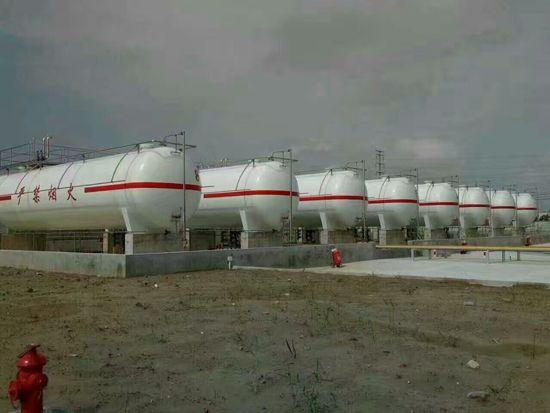
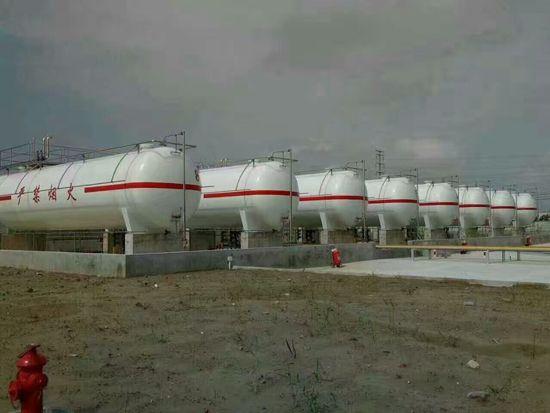
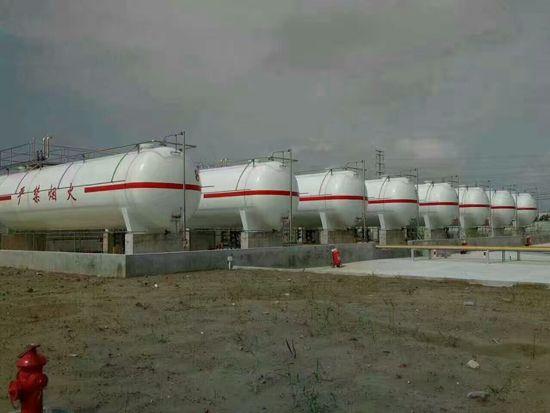
















Babjehec LPG Storage Tanks, Manufacturer of LPG Storage Tanks
The Diaphragm Liquefied Gas Tank is mainly composed of an electric motor, base, crankcase, crank and connecting rod motion mechanism, cylinder components, oil and gas piping, electrical control system, and some accessories. It increases the gas pressure through single-stage or multi-stage compression to meet the customer's requirements for process parameters such as pressure, flow rate, and temperature. The motor drives the crank, connecting rod, and piston to propel hydraulic oil, which in turn drives the diaphragm, compressing the medium through the diaphragm's vibration. The diaphragm press is a special type of volumetric liquefied gas storage tank, with its working cylinder divided into two parts by a diaphragm, the upper part called the gas cavity and the lower part called the oil cavity. During operation, the piston moves upwards to drive the hydraulic oil, which in turn drives the diaphragm to expel the compressed medium outside the diaphragm cavity. The diaphragm liquefied gas storage tank works by compressing the gas through diaphragm deformation. As the diaphragm moves, it must tightly adhere to the cylinder cover cavity surface with minimal clearance between the cylinder body cavity surface. By theoretically analyzing and scientifically selecting the cavity curve radius, maximum deflection, and deflection index, it ensures a larger volume, allowing the diaphragm to operate under nearly equal strength.
Liquefied gas storage tanks have the following advantages and features:
1) The whole machine structure design is rational, with smooth and reliable operation, low vibration and noise, and easy operation and maintenance. 2) The cylinder components use a structure without an oiling disk, reducing the difficulty of assembly process; fewer sealing surfaces; and an alarm for medium leakage, enhancing the overall reliability. 3) The new diaphragm cavity curve improves the volume efficiency of the liquefied gas storage tank and extends the service life of the vulnerable components like diaphragms and gas valves. 4) The built-in oil pump station provides pressure-stable, clean, and fully-cooled lubricating oil for the liquefied gas storage tank and cylinder operation, addressing the issue of oil leakage in the original external liquefied gas storage tank. 5) A highly automated control system ensures the safe operation of the equipment. 6) The entire equipment is mounted on a skid base, facilitating transportation, installation, and management.

Liquefied gas storage tanks are pressure vessels, and national regulations require annual inspections (with a recommended lifespan of 10 years for simple pressure vessels). Since inspections are conducted, there are products that pass or fail. Generally, if a company's liquefied gas storage tank fails an inspection due to improper usage procedures or inadequate maintenance, it must be decommissioned. Decommissioning such special equipment requires a specific process. Air compressor liquefied gas storage tanks are often considered safe, but if any stage of manufacturing, design, installation, or usage management is not standardized, and various risks accumulate, an explosion could occur, leading to more severe consequences. Therefore, we must adhere to the operational instructions for our air compressor liquefied gas storage tanks and avoid shortcuts or purchasing inexpensive, unqualified tanks. Tanks up to 1 cubic meter with a capacity of 10 kg or less are considered simple pressure vessels and do not require inspection. According to national regulations, they are exempt from inspection for the first 7 years from the date of manufacture on the label, but this exemption applies only to the tank itself.