























babjehec specializes in the production of LPG tanks
The diaphragm liquefied gas tank is primarily composed of an electric motor, base, crankcase, crank and connecting rod motion mechanism, cylinder components, oil and gas pipeline, electrical control system, and some accessories. It increases gas pressure through single or multi-stage compression to meet the customer's requirements for pressure, flow rate, temperature, and other process parameters. The electric motor drives the crank, connecting rod, and piston to propel hydraulic oil. The hydraulic oil then drives the diaphragm, which in turn compresses the medium through vibration. The membrane press is a special volume liquefied gas storage tank, with its working cylinder separated into two parts by a diaphragm. The upper part of the diaphragm is called the gas chamber, and the lower part is called the oil chamber. During operation, the piston moves upwards to drive the hydraulic oil, which in turn drives the diaphragm to expel the compressed medium outside the membrane cavity. The diaphragm liquefied gas tank compresses the gas through diaphragm deformation. During movement, the diaphragm must closely adhere to the cylinder head membrane cavity surface with minimal gaps between it and the cylinder body membrane cavity surface. Through theoretical analysis and scientific selection of the membrane cavity curve radius, maximum deflection, and deflection index, a larger volume is ensured, allowing the diaphragm to work under approximately equal strength.
Propane gas tanks offer the following advantages and features:
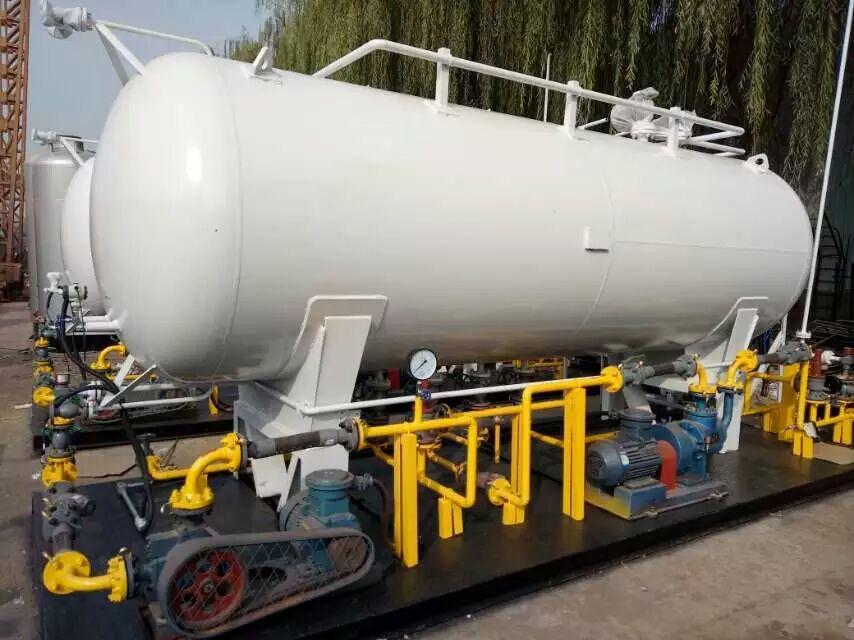
1) The complete machine structure design is rational, with stable and reliable operation, low vibration, low noise, and easy operation and maintenance. 2) The cylinder components use a structure without an oil distribution disk, reducing assembly difficulty and the number of sealing surfaces; alarms when the compressed medium leaks, enhancing the overall reliability. 3) The new diaphragm cavity curve improves the volumetric efficiency of the liquefied gas storage tank and extends the lifespan of the vulnerable diaphragm and gas valve components. 4) The built-in oil pump station provides pressure-stable, clean, and well-cooled lubricating oil for the liquefied gas storage tank and lubrication cylinders, addressing the issue of oil leakage in the original external storage tank. 5) A highly automated control system ensures the safe operation of the equipment. 6) The entire unit is mounted on a skid base for easy transportation, installation, and management.

Attachment: Safety valves and pressure gauges are mandatory for strict inspection. It is essential to report for inspection at the local quality supervision authority. This ensures better user experience. If the pressure gauge fails, your terminal's gas consumption will be unknown, and you cannot use it with peace of mind, fearing issues with the liquefied gas storage tank. Both the air compressor and the storage tank itself have safety valves. When pressure exceeds the safe setting of the safety valve, it will automatically release pressure, and the pressure gauge plays a significant role. Therefore, daily accessories of special equipment must be used with caution. In case of any issues, first confirm if the steel plate thickness of the storage tank meets standards; if not, identify the cause of steel plate corrosion. Also, reconfirm if the safety valve, pressure gauge, and other auxiliary equipment meet requirements. If all are found to be non-compliant, the local technical supervision authority of the enterprise will issue a notice of non-compliance. Upon receiving the notice, the enterprise should replace the new pressure vessel.






















