






















LNG Vehicle Fueling Station Process
The process flow of LNG refueling stations consists of four processes: unloading, pressure regulation, refueling, and pressure release.
1. Unloading Process
There are three methods for transferring LNG from tanker trucks or containers to the LNG storage tanks at gas stations: turbo-charger unloading, low-temperature pump unloading, and combined unloading using both a turbo-charger and a low-temperature pump.
1) Turbocharger unloading: After unloading, the tanker needs to be depressurized by 0.2 to 0.3 MPa, requiring the release of a large volume of gas, which takes a considerable amount of time.
2) The vapor space of LNG tank trucks and storage tanks is connected, and the gas is transported to the storage tank through low-temperature pumps. Disadvantages: High energy consumption and complex process flow.
3) Combined unloading of turbochargers and low-temperature pumps: First, connect the vapor space of the LNG tank truck and storage tank, then disconnect them. During the unloading process, use the turbocharger to moderately increase the pressure of the tank truck, and use the low-temperature pump to transfer LNG to the storage tank. Disadvantages of 30, 60, and 100 cubic meter LNG storage tanks: They consume electricity, produce vented gases, and have complex processes.
More often use the second unloading method.
2. Pressure Regulation Process
The pressure inside the vehicle's gas cylinder is relatively high, typically ranging from 0.5 to 0.8 MPa. However, for transportation and storage, lower pressure is preferable. Therefore, before refueling the car, the tank needs to be pressurized. There are three methods: pressure increase with a booster, low-speed pump circulation for pressure increase, and combined pressure increase using both a booster and a low-speed pump circulation.
3. Aerated process
After being pressurized by a low-temperature pump, the gas is metered and then filled into vehicle gas cylinders by a gas filling machine, available in single-line and dual-line configurations.
When the pressure of the vehicle-mounted gas cylinder is low, an overhead sprinkling method is used to reduce pressure and minimize emissions.
When the pressure of the vehicle-mounted gas cylinder is high, a dual-line filling method is used, and the gas inside the cylinder is recycled back into the storage tank.
4. Pressure Relief Process
Excess pressure is released through the safety valve.

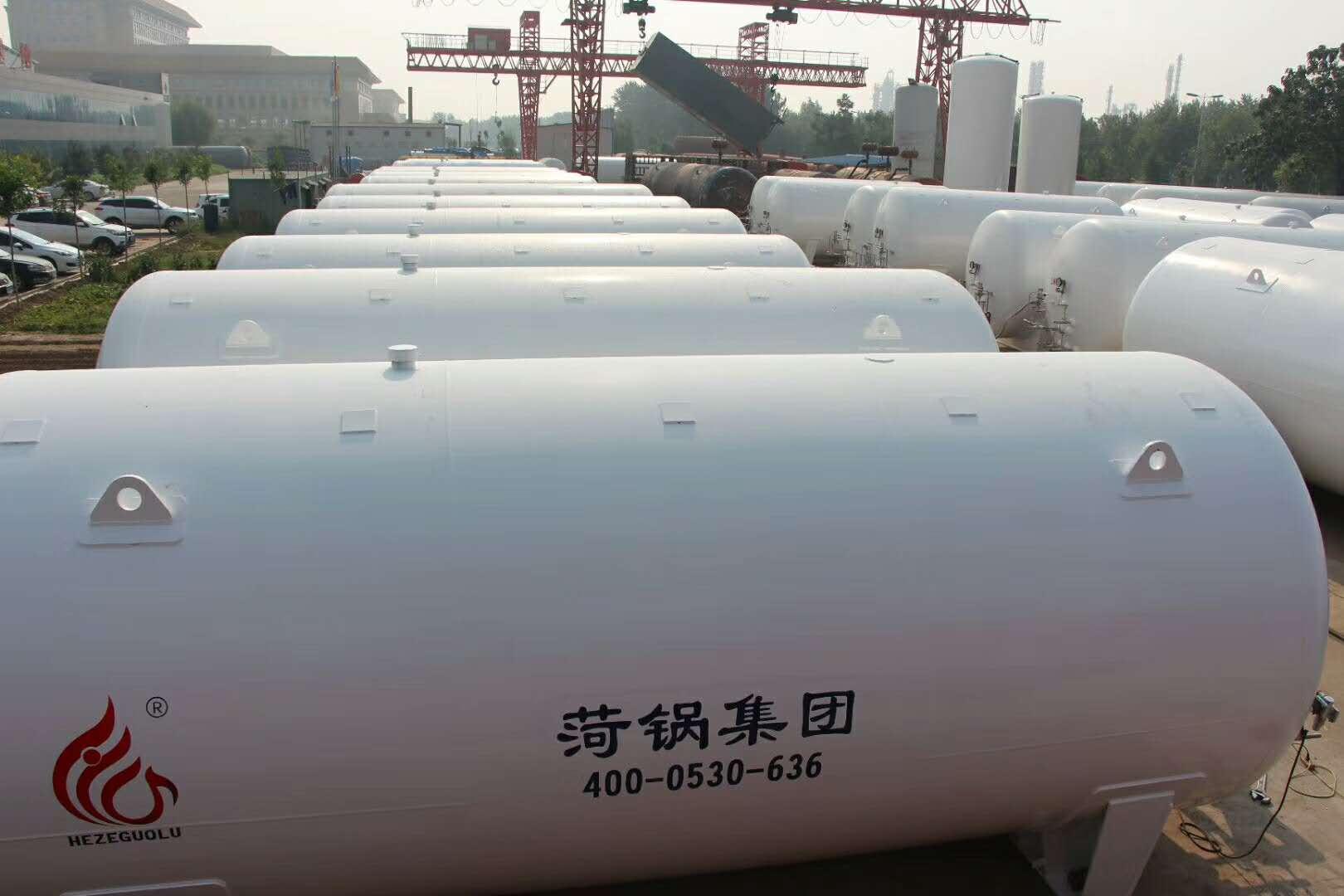
Low-temperature storage tanks are primarily used in the industrial gas sector, which has a broad range of applications. Industries such as steel mills, chemicals, oil, food, and aerospace all require gases. The industrial gases like oxygen, nitrogen, and argon, which are in high demand, are separated from air using air separation equipment, compressed, liquefied, and then separated based on their different boiling points before being stored in low-temperature storage tanks.
The company boasts two sandblasting rooms, with all tanks being treated using the pneumatic steel shot sandblasting rust removal process, ensuring both the exterior quality and paint quality. (After the overall sandblasting and rust removal, the paint adhesion is enhanced, significantly extending the lifespan of the paint.)
Each unit undergoes hydrostatic testing to ensure equipment strength and safety; each unit is tested for airtightness to guarantee sealing performance. After hydrostatic testing, the internal air is blown clean; and plastic covers are used to seal each pipe opening to prevent secondary contamination from the outside.
Huzhou Boiler Factory Co., Ltd.'s Pressure Vessel Division primarily produces 5-200 cubic meter liquefied gas storage tanks, anhydrous ammonia storage tanks, etc. The series of liquefied petroleum gas storage tanks are designed, manufactured, and inspected in strict accordance with GB150-2011 standards. They utilize Q345R steel plates specifically for pressure vessels, are rolled using CNC coil equipment, and are焊接 with full automatic gas shielded welding technology, ensuring strong and aesthetically pleasing welds. After passing through an overall annealing furnace for heat treatment, the tanks have better internal stress relief, enhanced material toughness and hardness, and offer superior performance compared to resistance wire heat treatment. The liquefied gas storage tanks undergo 100% X-ray inspection to ensure that the steel plates and welds meet technical requirements. High-pressure water jet small steel shot blasting is used for rust removal, which is much more effective than manual or abrasive wheel polishing. Additionally, applying four layers of paint—two anti-corrosion and two topcoats—guarantees the tanks do not require repainting for many years. Each tank is inspected and certified by the Quality and Technical Supervision Bureau before shipment, ensuring nationwide applicability.






















