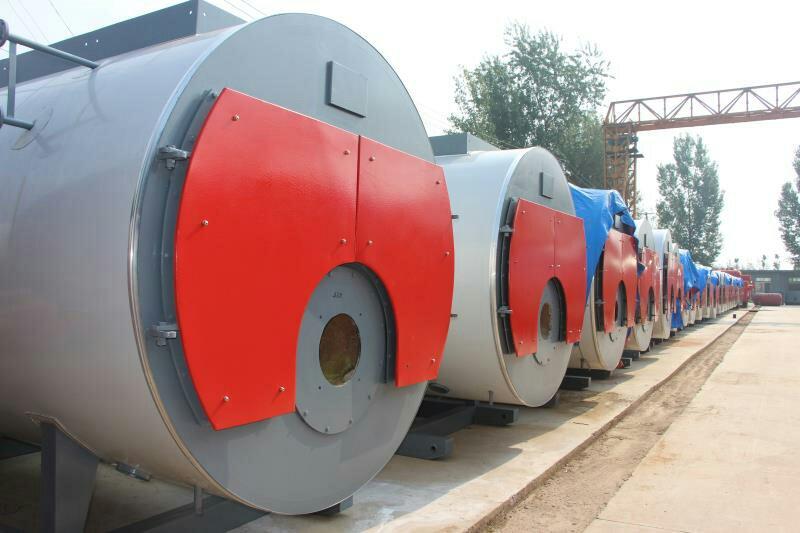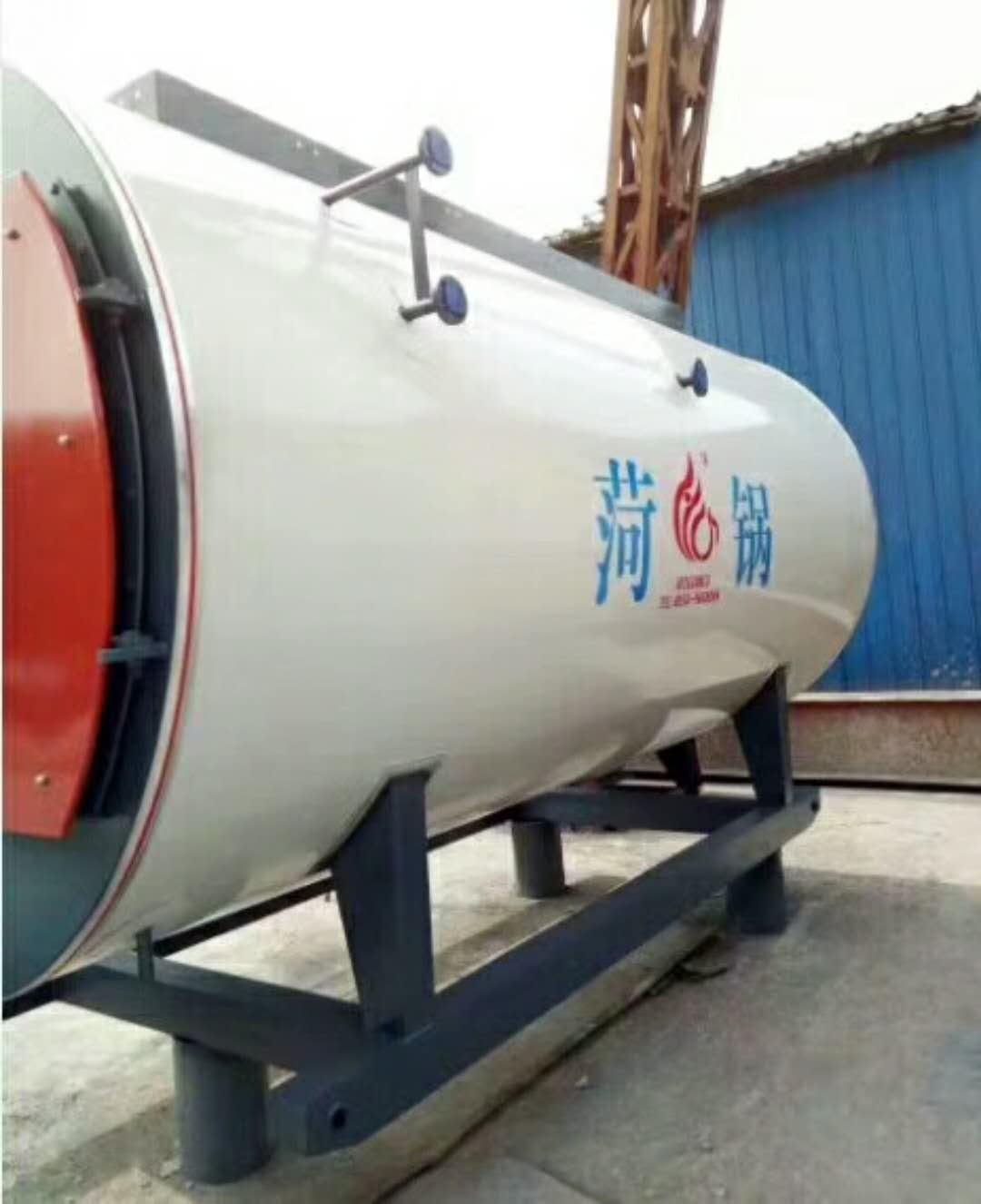
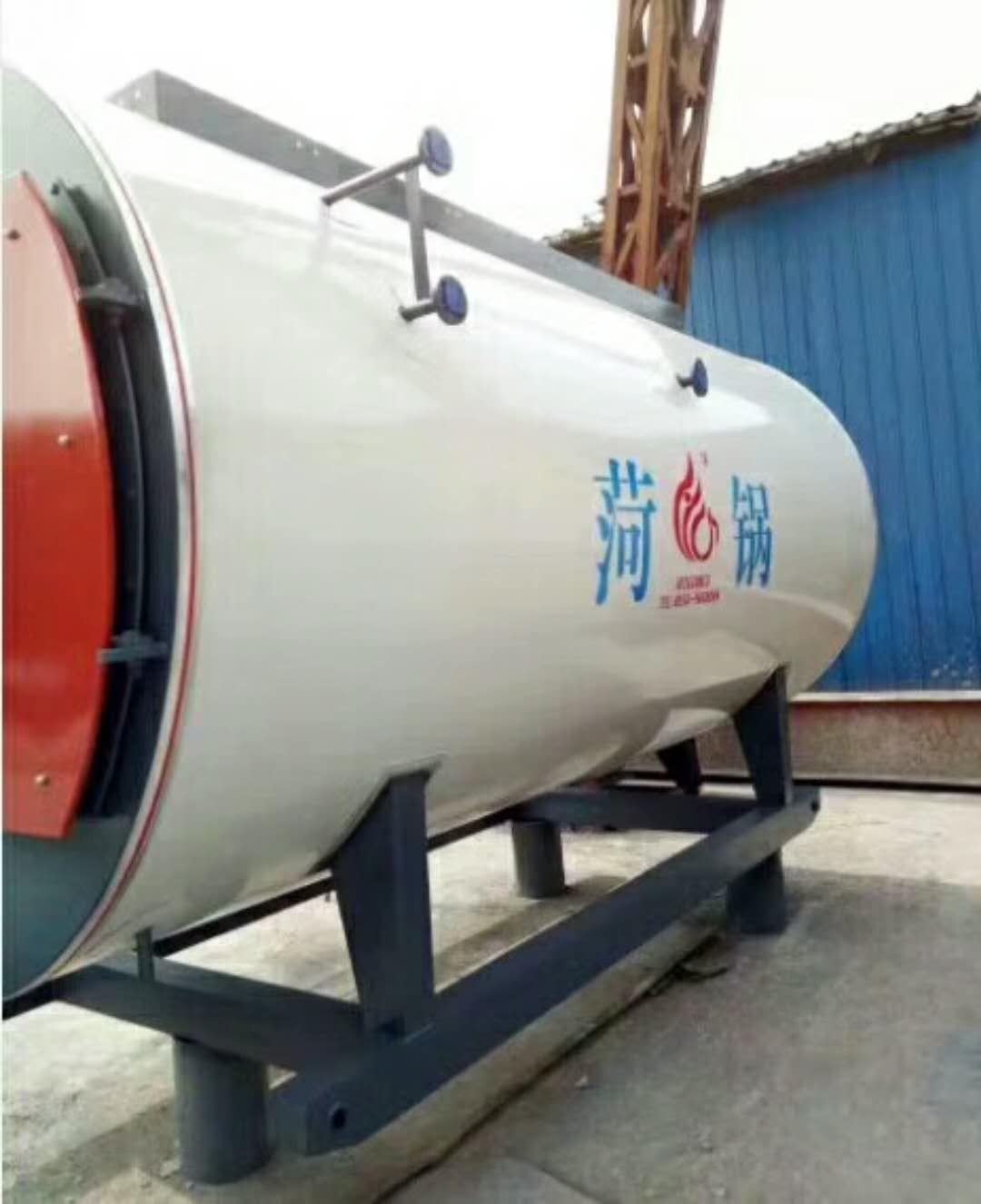




















HezeBoilers are primarily dedicated toBoilerResearch and development, production. Main products: Coal-fired boilers, gas-fired boilers, biomass boilers, and oil-fired boilers. Fields involved: industrial steam for paper mills, dyeing and printing factories, chemical plants, and more.;Heating and bathing systems for hotels, hospitals, etc.
1 ton of gasHot WaterBoilerHeatingDetails:
Rated thermal power: 0.7 MW, heating area:10000 square meters, applicable fuels: natural gas, city gas, liquefied gas, natural gas consumption:75Cubic meters per hour, for detailed parameters of the boiler, pleaseElectricityPlease provide the Chinese content to be translated into American English.
1-ton gas boiler features:
The entire unit is equipped with overheat protection (the burner automatically stops working and emits an alarm when the water temperature inside the furnace exceeds a high limit), secondary overheat protection (the secondary circuit is automatically disconnected when the boiler shell temperature exceeds 105℃), dry burning and low water protection (the boiler stops working and emits an alarm when the water level is below an extremely low level), and electric leakage protection (the power supply is automatically disconnected if the control system detects electrical leakage or a short circuit).
Boilers are designed with atmospheric pressure structure, operating in a non-pressurized state, posing no safety risk. They are insulated with high-grade centrifugal glass wool in multiple layers and encased with superior white color steel plates for the exterior, featuring minimal heat loss and an aesthetically pleasing, corrosion-resistant finish.


Boiler Classification
Steam Boiler
In the first half of the 18th century, steam engines used in British coal mines, including Watt's early steam engines, operated at steam pressures equal to atmospheric pressure. By the latter half of the 18th century, steam pressures above atmospheric pressure were employed. In the 19th century, the common steam pressure was raised to about 0.8 MPa. Correspondingly, the earliest steam boiler was a large-diameter vertical cylindrical pot shell for holding water, which was later replaced by a horizontal pot shell, with fires burning beneath in a brick-lined furnace body.
Double Flue Tube Boiler
As boilers grew larger, fire tubes were added within the boiler shell to increase the heating surface area. Fire is burned at the front end of the fire tubes, with flue gases exiting from the rear, passing through a brick-lined flue to the chimney, thereby heating the exterior of the boiler shell. This type of boiler is known as a fire tube boiler. Initially, only one fire tube was installed, referred to as a single fire tube boiler or Cornish boiler. Later, two fire tubes were added, known as a double fire tube boiler or Lancashire boiler.
Horizontal external combustion reheating tube boiler
Around 1830, after mastering the production of high-quality steel pipes and expansion technology, fire-tube boilers emerged. Some fire tubes were installed in the boiler shell, forming the main heating surface of the boiler, with the fire (flue gas) flowing through the tubes. A large number of fire tubes were installed below the water line in the boiler shell, known as horizontal external fire-tube boilers. They have a lower metal consumption but require a substantial masonry structure.
Dish Pot
In the mid-19th century, the water-tube boiler emerged. The heating surface was the water pipes outside the boiler shell, replacing the boiler shell itself and the firebox and flues inside. The increased heating surface area and steam pressure of the boiler were no longer limited by the diameter of the boiler shell, which was beneficial for enhancing the evaporation capacity and steam pressure of the boiler. The cylindrical boiler shell in this type of boiler was then renamed to the drum, or called a steam drum. Early water-tube boilers only used straight pipes, and both the pressure and capacity of straight-pipe boilers were limited.
In the early 20th century, the development of steam turbines necessitated larger boilers with higher capacity and steam parameters. The straight tube boilers were no longer sufficient. With advancements in manufacturing techniques and water treatment,弯水管式锅炉 emerged. Initially, multi-drum boilers were used. As water-cooled walls, superheaters, and economizers were adopted, and improvements were made to the steam-water separation elements within the drums, the number of drums gradually decreased, saving metal and also benefiting the boiler's pressure, temperature, capacity, and efficiency.
Safety
Gas boilers differ from other gas appliances due to their special installation location, high gas consumption, and the higher safety requirements. Therefore, in North America, all gas fireplace products must pass rigorous safety and environmental standards before being launched into the market. These standards are continuously updated as the products evolve. Each type of fireplace product has specific specialized safety testing standards. For instance, the testing standards for balanced gas fireplaces and flue gas fireplaces differ, as do those for decorative gas fireplaces and heating gas fireplaces. Consequently, North American balanced gas fireplace products should have certifications like Ansi Z21.88 or CSA2.33, indicating that the product's safety and environmental standards have been met, and users can use them with confidence.
Auxiliary boiler
Historically, fire-tube boilers, water-tube boilers, and firebox boilers were all types of natural circulation boilers. Due to varying heating conditions in the ascending and descending pipes, density differences were created, leading to natural flow of water and steam. While developing natural circulation boilers, the application of once-through boilers began in the 1930s, and auxiliary circulation boilers started being used in the 1940s.
Forced-circulation boiler
The auxiliary recirculation boiler, also known as a forced circulation boiler, is an evolution from the natural circulation boiler. A circulation pump is added to the downcomer system to enhance the water circulation in the heating surface of evaporation. In a once-through boiler, there is no drum. Feedwater is supplied to the economizer by the feed pump, passes through the water wall and superheater, etc., and becomes superheated steam sent to the steam turbine. All the flow resistance in each part is overcome by the feed pump.
Composite circulating boiler
After World War II, these two types of boilers experienced rapid development due to the demand for high-temperature, high-pressure, and large-capacity power generation units at the time. The aim of developing these boilers was to minimize or eliminate the need for drums, allowing for the use of small-diameter tubes as heating surfaces and providing greater flexibility in their arrangement. With advancements in automatic control and water treatment technologies, they have become increasingly mature. At supercritical pressure, once-through boilers are the only type that can be used. In the 1970s, the largest single unit capacity was a 27 MPa pressure with a 1300 MW power generation unit. Later, a composite cycle boiler was developed, which combined auxiliary circulation boilers and once-through boilers.