



















Global LNG Industry Development
Natural gas is primarily composed of methane, a permanent gas that cannot be liquefied by compression at room temperature; it only becomes liquid at low temperatures (-162 degrees). Since the 1920s, the rapid development of cryogenic industrial technology has made it possible to liquefy large quantities of natural gas.
In 1910, the United States began industrial-scale natural gas liquefaction. In 1917, Cabot was granted the first U.S. patent related to natural gas liquefaction, storage, and transportation. That same year, the world's first liquefied methane plant was established in the West Virginia region of the United States, where methane liquefaction production was initiated.
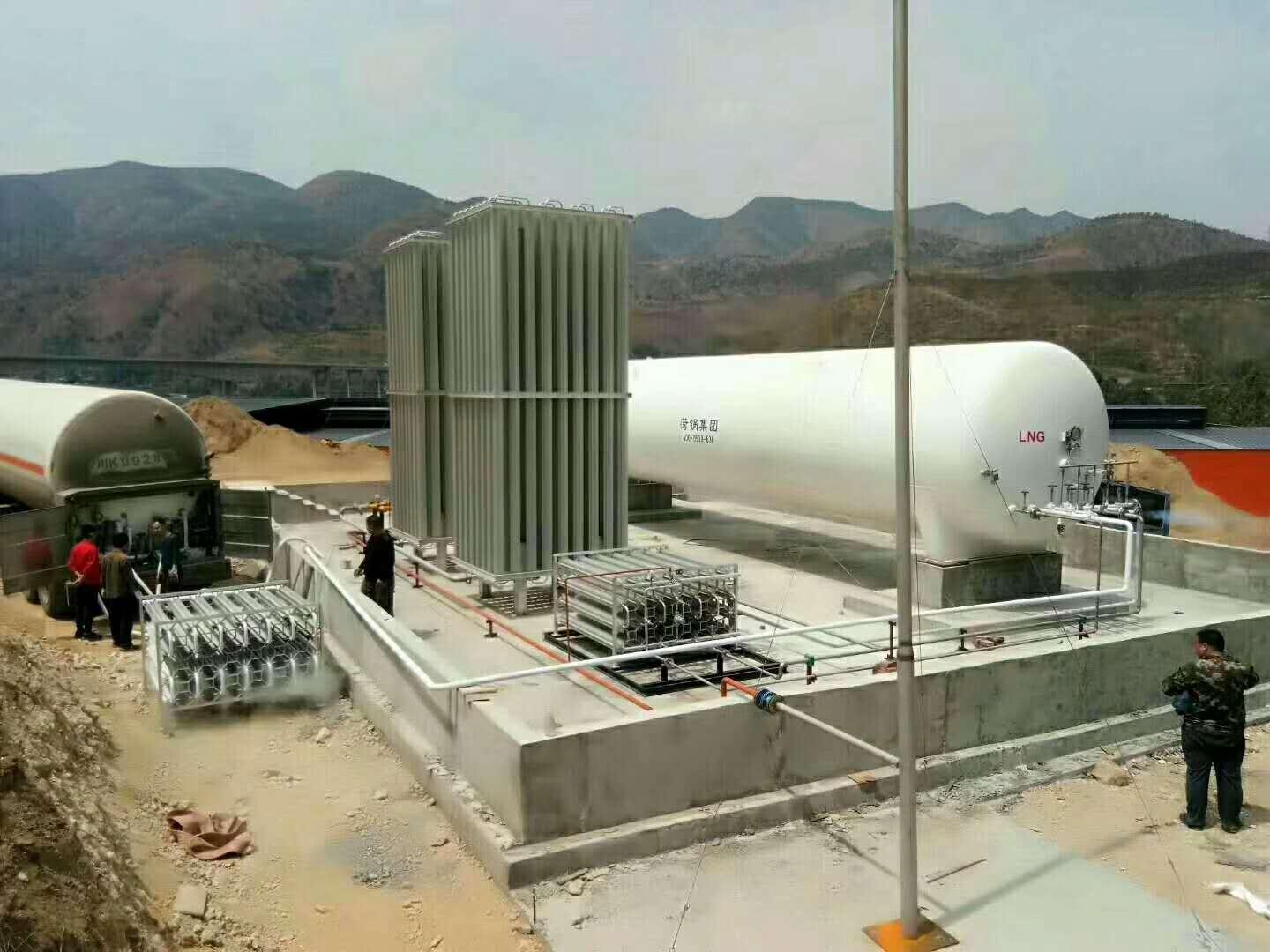
In 1937, Egerton from the UK proposed using liquefied natural gas (LNG) to regulate peak loads in urban gas supply. This involved liquefying and storing natural gas for peak winter supply and emergency situations. The Shanghai Pudong LNG production plant, which began operations at the end of 1999 with assistance from the French Sogeti Gas Engineering Company, has a daily design capacity of 120,000 cubic meters and is China's first natural gas backup/peak-shaving station using LNG technology.
1955, Comstock International Methane Corporation, USA, dedicated to the planning and design of cross-sea transportation for liquefied natural gas.
In 1957, British Gas decided to sign a contract with Comstock Company to import liquefied natural gas to supplement the insufficient city gas supply. They established the world's first liquefied natural gas receiving terminal on Canvey Island in the United Kingdom for the storage of the imported LNG.
In 1959, the U.S. Constock International Methane Company constructed the world's first LNG carrier, the "Methane Pioneer," which transported 2,200 tons of liquefied natural gas from Charles Lake, Louisiana, USA, to the Canvey Island receiving facility in the UK from January 28th to February 20th the following year, marking the birth of the global LNG industry.
In 1960, Shell UK acquired a 40% stake in the company. The "Methane Pioneer" tanker was put into service for LNG transportation from Algeria to the UK in 1964, rapidly boosting the global LNG commercial trade.
The surge in China's LNG community gasification trend is set to significantly boost the launch of China's LNG industry and the rapid development of the global LNG industry, as domestic LNG liquefaction plants continue to emerge and coastal import LNG receiving bases expand.

Advantages of LNG
Compared to LPG and CNG, the advantages of LNG as a substitute automotive fuel are as follows:
(1) Clean and environmentally friendly. As a vehicle fuel, LNG must first be vaporized by a vaporizer before entering the engine in a gaseous state for complete combustion. Since methane constitutes 90% to 99% of LNG's composition, the exhaust emissions contain very low levels of harmful substances, making it highly clean and environmentally friendly.
(2) High unit price calorific value. Compared to other fuels, LNG is priced lower and offers a higher unit price calorific value. The low-temperature characteristics of LNG can lower the temperature of the mixed gas and combustion temperature, improving the engine's thermal efficiency. This effectively ensures that LNG burns more completely and thoroughly than LPG, CNG, diesel, and gasoline within the engine. Additionally, with its high energy density and high storage efficiency, LNG is more advantageous for transportation and has a broader geographical range of use. Therefore, LNG boasts strong economic and applicability advantages.
(3) High safety level. LNG fuel tanks allow working pressures up to 1.586 MPa. The factory-set operating pressure range for natural gas is 0.1759 to 1.4074 MPa. Natural gas has the advantage of a lower likelihood of danger compared to CNG. Vehicle LNG tanks often use double-layer metal vacuum powder insulation or double-layer metal vacuum winding insulation structures, offering high thermal insulation efficiency and long-lasting non-evacuation. After gasification, LNG has a lower density than air under normal pressure, so even in the event of a LNG leak, it will quickly disperse in the air. The risk of spontaneous combustion is low. Additionally, LNG composition is relatively stable, with its simplicity and consistency beneficial for determining design parameters like engine compression ratio, avoiding the adverse effects of explosive combustion from components like ethane and propane. As a substitute for vehicle fuel, LNG ensures smooth engine operation, reduces noise pollution, and can save over 50% on engine maintenance costs compared to conventional fuels.