





















7 LNG Storage Tanks
7.1 General Provisions
7.1.1 Selection of Liquefied Natural Gas (LNG) Storage Tanks Shall Comply with the Following Regulations:
Conduct risk assessment for the tank design of liquefied natural gas storage, determining the impact on surrounding environment, personnel, and property safety.
Choose the tank types shown in Appendix B of this specification for liquefied natural gas storage tanks.
In densely populated industrial areas or those with numerous facilities, it is advisable to choose double-walled tanks, full-volume tanks, or film tanks.
4. A single-container option is available when the required safety spacing is met.
7.1.2 The design of the liquefied natural gas (LNG) storage tank shall comply with the following regulations:
During and after the OBE period, the tank system should continue to operate.
2. During and after the SSE, the storage capacity of the tanks should remain unchanged and they should be capable of being isolated and maintained.
3. The liquefied natural gas (LNG) storage tanks should undergo seismic calculations under OBE and SSE conditions, ensuring the tanks can safely shut down under SSE conditions. The prestressed concrete outer shell of the full-volume tanks should be subjected to ultimate bearing capacity calculations under ALE conditions.
7.1.3 The pipe openings of the liquefied natural gas storage tank should be located at the top of the tank.
7.1.4 The response spectra for OBE, SSE, and ALE should be determined in accordance with the following requirements:
The OBE should represent seismic ground motion with a 10% exceedance probability within 50 years (return period of 475 years) and a damping ratio of 5%, and its response spectrum should not be less than the value corresponding to the seismic fortification earthquake for the region, as specified in the current national standard for seismic design of buildings, GB 50011.
SSE should represent seismic ground motion with a probability of exceeding 2% within 50 years (return period of 2475 years) and a damping ratio of 5%, and its response spectrum should not be less than the value corresponding to the rare earthquake specified in the current national standard for seismic design of buildings, GB 50011, for the region in question.
The reaction spectrum acceleration value for ALE should be half of the SSE reaction spectrum acceleration value.
4 When the response spectrum of vertical earthquake is lacking, the vertical earthquake influence coefficient should not be less than 65% of the maximum value of the corresponding horizontal earthquake influence coefficient.
7.1.5 The auxiliary structures of the liquefied natural gas tanks shall be designed according to OBE.
7.1.6 During seismic activity, the damping ratios for each design component of the liquefied natural gas storage tank should be selected according to the specifications in Table 7.1.6.
Table 7.1.6: Anisotropy of Various Design Components
7.1.7 The permanent loads and variable loads of the liquefied natural gas storage tank shall comply with the provisions of Table 7.1.7.
Table 7.1.7 Permanently Applied and Variable Loads on Liquefied Natural Gas Tanks
Note: 1 a), b) Refer to Appendix B of this specification. "√" indicates consideration, while “—” indicates non-consideration.
"√*" indicates that it applies only to the steel top of the outer tank for low-temperature steel tanks.
7.1.8 The seismic loads and accidental loads of the liquefied natural gas storage tanks shall comply with the provisions of Table 7.1.8.
Table 7.1.8 Seismic and Accidental Loads on Liquefied Natural Gas Storage Tanks
Note: See Appendix B of this specification for items a) and b). "√" indicates consideration, while "—" indicates non-consideration.
7.1.9 The site of the liquefied natural gas receiving station should undergo seismic and geological disaster assessments.

Product Description
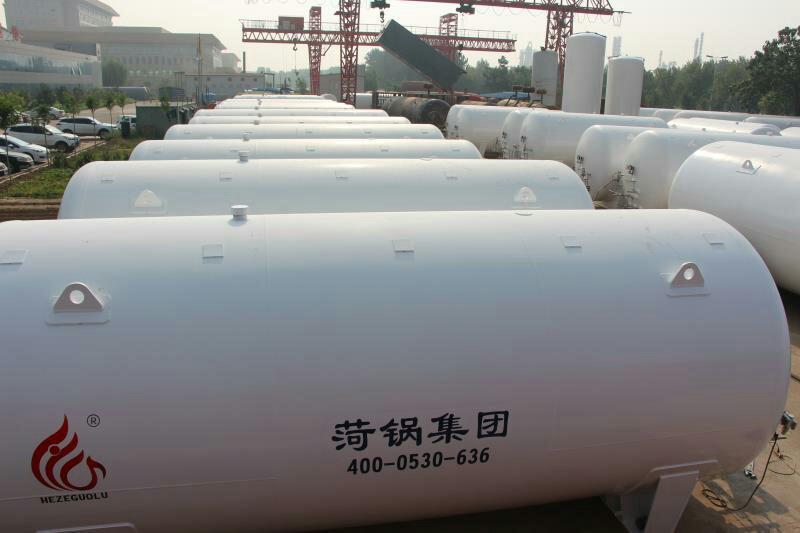
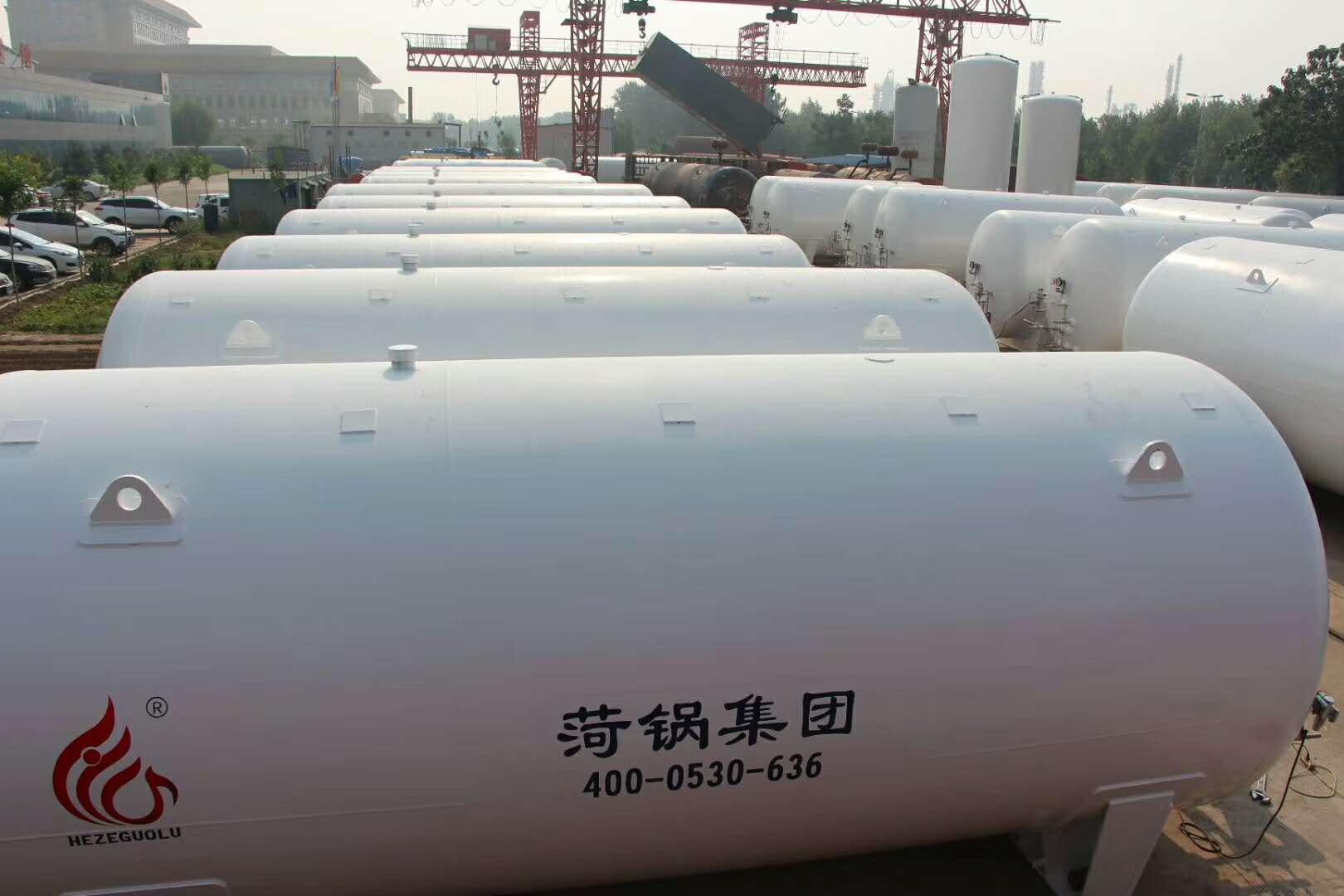
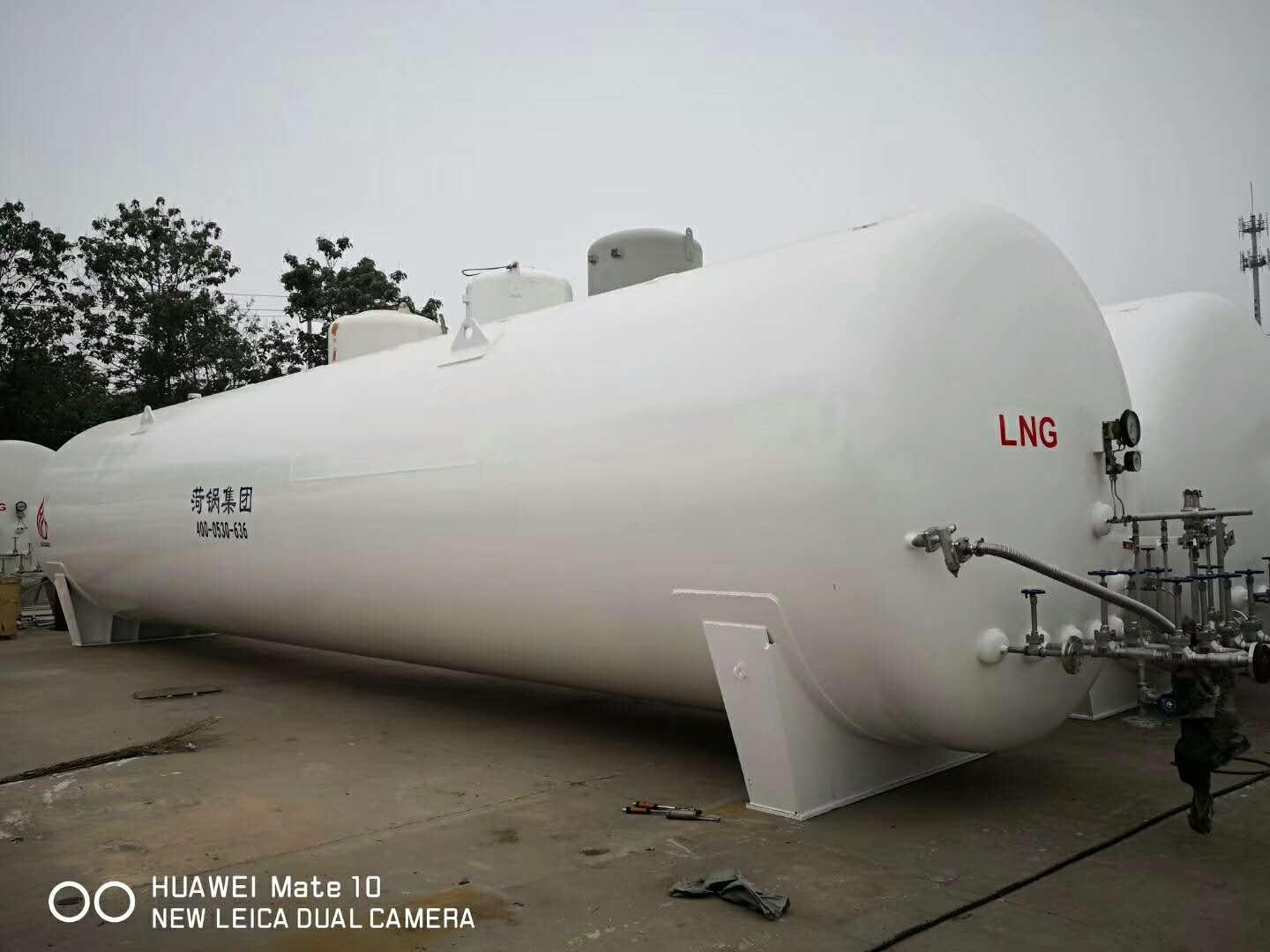
Brand Hegu Group Model CFW-60/0.8
Material: Stainless Steel, Diameter: 2916mm
Application Range: -162℃; Volume: 60,000L
Wall Thickness: 8mm, Outer Dimensions: φ2916*14929mm
Origin: Shandong Heze

Heze LNG Storage Tank, Low Temperature Oxygen/Nitrogen/Argon Carbon Dioxide Storage Tank, 60 Cubic Meters LNG Storage Tank
Low-temperature LNG tanks are high-vacuum insulated stainless steel pressure vessels, designed for the storage, transportation, and use of liquid natural gas. The tanks are manufactured in accordance with GB18442 standards and are used for reliable and cost-effective transportation and storage of cryogenic liquids, as well as for on-site storage and supply of liquid gases across a wide range of applications.
With the development of low-temperature liquid storage and transportation, the insulation technology of low-temperature containers is becoming more and more refined. To maintain the storage and transportation of low-temperature liquids and the temperature for low-temperature refrigeration, insulation measures must be taken for the low-temperature environment. Only under insulated conditions can low temperatures be maintained. Insulation can reduce vaporization losses or create conditions for the long-distance and long-duration transportation of low-temperature liquids.
Low-temperature insulation methods can be divided into two major categories: ordinary insulation and vacuum insulation.
(1) Standard insulation is an older, traditional method that involves placing solid, porous insulation materials on the exterior of equipment, containers, and pipelines. These materials contain air or other gases under atmospheric pressure within their voids.
(2) There are three basic types of vacuum insulation: high vacuum insulation, vacuum powder insulation, and vacuum multilayer insulation.
Principles of Pressure Increase and Decrease in LNG Tanks
Boost Pressure:
As LNG is used, the liquid level inside the tank continuously decreases, causing the gas phase space to expand and the tank pressure to drop. The flow rate of LNG gradually slows down until it stops. Therefore, during normal operation, it is necessary to continuously replenish gas into the tank to maintain the pressure within a certain range. This process is called pressurization. As shown in the diagram, the pressurization of the tank is achieved by an automatic pressurization system consisting of an autonomous pressurization regulator and a small air-temperature gasifier. When the tank pressure falls below the set value of the automatic pressurizer, the regulator opens, and the liquid inside the tank slowly flows into the pressurization gasifier due to the liquid level difference. The gas produced by the vaporization of the liquid flows through the regulator and the gas phase pipe to replenish the tank. The continuous replenishment of gas raises the tank pressure, and when it exceeds the regulator's set value, the regulator closes. At this point, the pressure inside the pressurization gasifier will prevent further liquid inflow, and the pressurization process ends.
Pressure Relief: (Overpressure Protection)
LNG slowly evaporates during storage due to heat loss from the storage tank's environment, causing the tank's pressure to gradually increase, which can ultimately threaten the tank's safety. Therefore, it's necessary to control the pressure limit by releasing the gas inside the tank. This is done by installing a regulator on the gas phase pipeline of the storage tank. When the tank's pressure rises to a set value, the pressure relief valve slowly opens to release the tank's gas. Once the pressure drops below the set value, the automatic regulator closes. It should be noted that the regulator referred to here is not the commonly used gas regulator. Most regulators rely on the action of the control valve at the outlet end, but this regulator operates based on the pressure control valve at the inlet end, similar to the commonly used vent valve. Additionally, it must withstand low temperatures. The released gas is generally not released into the atmosphere; instead, subsequent processes will recover and utilize it. This portion of the gas is abbreviated as BOG.
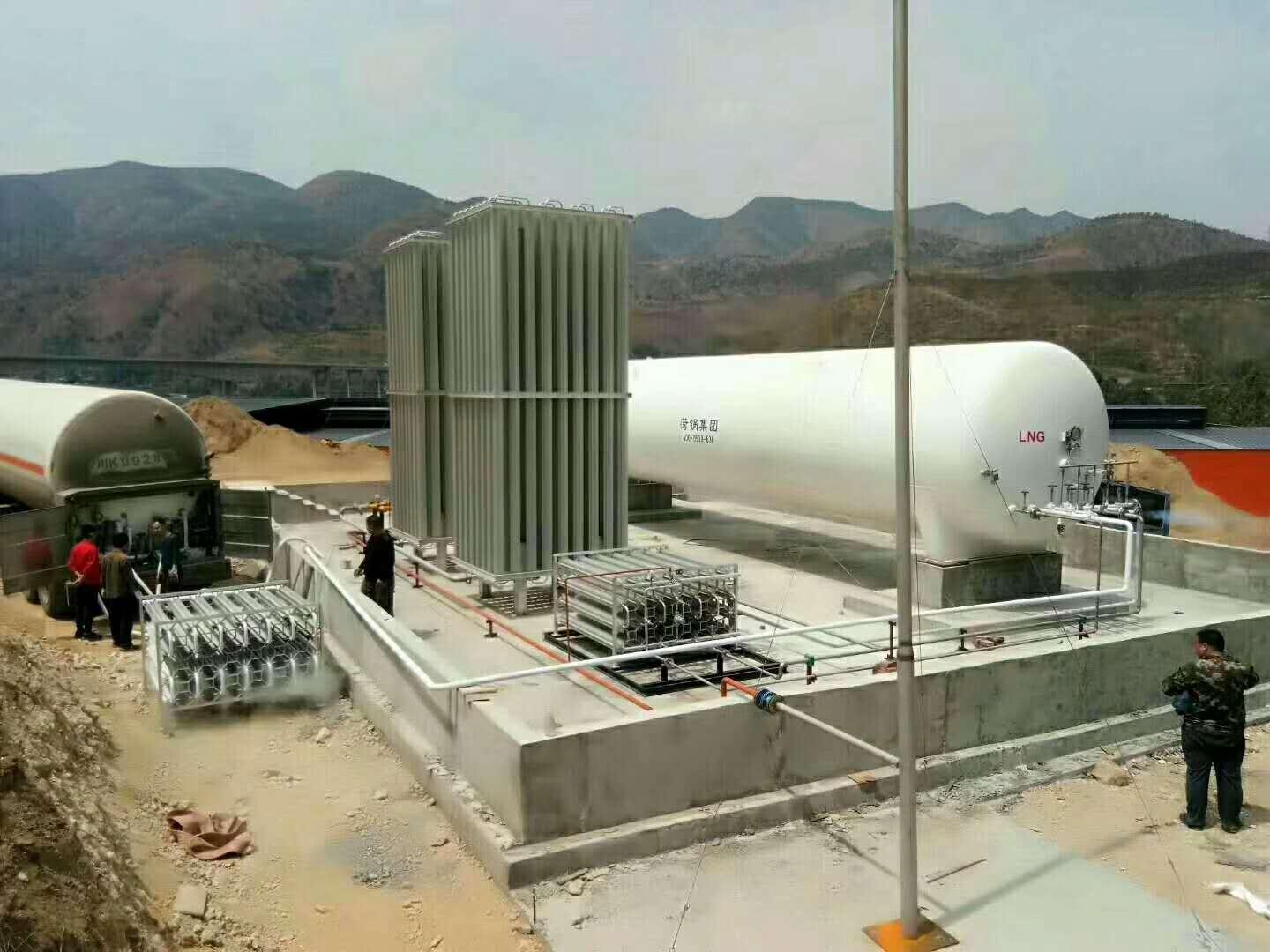
Heze LNG Storage Tank, Low-Temperature Oxygen/Nitrogen/Argon Carbon Dioxide Storage Tank, 60 Cubic Meters LNG Storage Tank