

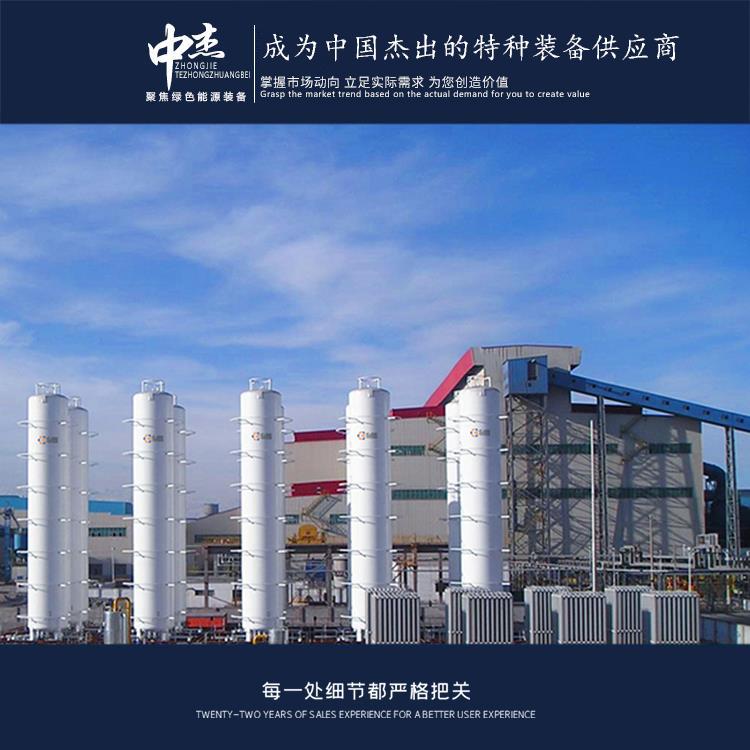

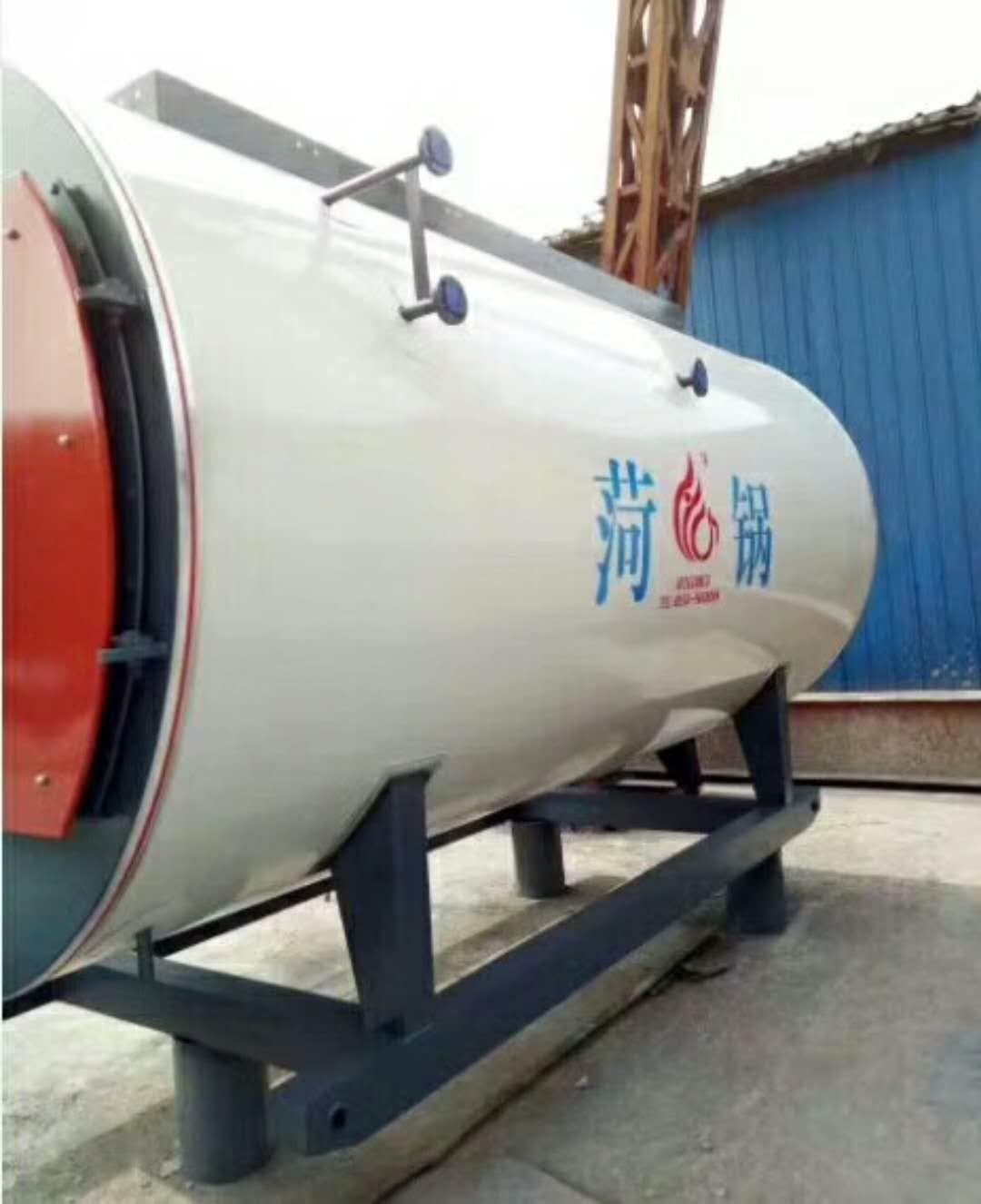
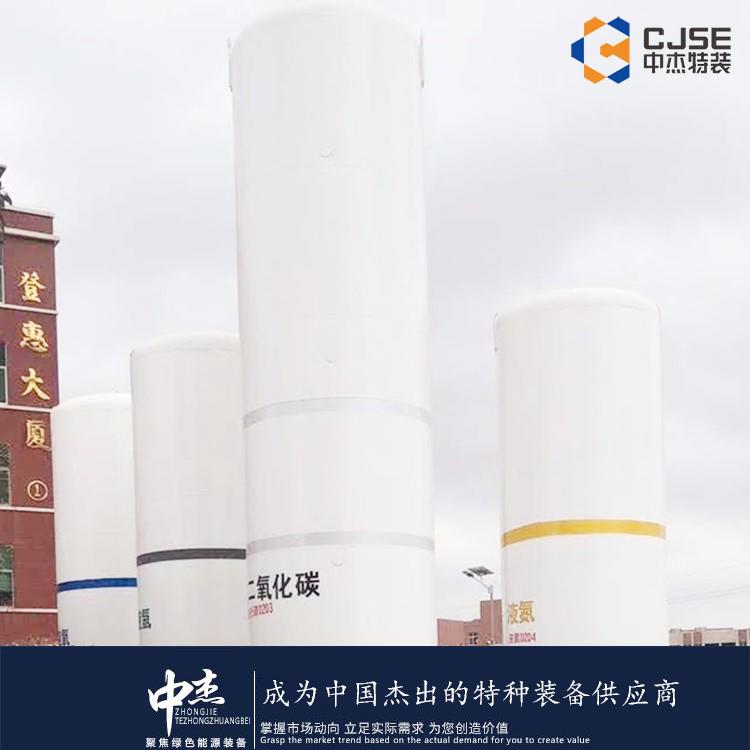



















Shandong Zhongjie Special Equipment Co., Ltd. specializes in the following products: fuel (gas) boilers, organic heat carrier boilers, biomass boilers, waste heat recovery boilers, and other boiler products; vacuum insulation cryogenic pressure vessels such as LNG tanks, oxygen/nitrogen/argon tanks, and CO2 tanks; pressure vessel products including denitrification engineering equipment, heat storage and energy storage equipment, and complete chemical equipment sets; central air conditioning and HVAC equipment such as ground (water) source heat pumps, air source units, water-cooled screw units, and air-cooled modular units. Planned products include large-scale energy centers, LNG transport vehicles, LNG tank containers, and other green energy equipment.
During the low-temperature liquid oxygen storage tank installation with central oxygen supply, special attention should be paid to the following aspects:
Safe Operation: Strict adherence to safety procedures and standards is mandatory during the storage tank installation process. Operators must be trained, familiar with the properties and safety requirements of liquid oxygen, and knowledgeable about the equipment and operational procedures to ensure safe operations.
Fire Prevention Measures: Liquid oxygen has a high oxygen content and is prone to causing fires. During the installation process, necessary fire prevention measures should be taken, such as setting up firewalls, using fire-resistant coatings, and prohibiting open flames, to prevent fires from occurring and spreading.
Leakage Control: Pay attention to leakage control during the installation process. Oxygen leakage from liquid oxygen can increase oxygen concentration, raising the risk of fire and explosion. Leak detectors and alarm systems should be equipped to detect and control leaks in a timely manner, and appropriate emergency measures should be taken.
Oxygen Concentration Monitoring: During the installation process, the oxygen concentration around the liquid oxygen storage tank should be monitored regularly. High oxygen concentrations can intensify the combustion of flammable substances, increasing the risk of fire and explosion. Take timely measures to ensure the oxygen concentration remains within a safe range.
Grounding and Static Protection: During the liquid oxygen facility process, ensure proper grounding of the storage tank and related equipment to minimize static accumulation and discharge. Utilize static-conductive materials and anti-static equipment to reduce the dangers caused by static.
Regular inspections and maintenance: After the installation is completed, the liquid oxygen tank should be regularly inspected and maintained. This includes visual inspections, pressure tests, leak detection, etc., to ensure the tank's safety and stability.
Note that during the installation of the central oxygen supply low-temperature liquid oxygen storage tank, it should be operated by experienced personnel and follow relevant safety operation procedures and standards. Throughout the installation process, safety risks should be closely monitored, and timely measures should be taken to ensure the safety and stability of the installation.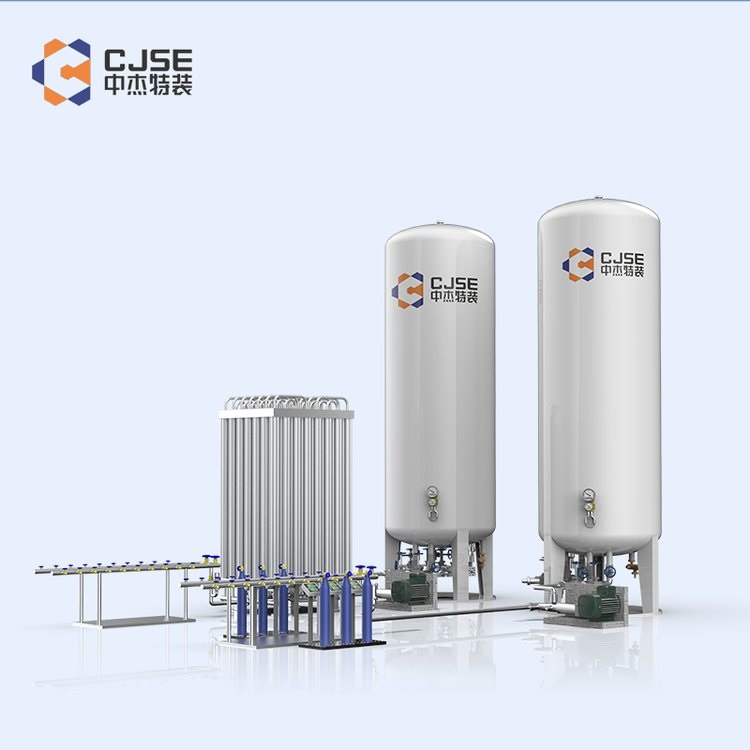
Tanks are specialized storage equipment that requires regular inspections and maintenance to ensure safe operation. Here are common inspection methods for tanks:
Appearance Inspection: Regularly inspect the exterior of the storage tank for any signs of leakage, corrosion, deformation, cracks, etc. Pay special attention to the integrity of the tank's joints, welds, and valves.
Pressure Testing: Conduct pressure tests to check the tank's sealing performance and pressure resistance. Pressure gauges or pressure sensors can be used for pressure testing the tank to ensure it can withstand the designed pressure.
Ultrasonic Testing: Ultrasonic testing is used to detect issues such as corrosion and cracks in tank walls. By scanning the tank with an ultrasonic probe, potential defects and problems are identified.
Magnetic Particle Inspection: Magnetic particle inspection is used to detect cracks in storage tank walls and the quality of welds. By applying magnetic particles to the surface of the tank and then using a magnetic particle inspection device to observe for particle accumulation, it can determine the presence of cracks or weld issues.
Environmental Monitoring: Regularly conduct environmental monitoring around the storage tanks, including checking gas concentrations and temperatures, to ensure the safety of the surrounding environment.
It's important to note that tank inspections should be conducted by a certified inspection agency or qualified inspectors. The frequency and methods of inspection should be determined based on the tank's usage, size, and relevant regulatory requirements. Regular inspections and maintenance can help identify potential issues early on, ensuring the safe operation of the tank.
Low-temperature liquid storage tanks are equipment used for storing low-temperature liquids, commonly employed for liquid oxygen, liquid nitrogen, liquid argon, and other low-temperature liquids. These liquids exist in a gaseous state at room temperature but are cooled to a liquid state at low temperatures for better storage and use. These tanks are typically made from high-strength materials like stainless steel or aluminum alloys to withstand low temperatures and high pressures. They often feature an insulating layer to minimize evaporation and maintain the low-temperature state. Applications of low-temperature liquid storage tanks include but are not limited to: They are widely used in rocket engines and propulsion systems, such as liquid oxygen, liquid nitrogen, and liquid hydrogen tanks, for storing and supplying low-temperature liquids as fuel and oxidizers to propel and operate the engines. Industrial Production: These tanks are used in industrial production for storing and supplying low-temperature liquids like liquid oxygen, nitrogen, and argon. They serve as coolants, raw materials for gas separation, and reactants in chemical reactions, among other uses. Medical Applications: They are used in the medical field to store and supply liquid oxygen for oxygen therapy, inhalation therapy, and operating rooms. Laboratory Research: In scientific research and laboratories, low-temperature liquid storage tanks provide low-temperature liquids as coolants and refrigerants. They are used for cooling laboratory equipment, material research, superconductivity, and low-temperature physics, among other areas. In summary, low-temperature liquid storage tanks are extensively used in rocketry, industrial production, and laboratory research for storing and supplying low-temperature liquids to meet the needs of various fields.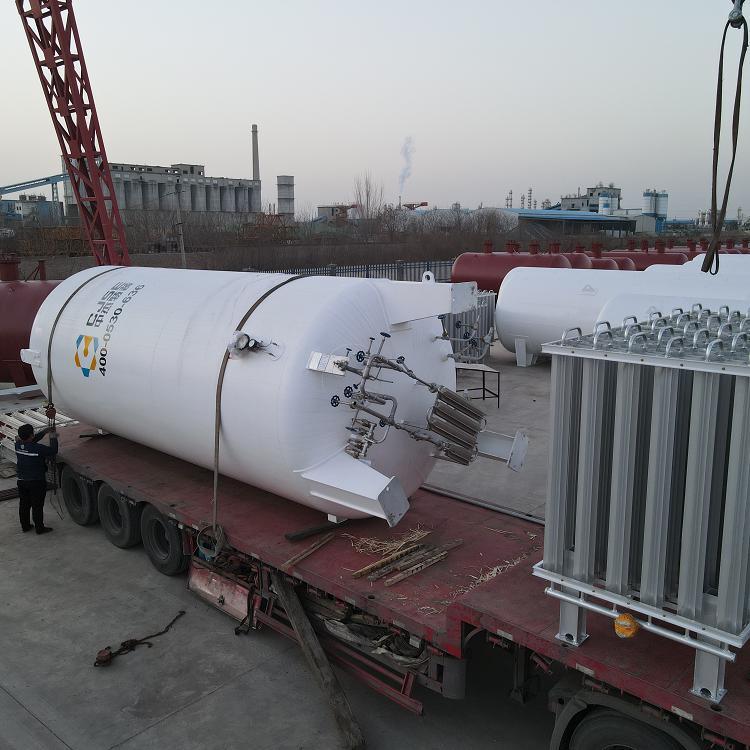
Carbon dioxide tanks and liquid oxygen tanks are containers used for storing different gases; they have some distinct physical properties:
Physical State: Carbon dioxide is a gas at room temperature and pressure, and it must be cooled and compressed to become liquid. Liquid oxygen is a liquid at room temperature, and it must be cooled further to solidify.
Boiling and Freezing Points: The boiling point of carbon dioxide is -78.5 degrees Celsius, with a freezing point of -56.6 degrees Celsius. The boiling point of liquid oxygen is -183 degrees Celsius, and its freezing point is -218.8 degrees Celsius. The boiling and freezing points of liquid oxygen are significantly lower than those of carbon dioxide.
Density: The density of liquid oxygen is relatively high, at about 1.14 grams per cubic centimeter. Carbon dioxide has a lower density, approximately 0.00198 grams per cubic centimeter. The density of liquid oxygen is about 570 times that of carbon dioxide.
Pressure: Liquid oxygen has a higher pressure, typically ranging from several tens to hundreds of MPa (Megapascals). Carbon dioxide has a lower pressure, usually within a few MPa range.
Safety: Liquid oxygen contains a high oxygen concentration, which is prone to cause fires and explosions. Carbon dioxide can also pose asphyxiation and suffocation hazards at certain concentrations.
Note that carbon dioxide and liquid oxygen are both highly flammable and explosive substances. Strict adherence to relevant safety operating procedures and standards, along with necessary safety measures, is required for storage and use to ensure the tank's safety and stability.
ZJ Special Equipment adheres to the great vision of "realizing employees' dreams, creating customer value, and striving for the prosperity and strength of our motherland," and is dedicated to the development of the green energy equipment industry. We commit to society with high-quality products and services at competitive prices!
WeChat Official Account

Scan to follow Official Account