





















Shandong Zhongjie Special Equipment Co., Ltd. (formerly Heze Boiler Factory Co., Ltd.) was established in 2001 and is located at No. 2218 Jinnan Road, Economic Development Zone, Heze City. With a registered capital of 50 million yuan and total assets of 500 million yuan, the company has 7 business centers: boiler, deep-freeze vessel, pressure vessel, central air conditioning, engineering installation, international trade, and Internet of Things. It has three manufacturing sites on Jinnan Road, East Changjiang Road, and Bohai Road, covering a total area of 200,000 square meters, with the main workshop spanning 83,000 square meters. The company currently employs 710 staff, including 247 engineering and technical personnel and 82 middle-level technical personnel. In December 2016, it was recognized as a "High-tech Enterprise" by the Science and Technology Department. In June 2021, it was identified as a "Specialized and New Enterprise of Shandong Province" by the Ministry of Industry and Information Technology. In June 2022, it was recognized as a "Gazelle Enterprise of Shandong Province" and in August 2022, as a "Specialized and New Small Giant Enterprise" by the Ministry of Industry and Information Technology.
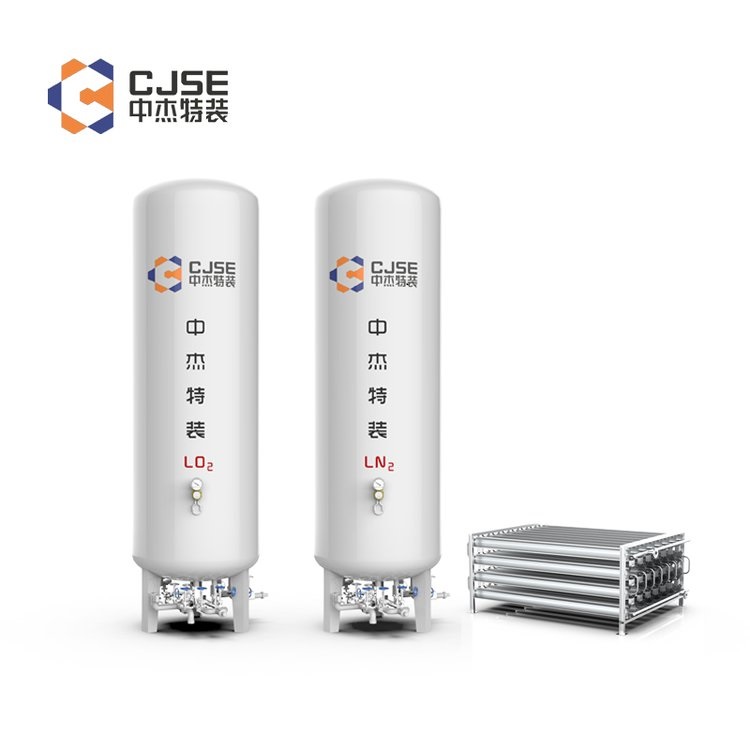
Liquid oxygen storage tanks may deform during use. The following are common deformation defects in liquid oxygen storage tanks:
Elastic Deformation: Liquid oxygen storage tanks may undergo elastic deformation when subjected to external pressure or temperature changes. This deformation is typically reversible, meaning the tank will return to its original shape upon the removal of external pressure or the normalization of temperature.
Plastic Deformation: When a liquid oxygen tank is subjected to significant external force or pressure, it may undergo plastic deformation. This deformation is irreversible, and the tank cannot return to its original shape. Plastic deformation can cause changes in the tank's shape, such as dents or warping.
Hot Deformation: Liquid oxygen storage tanks may experience hot deformation when subjected to high temperatures or temperature changes. Hot deformation can cause the tank to change shape, expand, or contract.
Cold Deformation: Liquid oxygen storage tanks may experience cold deformation when subjected to low temperatures or temperature changes. Cold deformation can lead to shape alterations, shrinkage, or cracking in the tank.
These deformation defects may affect the structural integrity and safety of liquid oxygen tanks. Therefore, regular inspections and assessments of the deformation of liquid oxygen tanks are crucial to ensure their normal operation and safe use. If deformation defects in the tanks are found, timely repair or replacement measures should be taken to avoid further damage and safety risks.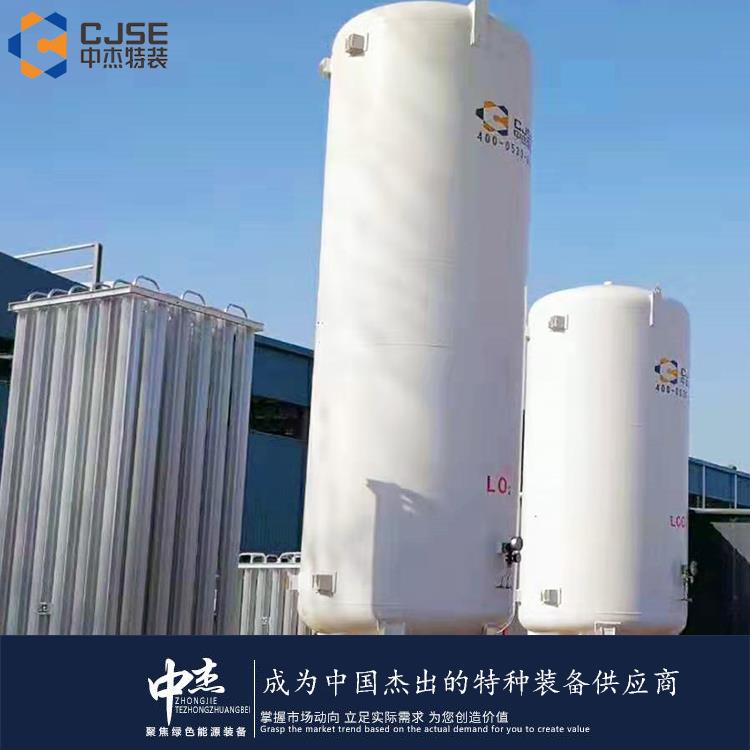
The spacing regulations between liquid oxygen storage tanks are typically governed by relevant safety standards and specifications to ensure safe distances and fire separation between the tanks. Below is a reference to general spacing rules for liquid oxygen storage tanks:
Horizontal spacing between tanks: The horizontal spacing between liquid oxygen tanks is typically required to maintain a certain distance to prevent heat transfer and mutual influence between tanks. The specific spacing should be determined based on factors such as tank capacity, pressure, and arrangement, generally recommending maintaining a safe distance to ensure safe operation and maintenance between tanks.
Tank and building or facility spacing: The spacing between liquid oxygen tanks and buildings, other facilities must also meet relevant safety requirements. This is to prevent the tanks from causing danger to surrounding buildings or facilities in the event of a leak or accident. Specific spacing requirements will be determined based on factors such as the tank's capacity, pressure, and surrounding environment, with a general recommendation to maintain a certain safety distance.
Fireproof Separation: It is crucial to maintain fireproof separation between liquid oxygen tanks and between tanks and buildings. Liquid oxygen has a high oxygen content and flammability, and in the event of a leak or accident, it could ignite a fire. Therefore, liquid oxygen tanks should be kept at a certain distance from other facilities to prevent fire spread or danger to the surrounding environment.
It's important to note that specific liquid oxygen storage tank spacing regulations may vary by region or industry. When designing, arranging, and operating liquid oxygen storage tanks, adhere to local safety standards and regulations, and consult with experts for accurate guidance.
Low-temperature liquid storage tanks feature the following characteristics and advantages:
Feature:
Low Temperature Storage: Low temperature liquid storage tanks can store low temperature liquids (such as liquid nitrogen, liquid oxygen, etc.) at low temperatures, maintaining their liquid state. Liquid storage can significantly increase storage density and save storage space.
Insulation: The low-temperature liquid storage tanks are equipped with special insulation materials and structural designs, effectively reducing heat conduction and maintaining stable temperatures for low-temperature liquids. This helps minimize energy loss and liquid evaporation.
Safety: Low-temperature liquid storage tanks offer excellent safety performance. The tanks are made with special materials and structural design, capable of withstanding low temperatures and high pressures. Additionally, they are equipped with safety devices such as pressure relief valves and level alarms to ensure safe operation and use.
Utilization Advantages:
High Purity Supply: Low-temperature liquid storage tanks can provide high-purity liquid substance supply. Through refrigeration and purification processing, high-purity liquid gases can be obtained to meet application requirements in fields such as industry and scientific research.
Long-term Storage: Low-temperature liquid storage tanks can store low-temperature liquids for extended periods, prolonging their service life. By controlling the temperature within the tank and the performance of the insulation layer, the evaporation and oxidation of the liquid can be slowed down, maintaining its stability and purity.
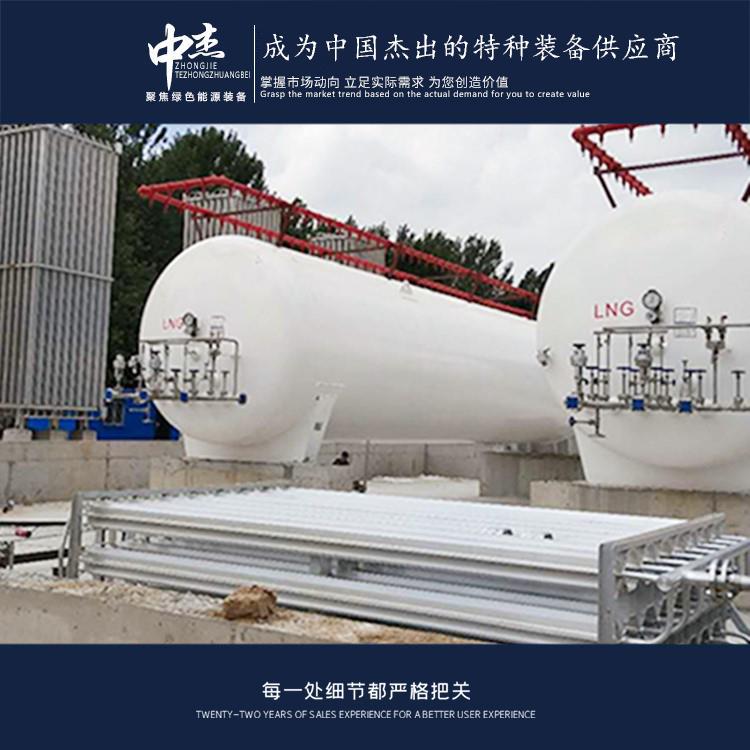
Wide Applications: Low-temperature liquid storage tanks are extensively used in fields such as industry and scientific research. They can be used for storing liquid oxygen to provide oxygen supply; in the industrial sector, they can store liquefied natural gas (LNG) and liquid nitrogen, among other process gases; and in scientific research, they can store low-temperature experimental samples.
Environmental Protection and Energy Efficiency: Low-temperature liquid storage tanks enable effective storage and utilization of low-temperature liquids, reducing energy waste and environmental pollution. Storage of liquid substances
The stable pressure design of a 15 cubic meter liquid argon storage tank should consider the following aspects:
Tank Pressure: Determine the design pressure of the tank to meet the storage and supply requirements for liquid argon. Establish an appropriate design pressure range based on the characteristics and usage conditions of liquid argon.
Stabilization System: Choose an appropriate stabilization system to maintain stable pressure within the storage tank. The stabilization system typically includes components such as pressure regulators, pressure sensors, and control valves, which are used to monitor and adjust the pressure inside the tank.
Pressure Sensor: Install a pressure sensor to monitor the pressure changes inside the storage tank in real-time. The sensor transmits pressure signals to the voltage regulation system, enabling timely adjustment of the control valve to maintain stable pressure within the tank.
Control Valve: Select an appropriate control valve for regulating the gas flow and pressure within the storage tank. The control valve should possess excellent regulating performance and stability to ensure the pressure within the tank remains within the set range.
Safety Valve: Install a safety valve to automatically release gas when the pressure inside the tank exceeds the set value, preventing overpressure. The safety valve should be selected and installed based on the tank's design pressure and capacity.
Voltage Stabilization System Control: Equipped with an appropriate control system for monitoring and regulating the operation of the voltage stabilization system. The control system enables automatic adjustment and alarm functions to ensure stable and safe pressure within the storage tank.
It's important to note that the design of the voltage regulation system should be tailored to the specific engineering requirements and operating conditions of the liquid argon storage tank, adhering to relevant local regulations, standards, and specifications. When designing and installing the voltage regulation system, it is recommended to consult with an engineer or a relevant institution for guidance to ensure the reliability and safety of the system.
Our company attaches great importance to technological innovation and R&D design, boasting a city-level enterprise technology center in Heze City. We have established testing facilities for non-destructive testing, physical and chemical testing, welding testing, hydrostatic testing, etc., and are equipped with over 600 various instruments and equipment, including CNC machine tools, X-ray flaw detectors, digital ultrasonic flaw detectors, mechanical property testing machines, chemical analyzers, spectrometers, tensile testing machines, plasma welding machines, and more. The key products and technologies we have developed, such as welding of temperature and pressure vessels, emission reduction of biomass boilers, and waste heat utilization, have successively been shortlisted for multiple Shandong Provincial Department of Industry and Information Technology science and technology innovation projects, Shandong Provincial key projects, and Heze City innovation and excellence projects. We have cumulatively obtained 27 authorized utility model patents, 16 authorized invention patents, participated in drafting 2 standards, 2 industry standards, and registered 15 trademarks. Our technical team, in collaboration with Professor Li Yajiang of Shandong University, has jointly developed deep cryogenic container processing technology, utilizing the international plasma arc + wire filling tungsten inert gas arc welding (PAW-GTAW) technology. After being appraised by the provincial-level scientific and technological achievement, the technology level has reached the international standard in the field of deep cryogenic container manufacturing. Choose Zhongjie Special Equipment, let's join hands to create brilliance!
WeChat Official Account

Scan to follow Official Account