


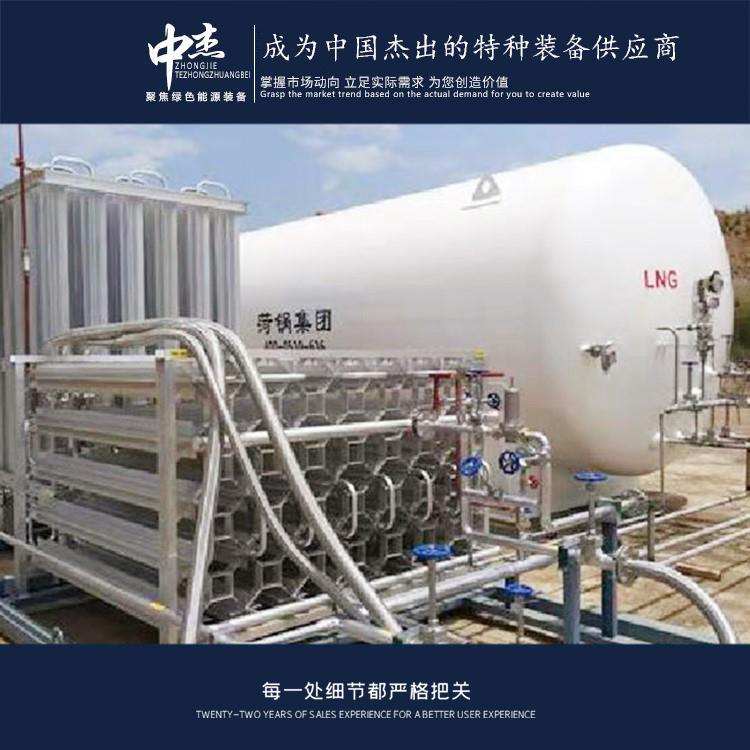

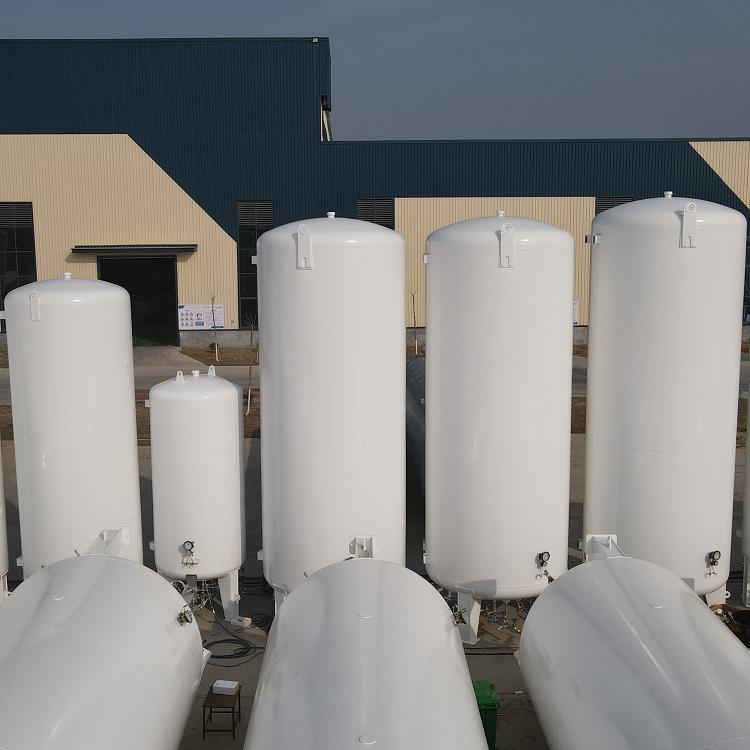
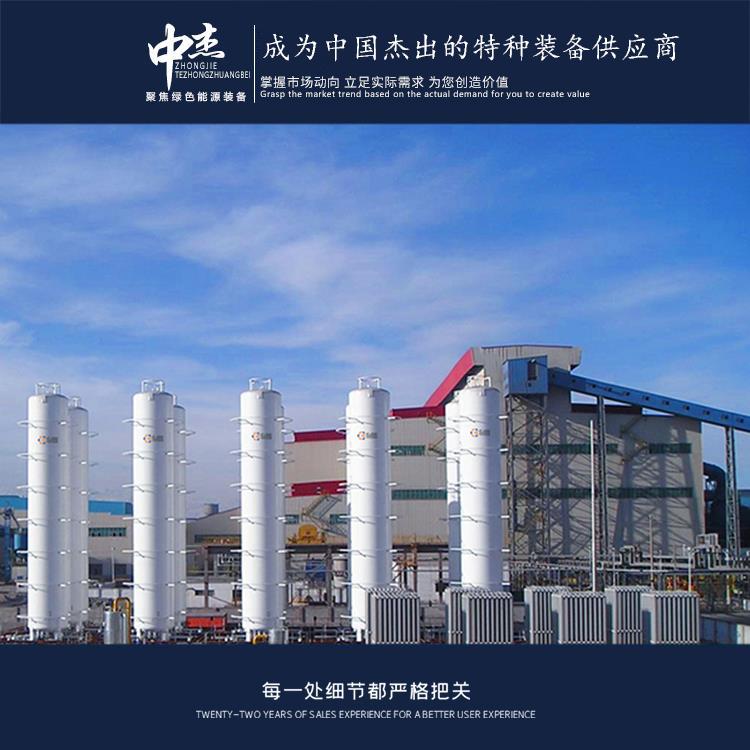



















Shandong Zhongjie Special Equipment (formerly Heze Boiler Factory Co., Ltd.) was established in 2001, located at No. 2218 Jinnan Road, Development Zone, Heze City, with a registered capital of 50 million yuan and total assets of 500 million yuan. The company has seven business centers: boilers, deep-freeze containers, pressure vessels, central air conditioning, engineering installation, international trade, and the Internet of Things. It has three factory sites on Jinnan Road, East Changjiang Road, and Bohai Road, covering a total of 200,000 square meters, with the main workshop spanning 83,000 square meters. It currently employs 710 people, including 247 engineers and technicians, and 82 intermediate-level technicians. In December 2016, it was recognized as a "High-tech Enterprise" by the Science and Technology Department. In June 2021, it was identified as a "Specialized and New Enterprise in Shandong Province" by the Ministry of Industry and Information Technology. In June 2022, it was recognized as a "Gazelle Enterprise in Shandong Province" and in August 2022, it was identified as a "Specialized and New Small Giant Enterprise" by the Ministry of Industry and Information Technology.
Before using a CO2 storage tank, certain inspection and filling points must be addressed. Here are some common precautions:
- Inspect the tank exterior: Check for any visible damage, corrosion, or leakage signs. Ensure the tank shell is undamaged.
- Check valves and fittings: Verify that the tank's valves and fittings are securely fastened with no leakage. Ensure their proper operation.
- Inspect the pressure gauge: Confirm the pressure gauge on the tank is functioning correctly and readings are accurate. Replace or repair if abnormal.
- Check the level indicator: Ensure the tank's level indicator is working properly and accurately displays the level. Repair or replace if abnormal.
- Inspect the pressure relief device: Check the tank's pressure relief device (e.g., safety valve) for proper operation and pressure settings. Repair or replace if abnormal.
- Inspect filling equipment: Verify the filling equipment (e.g., filling pipes, pumps) is functioning correctly with no leakage or blockages. Ensure safety and reliability.
- Filling operations: During the filling process, note the following:
- Control the filling rate, avoiding too fast or too slow.
- Control the filling pressure, not exceeding the tank's rated pressure.
- Monitor the level to ensure proper filling.
- Regularly inspect filling equipment and valves to ensure normal operation.
- Safety measures: Adhere to relevant safety regulations and procedures during filling. Operators should wear appropriate protective gear, such as antistatic clothing, gloves, etc.
- Note that specific inspection and filling points may vary depending on tank type and application. Before using a CO2 storage tank, inspect and operate according to relevant specifications and standards, and consult with experts to ensure safety and effectiveness.
Leakage issues in CO2 storage tanks may be caused by the following reasons: Material Corrosion: CO2 has some corrosive properties, and prolonged exposure can lead to corrosion of the tank material. Corrosion can damage the tank's surface protective layer, causing it to lose its seal and resulting in leaks. Welding Defects: The welding joints of the tank may have defects such as cracks in the weld seams or voids, which can weaken the strength of the焊接 areas and lead to leaks. Design Defects: Inadequate design or defects in the tank can also cause leaks. For example, poorly designed interface connections or unreasonable structural designs can lead to leakage problems in the tank. Overpressure: If the internal pressure of the tank exceeds its capacity, it may deform or rupture, causing leaks. Temperature Fluctuations: During temperature changes, the thermal expansion and contraction effect on CO2 storage tanks can cause deformation or stress concentration, leading to leaks. Incorrect Operation: Improper operation and maintenance can also cause leaks. For instance, over-tightening valves or improper maintenance measures can reduce the tank's sealing performance. External Damage: External forces such as impacts, scratches, or corrosion on the tank can cause surface damage or corrosion, resulting in leaks. To avoid leakage issues in CO2 storage tanks, it is important to select appropriate materials, reasonable design, and manufacturing processes, and to conduct regular inspections and maintenance. Additionally, operators should receive training and adhere to operational procedures to ensure the safe operation of the tanks.
Installation and operation of low-temperature carbon dioxide storage tanks must comply with the following requirements:
Installation Location Selection: When choosing the installation location for the tank, consider its weight and dimensions to ensure a solid and stable foundation. Additionally, keep it away from flammable and explosive materials and high-temperature sources to ensure safety.
Safety Distance: Maintain a certain safety distance around the tank for routine inspections, maintenance, and emergency response. The safety distance should meet relevant safety regulations and standards.
Connection Pipes: Use appropriate connection methods between the tank and pipes to ensure tight and reliable connections with no leaks. The connection pipes should comply with relevant standards and specifications.
Pressure Relief Devices: The tank should be equipped with pressure relief devices, such as safety valves, to control internal pressure. The set pressure of the pressure relief devices should meet relevant requirements and be inspected and maintained regularly.
Sealability Inspection: Regularly check the tank's sealing performance to ensure no leaks. Pay special attention to the sealing of valves, pipe connections, and the tank itself.
Temperature Control: Temperature control is required for low-temperature carbon dioxide storage tanks to maintain the low internal temperature. Ensure the surrounding environmental temperature is suitable and take corresponding insulation measures.
Safety Protection: Set up appropriate safety protection facilities around the tank, such as guardrails and warning signs, to remind personnel of safety and prevent unauthorized access to the tank.
Storage Capacity Control: Control the storage capacity of the tank according to actual needs to avoid exceeding the rated capacity. Exceeding the rated capacity may cause excessive pressure in the tank, increasing safety risks.
Storage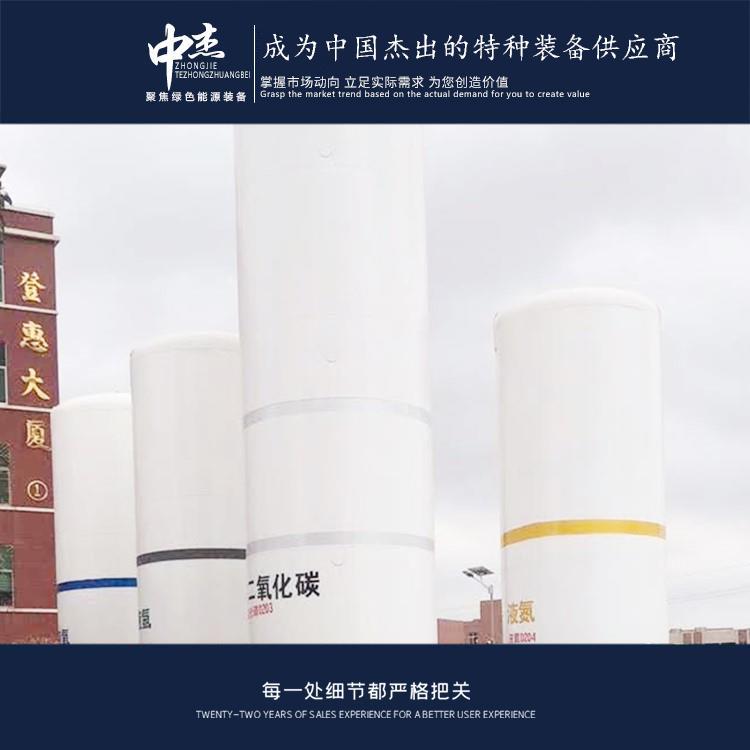
Detailed parameters for carbon dioxide tanks can vary based on specific design and usage requirements. Here are some common parameters for carbon dioxide tanks:
- Capacity: The capacity of carbon dioxide tanks can differ according to needs, with common ranges spanning from a few thousand to tens of thousands of liters.
- Pressure: The design working pressure of carbon dioxide tanks typically falls between 15-25 MPa (megapascals), with the specific pressure depending on the application scenario and requirements.
- Material: Carbon dioxide tanks are usually made from high-strength materials like carbon steel or stainless steel. The choice of material depends on the storage environment and requirements.
- Dimension: The physical dimensions of carbon dioxide tanks can also vary based on capacity and design. Common shapes include cylindrical, spherical, or cuboidal.
- Level Control: Carbon dioxide tanks usually come with level control systems for monitoring and controlling the liquid level of carbon dioxide. These systems typically include level sensors and control valves.
- Pressure Control: Internal pressure control systems are commonly fitted in carbon dioxide tanks to monitor and control the gas pressure inside. These systems usually include pressure sensors and safety valves.
It's important to note that specific parameters for carbon dioxide tanks can vary among manufacturers, application scenarios, and standards. When selecting and using carbon dioxide tanks, it's essential to follow relevant safety operating procedures and guidelines, and consult with experts to obtain accurate parameter information.
Shandong Zhongjie Special Equipment, welcome customers to visit our factory for cooperation discussions.
WeChat Official Account

Scan to follow Official Account




















