


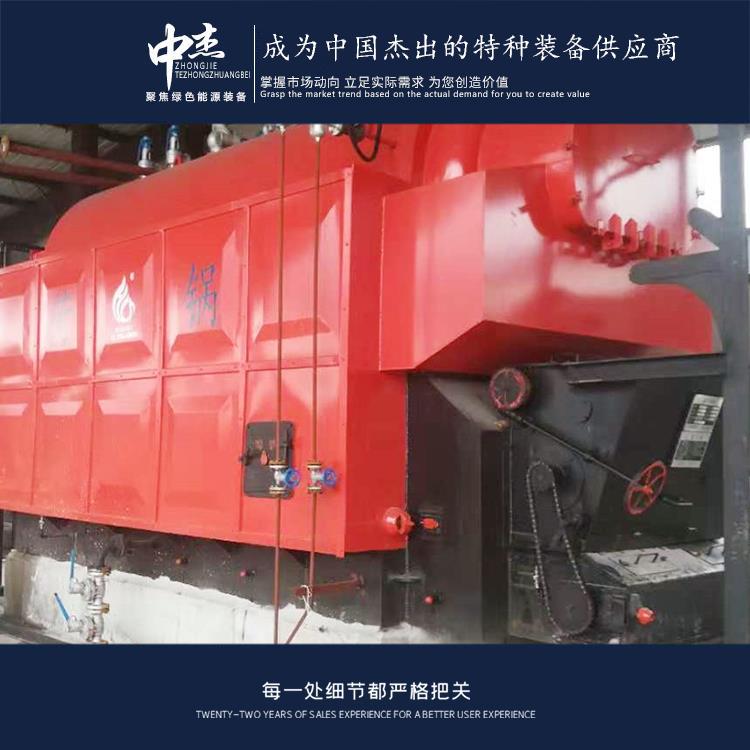

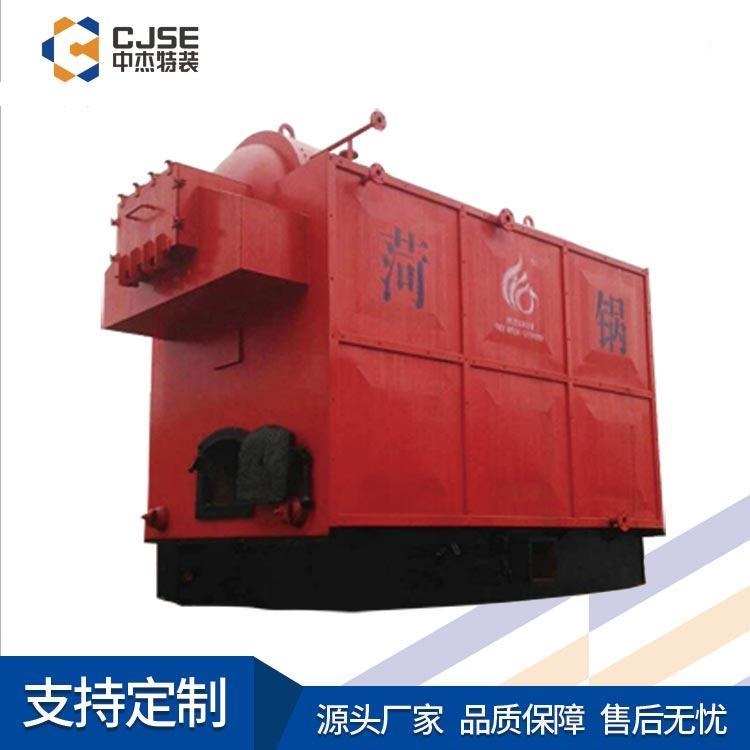
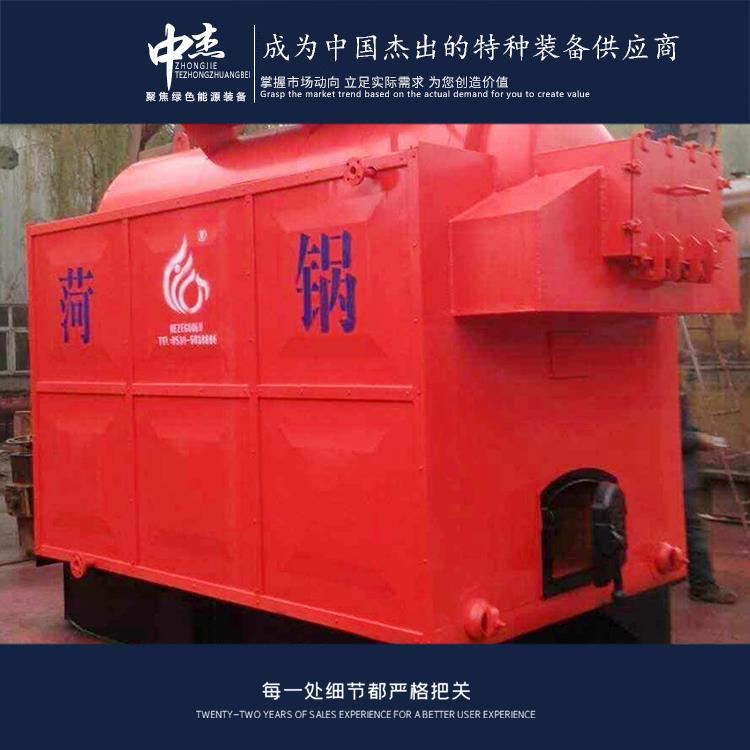



















Shandong Zhongjie Special Equipment (formerly Heze Boiler Factory Co., Ltd.) holds an A-grade boiler manufacturing license, an A2-grade pressure vessel manufacturing license, an A2-grade pressure vessel design license, a B-grade boiler installation license, and GB2/Class, GC2/Class pressure pipeline installation licenses, as well as a mechanical and electrical equipment installation contracting qualification. It is a member of the China Boiler and Water Treatment Association, the China Chemical Equipment Association, and the director unit of the Shandong Equipment Manufacturing Association. The company has also passed the ISO9001 Quality Management System, ISO14001 Environmental Management System, OHSAS18001 Occupational Health and Safety Management System certifications, and the American ASME/U2 certification.
When purchasing biomass boilers, the following factors should be considered:
Fuel Compatibility: Different types of biomass boilers are suitable for various fuels such as wood chips, straw, and discarded crops. When selecting a biomass boiler, consider the availability and cost of the required fuel to ensure the boiler can accommodate the fuel type used.
Boiler Power and Heat Load: Select an appropriate biomass boiler power based on the heating area required and the heat load size. An underpowered boiler may not meet the heating needs, while an overpowered one will result in energy waste.
Combustion Efficiency: Combustion efficiency is a key indicator of boiler energy utilization. Choosing biomass boilers with high combustion efficiency can reduce energy consumption and carbon emissions.
Equipment Quality and Reliability: Choose a biomass boiler manufacturer with an excellent reputation to ensure the equipment is of high quality, reliable, and stable in operation, thereby reducing failure and maintenance costs.
Environmental Performance: Focus on the environmental performance of biomass boilers, including emission standards and flue gas treatment systems. The selected boilers reduce environmental pollution.
Control systems and automation level: The advanced control systems and automation level enhance the operational efficiency and stability of biomass boilers, while reducing labor and management costs.
After-sales Service and Technical Support: Choose suppliers with excellent after-sales service and technical support to ensure prompt technical assistance and repair services during use.
In summary, when selecting biomass boilers, consider factors such as fuel adaptability, boiler power and heat load, combustion efficiency, equipment quality and reliability, environmental performance, control systems, and degree of automation.
Several factors need to be considered when selecting an appropriate biomass boiler:
Fuel Type: First, determine the available biomass fuel types, such as wood chips, straw, etc. Different biomass fuels have varying characteristics, including moisture content, ash content, calorific value, etc., and it's necessary to select a boiler suitable for the fuel type.
Boiler Capacity: Determine the required steam or hot water output based on actual needs and select an appropriate boiler capacity. Over-sizing leads to energy waste, while undersizing fails to meet demand.
Combustion Efficiency: Focus on the boiler's combustion efficiency, which is the proportion of fuel converted to thermal energy. High combustion efficiency can enhance energy utilization and reduce operating costs.
Equipment Quality and Reliability: Select biomass boilers and suppliers with excellent quality and reliability to ensure long-term stable operation and ease of maintenance for the equipment.
Environmental Performance: Focus on the environmental performance of the boiler, including emission standards and reduction of pollutant emissions. The selected biomass boiler is beneficial for environmental protection and compliance with relevant regulations.
Economic Efficiency: Choose a cost-effective biomass boiler by considering the overall purchase, operation, and maintenance costs of the boiler.
Adaptability and flexibility: Select biomass boilers with high adaptability and flexibility, tailored to actual needs and application scenarios, to accommodate different fuel and operational requirements.
When selecting biomass boilers, consult with boiler suppliers or engineers to conduct technical assessments and economic analyses based on specific circumstances, and choose the appropriate type and specification of biomass boiler.
Possible reasons for the black smoke produced by biomass boiler combustion may include:
Incomplete Combustion: Inadequate oxygen supply or insufficient combustion temperature in biomass fuel can lead to incomplete combustion, producing a large amount of smoke and black smoke. This may be caused by poor combustion chamber ventilation, poor fuel quality, or incorrect combustion parameter settings.
High moisture content: Excessive water content in biomass fuel can lead to the evaporation of a large amount of steam during combustion, lowering the combustion temperature and affecting the combustion efficiency, resulting in the production of black smoke.
Fuel Quality Issues: If biomass fuel contains impurities, ash, or uneven moisture content, it can affect the combustion process, leading to incomplete combustion and the production of black smoke.
Combustion Equipment Issues: If there are malfunctions or wear in the combustion equipment of a biomass boiler, such as slagging in the combustion chamber or clogging of the burner, it can affect the combustion efficiency and lead to the production of black smoke.
To reduce the emission of black smoke, the following measures can be taken:
Ensure adequate oxygen supply: Adjust the ventilation system of the combustion equipment to ensure sufficient oxygen supply, enhance combustion efficiency, and reduce the production of black smoke.
Control combustion temperature: Adjust combustion parameters, such as combustion temperature and duration, to ensure complete fuel combustion and reduce the production of black smoke.
Optimize fuel quality: Select the appropriate amount of biomass fuel, ensuring uniform dryness and quality, reducing moisture content and impurities, and enhancing combustion efficiency.
Regular Maintenance: Perform regular maintenance on biomass boilers to clean the combustion chamber, burners, and other components, ensuring the equipment operates smoothly and reducing the production of black smoke.
Install Pollutant Control Equipment: As required, install flue gas purification equipment such as dust collectors and desulfurization devices, effectively removing particulates generated during the combustion process.
A biomass boiler economizer is a device used to recover waste heat from flue gases, its function is to enhance the thermal efficiency of the boiler and reduce energy waste. The economizer achieves this by transferring heat from the flue gases to the boiler feed water, preheating it and thereby reducing fuel consumption.
Based on their structure and working principles, biomass boiler economizers can be categorized into the following types:
Tubular Economizer: A common type of economizer, consisting of a series of parallel pipes. Flue gas flows over the outside of the pipes, while feedwater circulates inside the pipes, recovering waste heat from the flue gas through heat transfer across the tube walls.
Finned Economizer: The finned economizer, based on the tubular economizer, adds fins to increase the heat transfer area and enhance efficiency. It is suitable for higher flue gas temperatures.
Direct-Flow Economizer: A direct-flow economizer is a structure that分流smoke gases and incoming water separately, utilizing multiple parallel smoke and water channels to achieve cross heat transfer between the two, thereby enhancing heat transfer efficiency.
Recirculation refers to the process of reintroducing the waste heat from the economizer back into the boiler combustion zone to increase combustion temperature and thermal efficiency. Recirculation can be controlled by adjusting the recirculation ratio, which is generally adjusted as needed during the boiler's operation. Recirculation can enhance combustion temperature, improve combustion completeness, and reduce pollutants.
ZJ Special Equipment adheres to the great vision of "realizing employees' dreams, creating value for customers, and striving for the prosperity and strength of our motherland," focusing solely on the development of green energy equipment, and dedicating high-value products and services to society!
WeChat Official Account

Scan to follow Official Account




















