


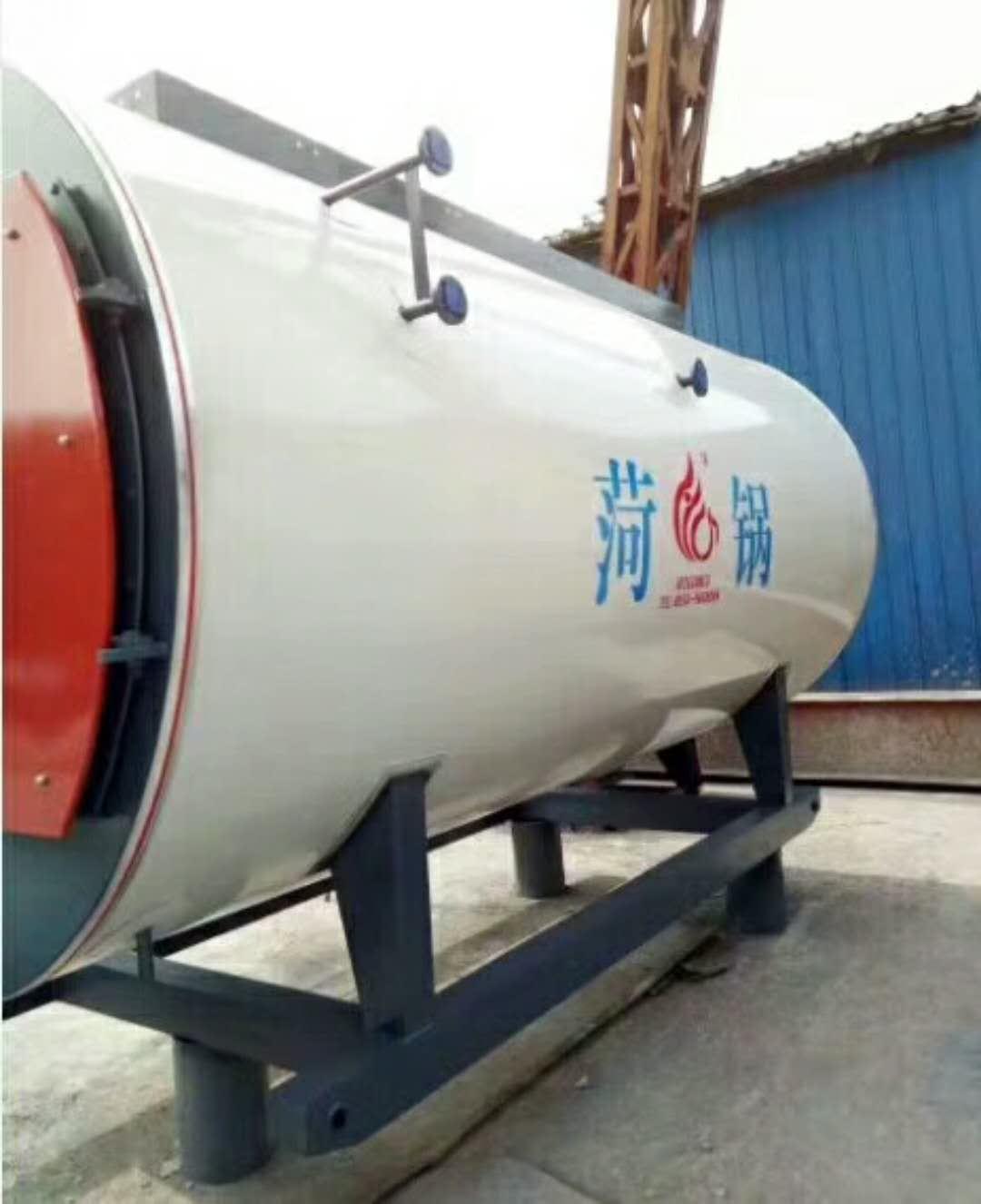

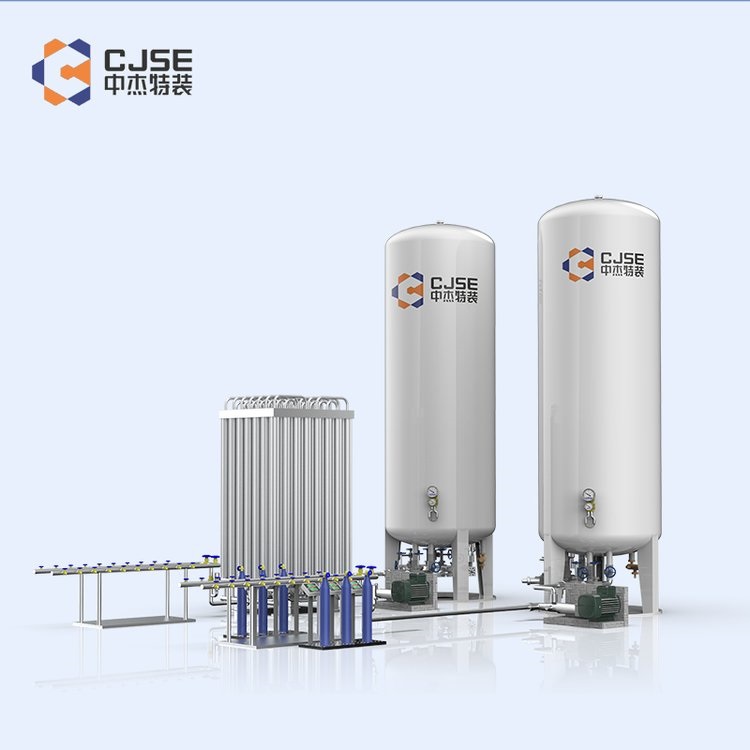
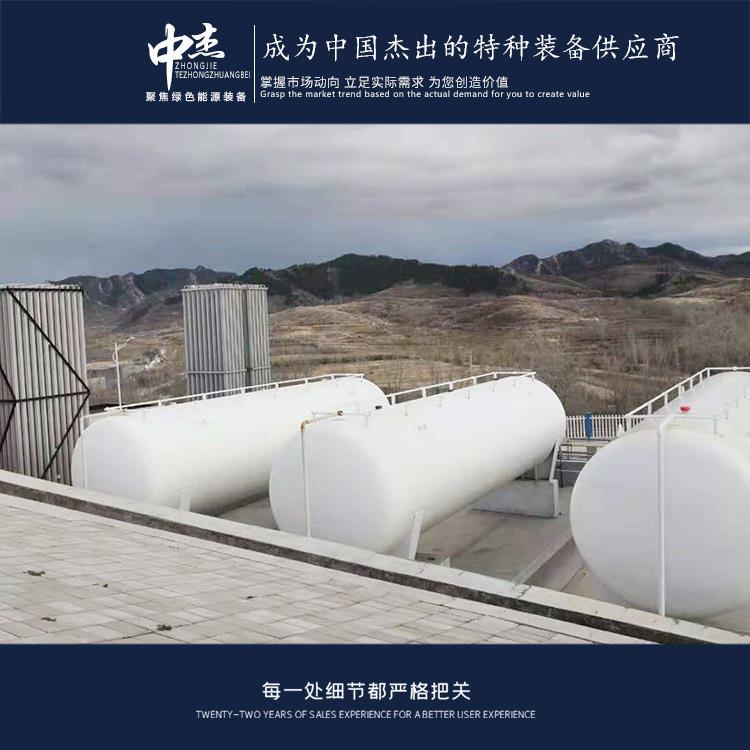



















Shandong Zhongjie Special Equipment's main products include: fuel (gas) boilers, organic heat carrier boilers, biomass boilers, waste heat boilers, and other boiler products; vacuum insulation cryogenic pressure vessels such as LNG tanks, oxygen/nitrogen/argon tanks, and CO2 tanks; pressure vessel products such as denitrification engineering equipment, heat storage and energy storage equipment, and complete chemical equipment sets; central air conditioning and HVAC equipment such as ground (water) source heat pumps, air source units, water-cooled screw units, and air-cooled modules. Planned products include large-scale energy centers, LNG transport vehicles, LNG tank containers, and other green energy equipment.
The use of liquid nitrogen storage tanks in flash freezing technology offers several advantages:
Rapid Freezing Speed: The temperature of liquid nitrogen is low, approximately -196 degrees Celsius. Using a liquid nitrogen tank for rapid freezing can quickly lower the surface temperature of food, achieving fast freezing. Compared to traditional freezing methods, liquid nitrogen rapid freezing can significantly reduce freezing time while preserving the quality and texture of the food.
Uniformly Frozen Effect: The liquid nitrogen quick-freezing technique achieves rapid and even freezing of food. Liquid nitrogen is喷射ed onto the food surface in a gaseous form, quickly absorbing heat and transforming into a liquid state, thereby ensuring even freezing of the food and avoiding crystallization and lumping during the freezing process.
Maintain Food Quality: Rapid freezing with liquid nitrogen quickly chills food, reducing crystallization and caking during the freezing process, thereby preserving the quality and texture of the food. During the rapid freezing process, liquid nitrogen swiftly lowers the surface temperature of the food, forming tiny frozen structures that effectively retain the moisture and nutritional content.
Flexibility and Adaptability: Liquid nitrogen tanks can be adjusted and controlled for different types of food and freezing requirements. The injection speed and angle of liquid nitrogen can be adjusted based on the size, shape, and freezing needs of the food to achieve optimal freezing results.
Environmental Protection and Energy-Saving: Liquid nitrogen rapid freezing technology can save energy and resources more efficiently compared to traditional freezing methods. Liquid nitrogen evaporates quickly during the freezing process, causing environmental pollution and generating waste water and waste gas.
Be mindful that when using liquid nitrogen tanks for rapid freezing, it is crucial to adhere to the relevant safety operating procedures and guidelines. Ensure that operators are equipped with the necessary safety awareness and operational skills to prevent any accidental incidents. Additionally, consult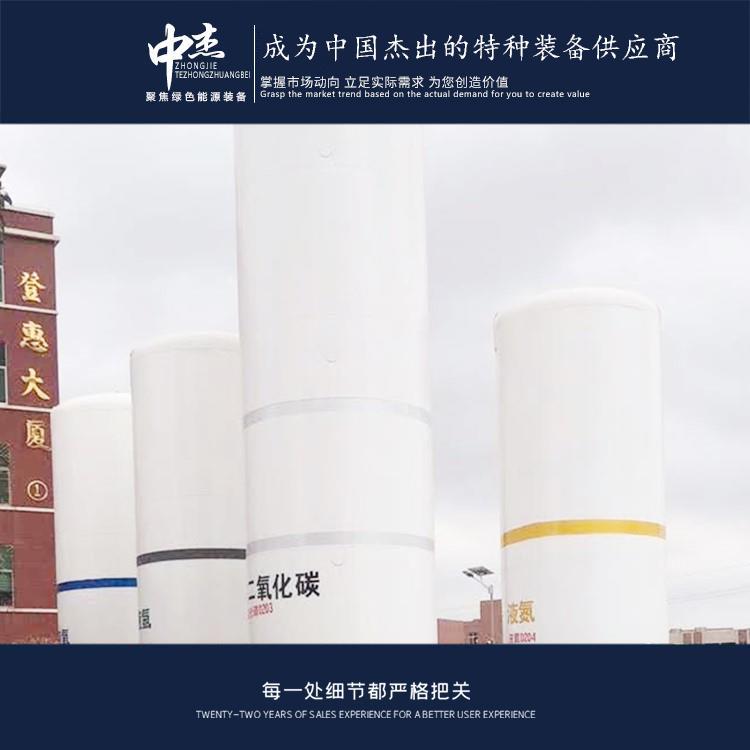
Maintaining and being aware of the precautions for liquid nitrogen tanks is crucial. Here are some key points:
Maintenance:
Regular Inspections: Conduct regular inspections of the liquid nitrogen tank's exterior, valves, pipes, and other components to ensure they are intact and undamaged. Pay special attention to check for any leaks, corrosion, or other forms of damage.
Clean Storage Tanks: Regularly clean liquid nitrogen storage tanks to remove internal dirt and deposits. Use appropriate cleaning agents and tools, and follow cleaning procedures and safety operation protocols.
Liquid Nitrogen Refill: Refill liquid nitrogen on a regular basis as needed. Ensure that there is an adequate reserve in the storage tank to meet usage requirements.
Maintain Pressure: Regularly inspect the liquid nitrogen tank's pressure to ensure it remains within the safe range. Conduct pressure tests and adjustments as needed.
Corrosion Protection: Implement appropriate corrosion prevention measures based on the material and usage environment of the storage tank to extend its service life. For example, apply corrosion-resistant coatings, perform regular corrosion treatments, etc.
Cautionary Notes:
Safe Operation: When using liquid nitrogen tanks, strict adherence to safety operation procedures and standards is mandatory. Operators must be trained, familiar with the properties and safety requirements of liquid nitrogen, and acquainted with the tank equipment and operational procedures.
Protection Measures: When using liquid nitrogen tanks, it is essential to take necessary protective measures, such as wearing protective gloves and suits. Avoid direct contact with liquid nitrogen to prevent coldness.
Leak Control: Conduct regular inspections of liquid nitrogen tanks for leaks, and equip with leak detectors and alarm systems. In the event of a leak, immediate measures should be taken to control the leak and carry out repairs.
Ventilation Requirements: In enclosed spaces where liquid nitrogen tanks are used, adequate ventilation must be ensured.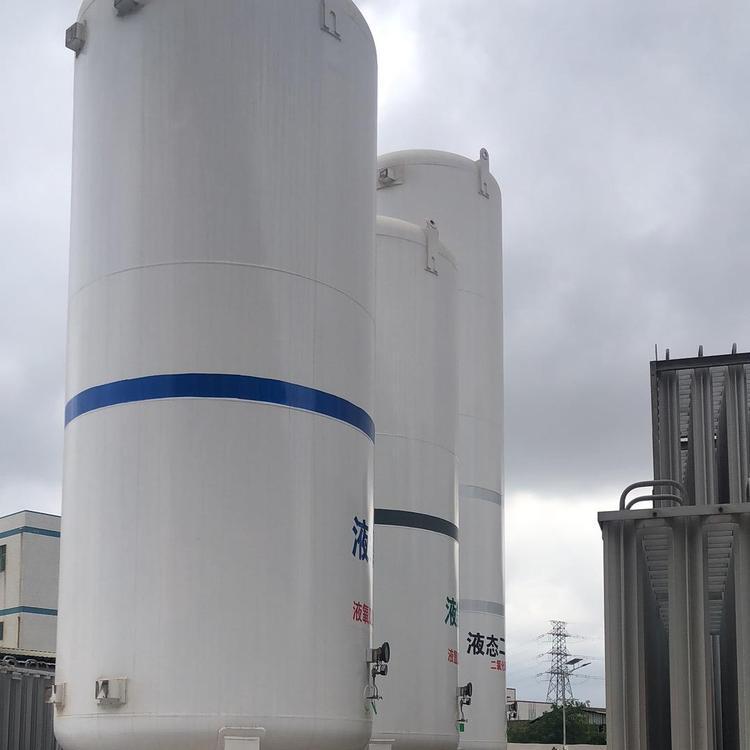
Low-temperature liquid oxygen storage tanks typically require certain safety accessories to ensure safe operation and to address potential risks. The following are some common safety accessories for low-temperature liquid oxygen storage tanks:
Pressure Sensor: Used to monitor pressure changes within storage tanks. Should the pressure exceed the set range, it will trigger an alarm or automatically stop filling to prevent overpressure in the tank.
Safety valve: Used to automatically release gas when the pressure inside the storage tank exceeds the set value, preventing overpressure. The safety valve should be selected and installed based on the design pressure and capacity of the storage tank.
Pressure relief device: Used to release gas into a safe area when the pressure inside a storage tank is too high, thereby reducing the pressure on the tank. The pressure relief device typically includes pressure relief valves and relief pipes.
Level sensor: Used to monitor the level changes of liquid oxygen inside storage tanks to ensure an adequate supply and prevent overfilling.
Temperature Sensor: Used to monitor temperature changes within the storage tank to ensure the liquid oxygen inside remains within a safe temperature range.
Fire Detectors and Fire Suppression Systems: Designed to monitor fire risks around storage tanks and activate fire suppression systems as needed to prevent the spread of fire to adjacent areas.
The use and operation of the liquid oxygen storage tank system require attention to the following points:
Safe Operation: When operating the liquid oxygen storage system, it is mandatory to follow relevant safety operating procedures and standards to ensure the safety of the operators.
Tank Selection: Choose liquid oxygen tanks that comply with regulations and standards, ensuring their quality and safety performance.
Tank Installation: Tanks should be installed on a sturdy foundation to ensure stability. Additionally, the surrounding area must be well-ventilated and kept away from flammable materials and heat sources.
Seal Integrity Inspection: Regularly check the sealing performance of the storage tank system to ensure there are no leaks at valve and pipeline connections.
Pressure Control: The storage tank system should be equipped with a pressure gauge and a safety valve, with regular inspections and maintenance to ensure pressure remains within safe limits.
Fire Prevention Measures: Liquid oxygen contains a high concentration of oxygen, which is highly flammable. Establish fire barriers around the storage tank system, ban smoking and open flames, and ensure safety.
Static Protection: During the operation of the liquid oxygen system, static electricity may cause sparks, increasing the risk of fire. Measures such as using static-conductive materials and anti-static equipment are taken to reduce the accumulation and release of static electricity.
Regular Inspections and Maintenance: Conduct regular checks on the tank system and related equipment, including valves, pipelines, pressure gauges, etc. Ensure that the equipment is in perfect condition, and promptly repair or replace any damaged parts.
Waste Gas Treatment: During the operation of the liquid oxygen system, waste gas is produced, and appropriate waste gas treatment measures must be implemented to minimize environmental impact.
Above are the precautions to be taken when using the liquid oxygen storage tank system, ensuring safe operation and the normal functioning of the system. During operation, strictly adhere to the relevant operational procedures and safety requirements to avoid accidents.
Chongjie Special Equipment upholds the great vision of "Realizing employee dreams, creating customer value, and striving for the prosperity and strength of our motherland," and is dedicated to the development of green energy equipment. We offer products and services with high cost-performance to contribute to society!
WeChat Official Account

Scan to follow Official Account




















