


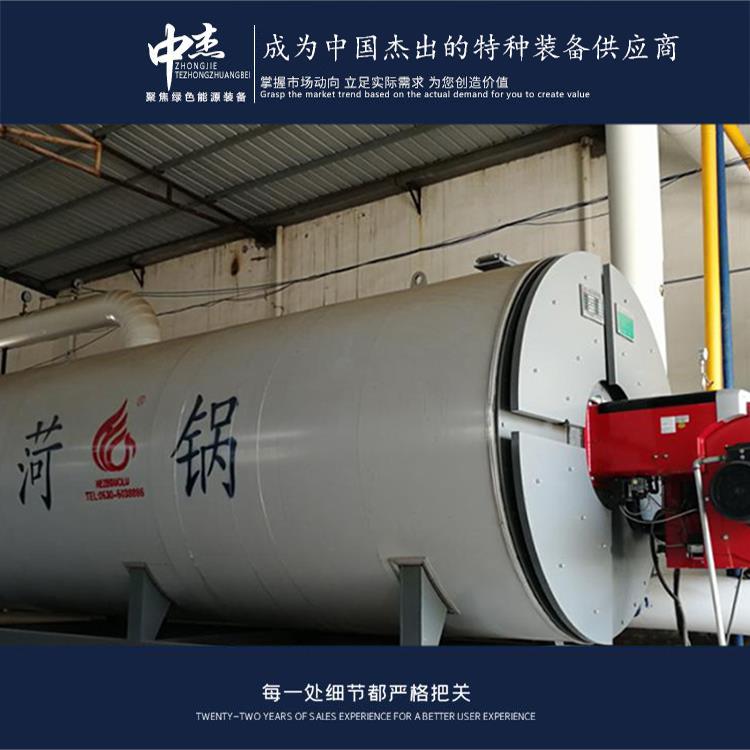



















Shandong Zhongjie Special Equipment (formerly Heze Boiler Factory Co., Ltd.) holds an A-grade boiler manufacturing license, an A2-grade pressure vessel manufacturing license, an A2-grade pressure vessel design license, a B-grade boiler installation license, and GB2/Class, GC2/Class pressure pipeline installation licenses, as well as a mechanical and electrical equipment installation contracting qualification. It is a member of the China Boiler and Water Treatment Association, the China Chemical Equipment Association, and the director unit of the Shandong Equipment Manufacturing Association. The company has also passed certifications for the ISO9001 Quality Management System, ISO14001 Environmental Management System, OHSAS18001 Occupational Health and Safety Management System, and the American ASME/U2 certification.
The importance of energy-saving in steam boilers is significant for the following reasons: Energy Costs: Steam boilers typically use fuels (such as coal, gas, oil, etc.) to generate steam, with energy costs accounting for a significant portion of the boiler's operational expenses. Energy-saving measures can reduce energy consumption and lower costs. Environmental Protection: The combustion process of steam boilers produces exhaust gases and dust, causing environmental pollution. Energy-saving can decrease fuel usage and reduce emissions, having a positive impact on environmental protection. Sustainable Development: Energy-saving is a crucial aspect of sustainable development. By reducing energy consumption and extending the boiler's lifespan, resources can be conserved and wasted, achieving sustainable development. To promote energy-saving, the following measures can be taken: Improving Boiler Efficiency: By enhancing the boiler's combustion system, optimizing combustion parameters, and increasing heat exchange efficiency, the boiler's thermal efficiency can be raised, reducing energy waste. Heat Recovery Utilization: Using waste heat recovery systems, the residual heat in the flue gas emitted by the boiler can be recovered and utilized for heating water or other processes requiring heat, enhancing energy utilization efficiency. Application of Energy-Saving Equipment: The use of energy-saving equipment, such as variable-frequency drives, energy-saving burners, and heat pumps, can reduce energy consumption and improve boiler efficiency.
To ensure the safe operation of industrial boilers, attention should be given to the following aspects:
1. Compliance with Laws and Regulations: Understand and comply with relevant laws, regulations, and standards, including those governing boiler safety management and standards for boiler use and maintenance. Ensure that the operational process adheres to legal requirements.
2. Establish a Management System: Develop a comprehensive industrial boiler safety management system, clearly defining responsibilities and authorities, and standardizing operational procedures and safety measures. Formulate operational guidelines and emergency response plans to ensure the orderly conduct of safety operations.
3. Training and Education: Provide training and education for personnel involved in the safe operation of industrial boilers to enhance their safety awareness and skill levels. This includes training for boiler operators, maintenance staff, and managers.
4. Regular Inspection and Maintenance: Conduct regular inspections and maintenance on industrial boilers to ensure the normal operation and safety performance of the equipment. This includes checking and maintaining key components such as the combustion system, water level control, safety valves, and pressure gauges.
5. Safety Equipment and Supplies: Equip necessary safety equipment and supplies, such as safety valves, pressure gauges, water level indicators, and burners, ensuring their proper operation and effectiveness.
6. Regular Inspections and Assessments: Conduct regular inspections and assessments of industrial boilers to ensure they meet safety requirements, including periodic pressure tests, water quality inspections, and combustion efficiency evaluations.
7. Safety Records and Documentation: Establish a comprehensive system for safety records and documentation management, recording the operational status, maintenance records, and accident reports of industrial boilers. Update and preserve relevant safety documents in a timely manner.
8. Regular Drills and Emergency Response Plans: Organize regular safety drills and emergency response training to improve the ability to respond to emergencies and the efficiency of emergency handling.
The above are some basic points for ensuring the safe operation of industrial boilers. Specific operations should be carried out based on actual conditions and relevant requirements.
Chemical cleaning of industrial boilers is a common method that effectively removes dirt and sediments inside the boiler, enhancing heat exchange efficiency and extending the boiler's lifespan. Below are the general steps and methods for industrial boiler chemical cleaning:
Preparation: Turn off the boiler's power and gas supply, drain the water and steam from the boiler, ensuring the boiler is in a safe condition. Prepare the required chemical cleaning agents and equipment.
Cleaning Agent Selection: Choose a suitable chemical cleaning agent based on the boiler's material and the nature of the dirt. Common cleaning agents include acidic, alkaline, and chelating agents.
Cleaning Agent Circulation: Dissolve the cleaning agent in an appropriate amount of water and pump it into the boiler in a cycle. Determine the circulation time and temperature based on the boiler's size and the extent of the dirt.
Cleaning Agent Action: During the circulation, the cleaning agent reacts chemically with the dirt inside the boiler, dissolving and decomposing it. Acidic cleaning agents can remove rust and scale, while alkaline cleaning agents can remove grease and organic matter.
Rinsing and Neutralizing: After the cleaning agent circulation is complete, rinse the boiler with clean water to flush out the cleaning agent and dissolved dirt. Simultaneously, use a neutralizer to neutralize any remaining acidic or alkaline substances, ensuring the boiler's neutrality.
Inspection and Maintenance: After cleaning, inspect the boiler to ensure the cleaning effectiveness and normal operation. Perform the necessary maintenance and repair work as needed.
Points to note when performing industrial boiler chemical cleaning:
- Adhere strictly to the usage instructions and safety operation procedures for chemical cleaning agents to ensure the safety of the operators.
- Select the appropriate cleaning agent and method based on the boiler's material and the properties of the cleaning agent.
- Control the concentration, temperature, and circulation time of the cleaning agent to avoid unnecessary damage to the boiler.
- Monitor the concentration and pH value of the cleaning agent in a timely manner during the cleaning process, adjusting the cleaning conditions.
- Flush the boiler after cleaning to ensure the complete removal of cleaning agents and dirt.
- Perform boiler maintenance and repair promptly after cleaning to ensure normal operation and long-term use.
The purpose of deoxygenation in industrial boiler feed water is to reduce oxygen corrosion and bubble formation within the boiler, ensuring the safety and proper operation of the boiler and pipeline system. The main methods of deoxygenation include:
1. Mechanical Deoxygenation: Removing oxygen from water through physical means. Common mechanical deoxygenation equipment includes deaerators and degassers. Deaerators remove oxygen by atomizing water into a film, utilizing the difference in gas solubility. Degassers, on the other hand, remove oxygen by atomizing water into fine droplets, also using the difference in gas solubility.
2. Thermal Deoxygenation: Removing oxygen from water by heating the water body, taking advantage of the property that oxygen solubility decreases with temperature. Common thermal deoxygenation equipment includes deaerators and deaeration pots. Deaeration pots release oxygen from water by heating it to saturation temperature. Deaerators heat the water to reduce oxygen solubility and remove oxygen.
3. Chemical Deoxygenation: Removing oxygen from water by adding chemicals that react with the oxygen, thereby removing it. Common chemical deoxygenating agents include salts and reductants. Chemical deoxygenation is often used in high-pressure boiler systems and can effectively remove oxygen from water.
The choice of deoxygenation method and equipment depends on the specific boiler system and water quality. In practice, a combination of deoxygenation methods is often used to achieve the desired deoxygenation effect. The selection and operation of deoxygenation equipment should be assessed and adjusted based on actual conditions to ensure the safety and proper operation of the boiler system.
Shandong Zhongjie Special Equipment, welcome customers to visit our factory for business discussions.
WeChat Official Account

Scan to follow Official Account




















