













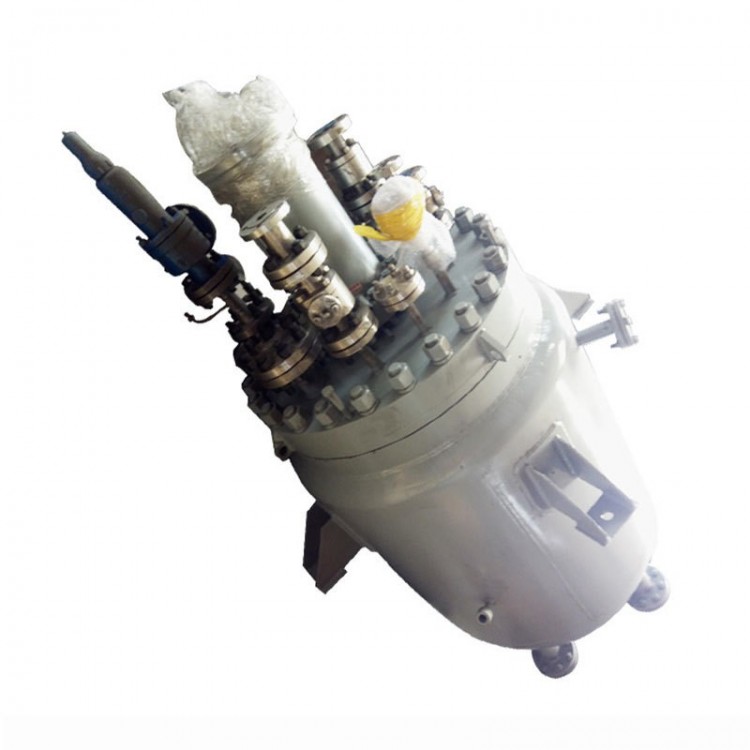
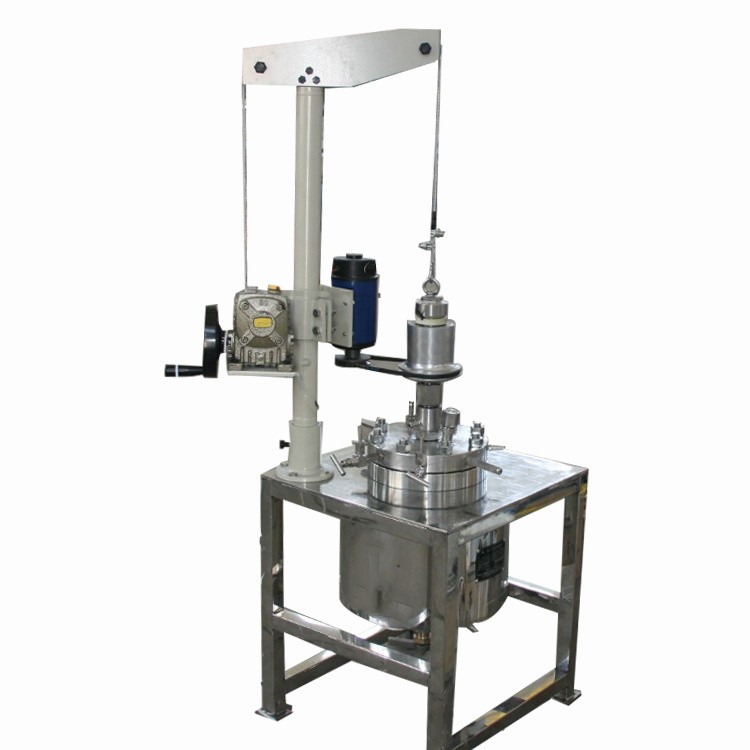
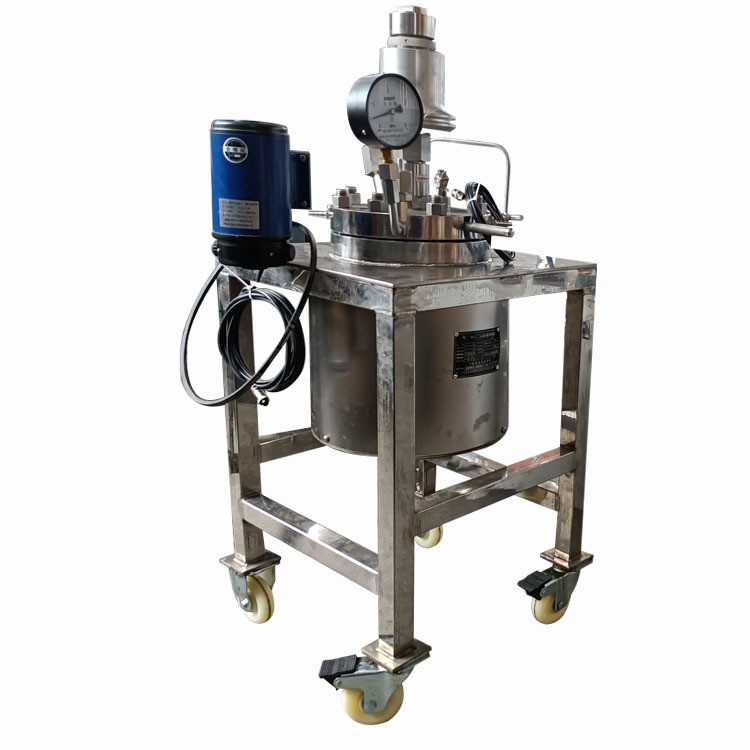
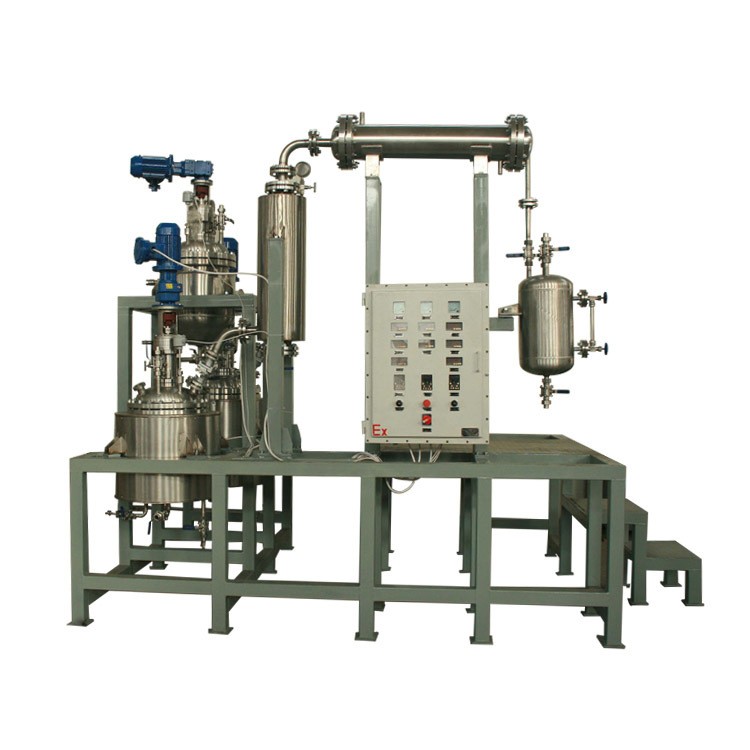
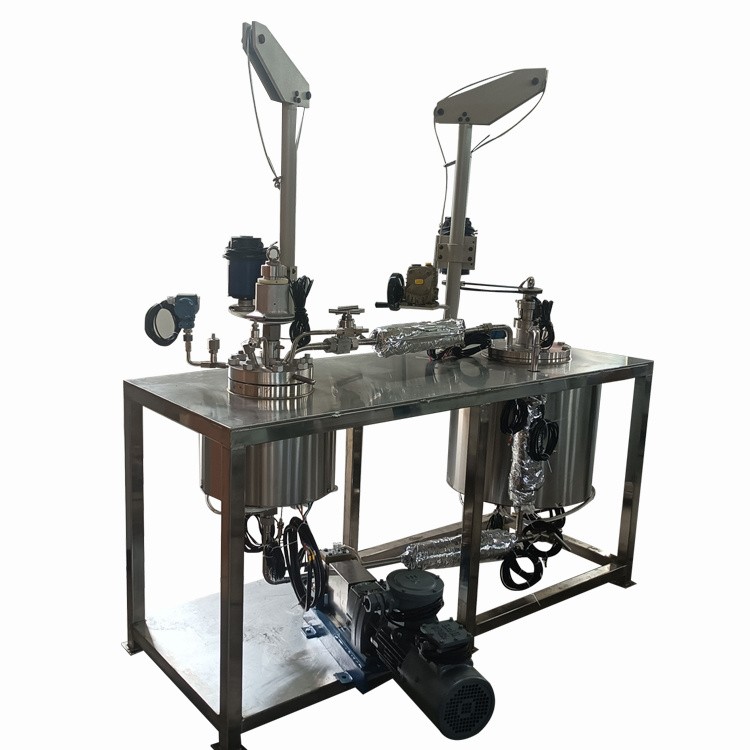
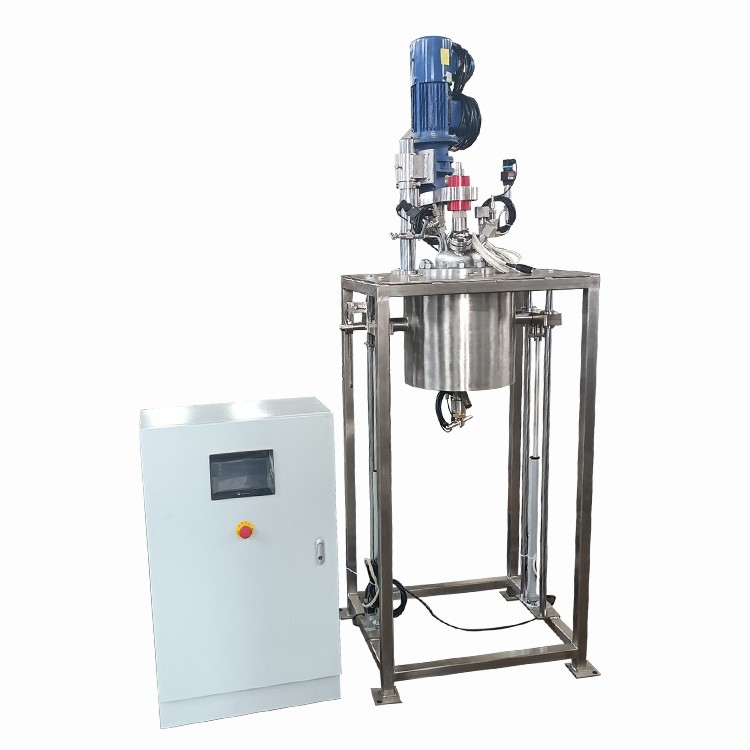
High-pressure reactors are composed of components such as electric motors,减速 gears, magnetic drive units, flanges, cylindrical bodies, jackets, and agitators.
The magnetic drive unit is a typical innovation for autoclaves, fundamentally solving the shaft seal leakage problem that previous packing and mechanical seals could not overcome. It ensures no leakage or contamination, making it an ideal device for high-temperature and high-pressure chemical reactions in China. It particularly excels in reactions involving flammable, explosive, or toxic substances. It is widely used in industries such as oil, chemicals, rubber, pesticides, dyes, and food, to complete processes like vulcanization, nitration, hydrogenation, hydrocarbonation, polymerization, and condensation.
Structural Features:
Specs: 50L, 100L, 200L, 300L, 500L, 1000L, 1500L, 2000L, 3000L, 5000L, 8000L, 10000L, 20000L, and more
Material: High-pressure reactors primarily use composite panels, commonly with basic material Q345R and covering materials such as S31603, S30408, S32168, Hastelloy, nickel, titanium, Inconel, zirconium, and other non-ferrous metals. Stainless steel can also be used.
Stirring: A high-strength magnetic rotational coupling structure (magnetic drive unit) made with rare-earth permanent magnets. The basic manufacturing materials for the magnetic drive unit are ferromagnetic substances (iron-based alloys, nickel-based alloys), with minimal loss of magnetic field when passing through the sealed alloy layer. As a result, the rotating magnetic field generated by the external permanent magnet can be effectively received by the internal permanent magnet rotor, thereby driving the stirring components within the reactor for material mixing. Stirring speed ranges from 0 to 300 rpm, even higher, and can be equipped with various blades such as propulsion, paddle, anchor, frame, and helical blades.
Heating: Common heating methods include jacket (semi-circular tube) external circulation heating and electric heating, with circulating media such as steam and thermal oil.
Safety: High-pressure reactors are equipped with safety valves or bursting discs, featuring small bursting value errors and rapid exhaust speed for quick release, ensuring safety and reliability.
Polishing: The interior surface of the vessel, as required, can be mirror polished.
Dish Cover: Common structures of dish covers include flat covers and dome-shaped caps. The openings on the dish cover can be designed according to customer requirements.
Caution for using high-pressure reactors (hydrogenation reactors):
For beginners operating autoclaves, at least one person must be present who is proficient in autoclave operations.
2. Personnel operating on-site must wear cotton gloves and footwear without nails.
3. Do not carry items such as mobile phones, lighters, MP3 players, etc., that may cause explosions or spontaneous combustion into the hydrogenation work area.
4. Operators handling tools and parts near the hydrogen cracking process should handle them gently to avoid rigid impacts that could cause sparks.
5. During pressure release, the exhaust from high-pressure reactions should be directed outdoors via a flexible hose or into a fume hood.