
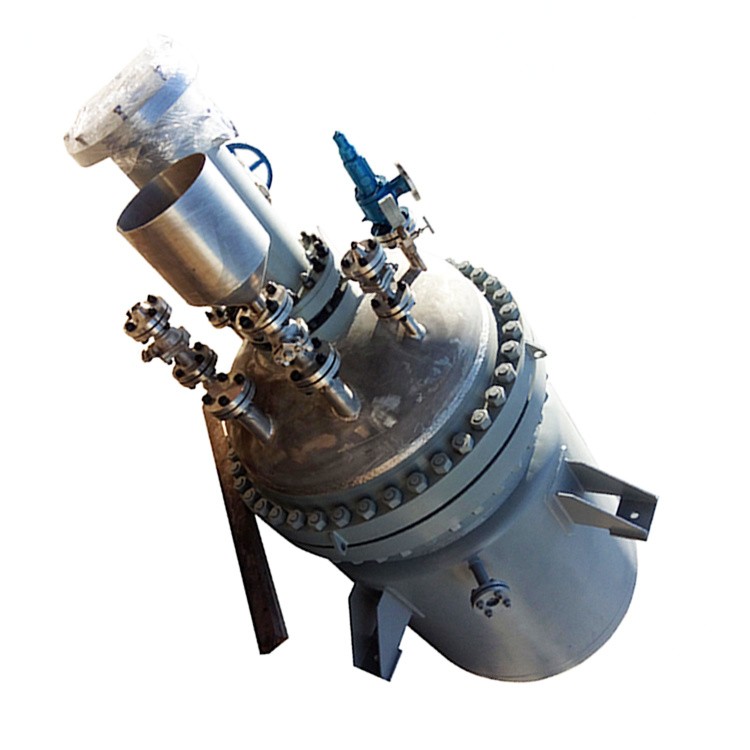












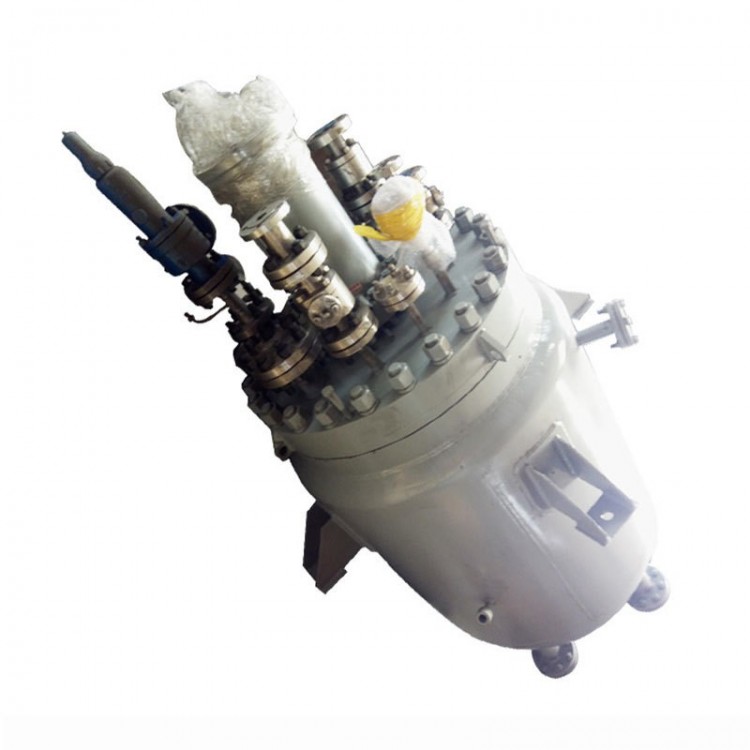
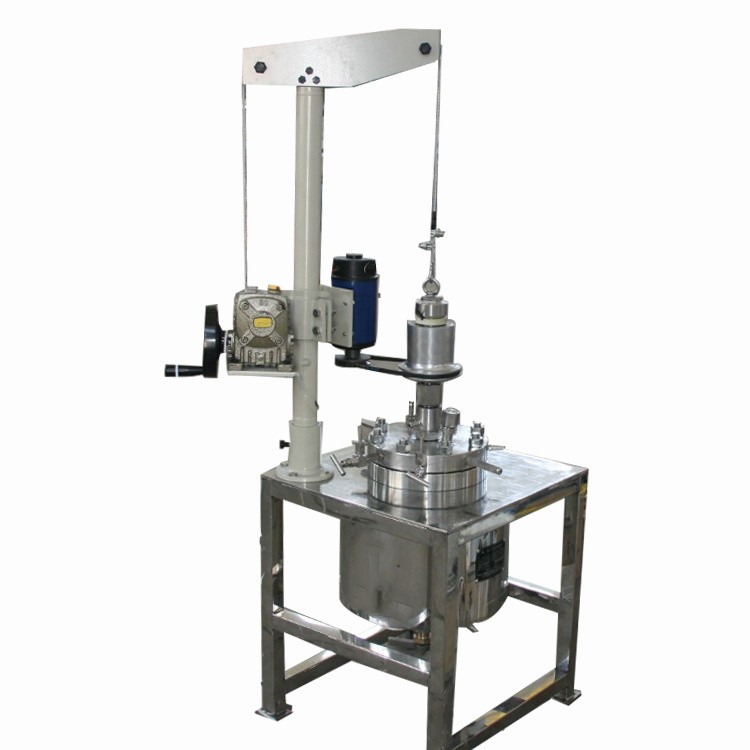
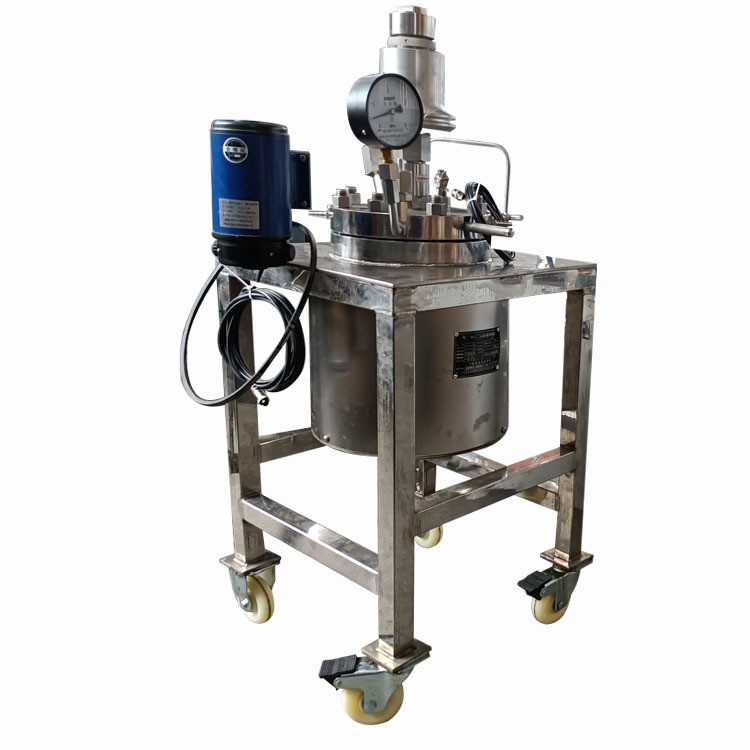
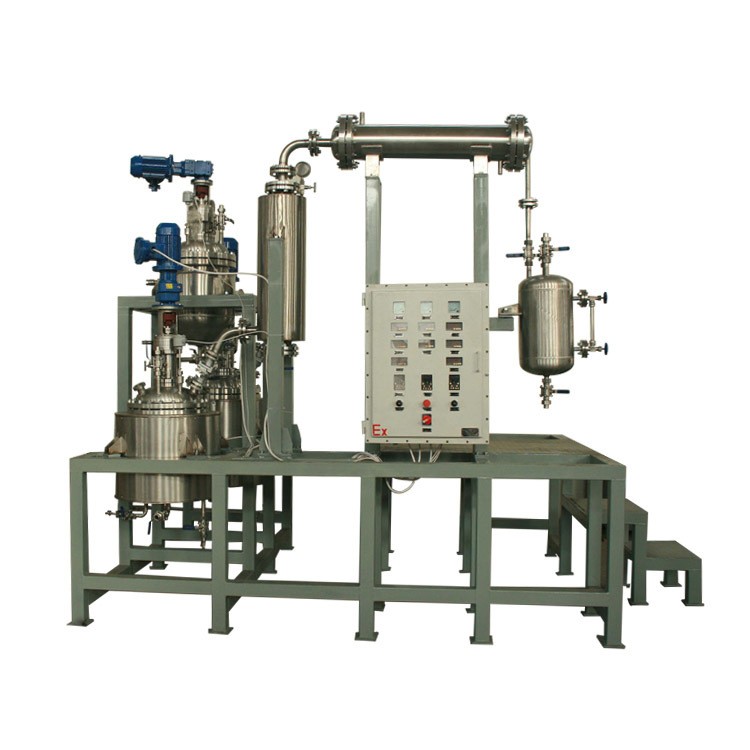
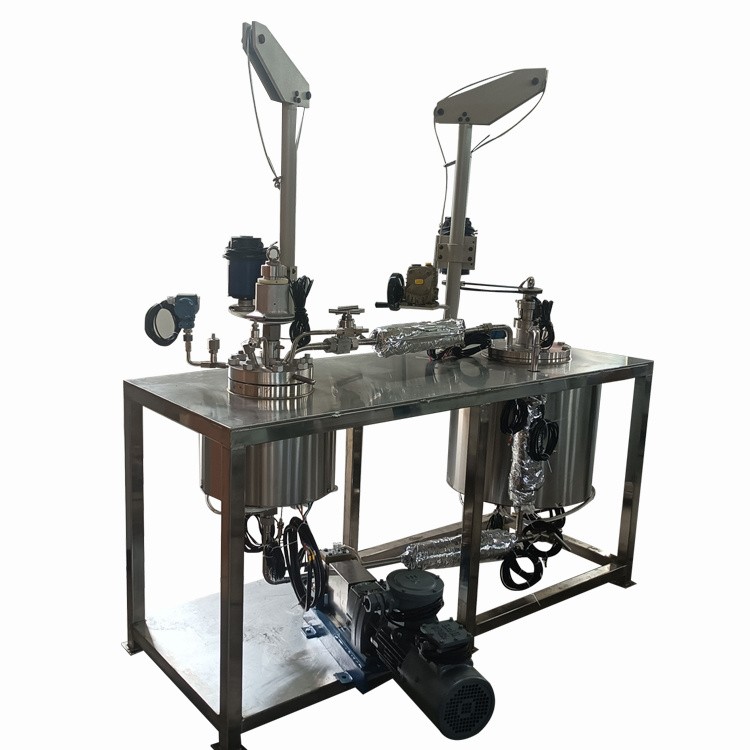
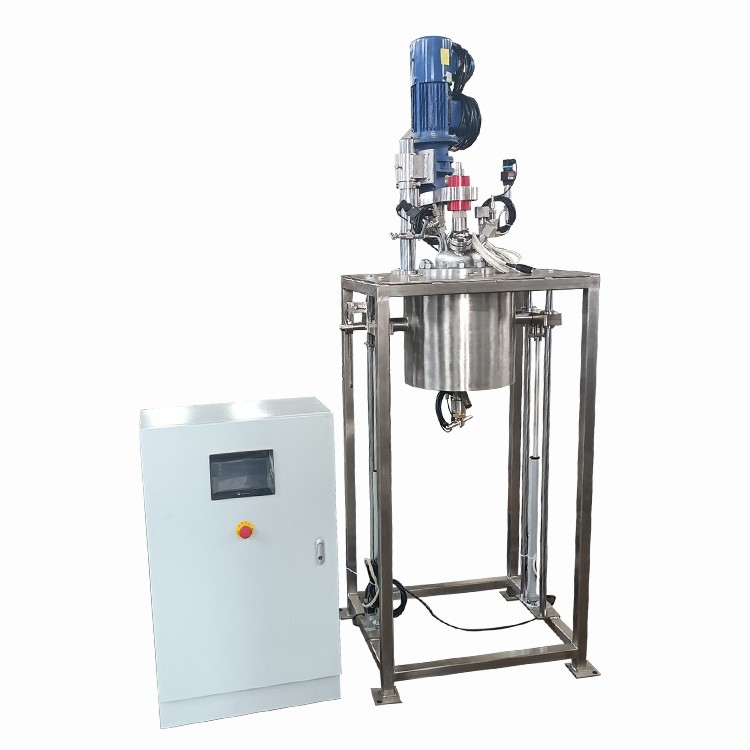
Hydrogenation reactors are widely used in industries such as petrochemicals, rubber, pesticides, dyes, food, etc. The working principle of a hydrogenation reactor is to achieve rapid reaction by mixing hydrogen, catalysts, and materials thoroughly through high-speed stirring.
Materials: Alcohols, hydrogen, catalysts (Palladium on Carbon, Raney Nickel, etc.) and materials (benzene, alkali, alkanes, phenols, etc.)
Volume: 100/200/500/1000L/2000L/3000L/5000L/8000L/10000L/
Temperature: 0~350 degrees
Pressure: -0.1 MPa to 15 MPa
Material: Common materials for contact parts include S31603, S30408, S32168, Hastelloy, and other non-ferrous metals like nickel.
Agitator Blade: In a high-pressure hydrocracking reactor, the solid-liquid-gas three-phase mixture is crucial, and the uniformity of hydrogen mixing is the key to the reaction. To accelerate the mixing of hydrogen, the following three methods are generally used:
1. The hydrogenation reactor typically features a reactor body with a gas distributor at the bottom, where hydrogen gas is distributed from the bottom up through the distributor to thoroughly mix with the material.
2. Our company utilizes a self-priming agitator blade, which operates by creating a vacuum zone around the agitator due to high rotation speed. Under the influence of pressure difference, hydrogen gas at the top of the reactor is drawn into the material interior through the hollow shaft and the self-priming blade. In the high-speed rotation, it is ejected into the material to form bubbles, thereby achieving thorough mixing.