






















Shandong Zhongjie Special Equipment (formerly Heze Boiler Factory Co., Ltd.) was established in 2001, located at No. 2218 Jinnan Road, Development Zone, Heze City. With a registered capital of 50 million yuan and total assets of 500 million yuan, the company has 7 business centers: boilers, deep-freezing containers, pressure vessels, central air conditioning, engineering installation, international trade, and the Internet of Things. It has three factory sites on Jinnan Road, East Changjiang Road, and Bohai Road, covering a total of 200,000 square meters, with the main workshop spanning 83,000 square meters. It currently employs 710 people, including 247 engineers and technicians and 82 intermediate-level technicians. In December 2016, it was recognized as a "High-tech Enterprise" by the Science and Technology Department. In June 2021, it was identified as a "Specialized and New Enterprise in Shandong Province" by the Ministry of Industry and Information Technology. In June 2022, it was named a "Gazelle Enterprise in Shandong Province" and in August 2022, it was recognized as a "Specialized and New Small Giant Enterprise" by the Ministry of Industry and Information Technology.
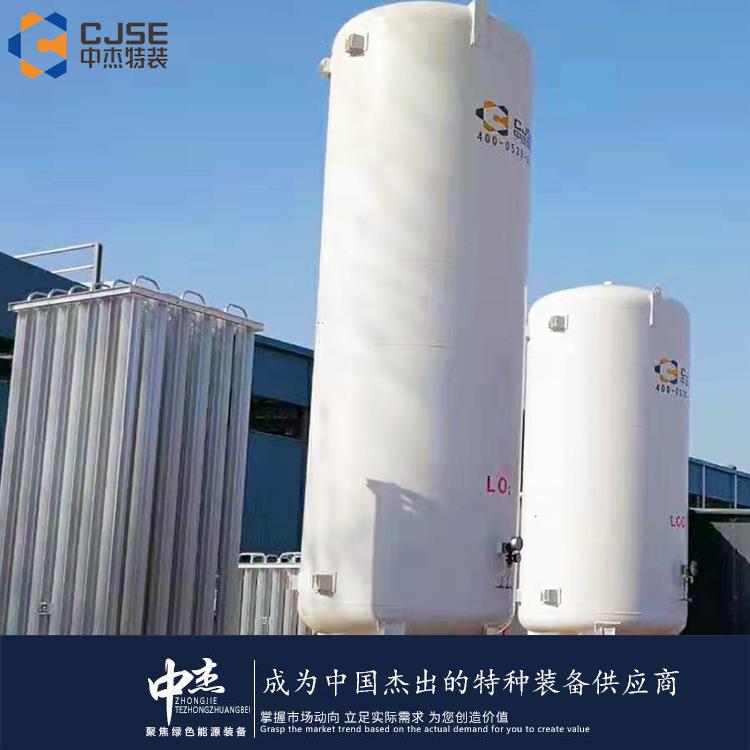
The dimensions and structure of liquid oxygen storage tanks can vary depending on specific requirements and applications. The following are common sizes and structures of liquid oxygen storage tanks:
Dimensions: The size of liquid oxygen tanks is typically determined by the capacity for storage or transportation. Common liquid oxygen tank capacities range from a few thousand to several tens of thousands of liters.
Structure: The structure of the liquid oxygen tank primarily includes the inner shell, outer shell, insulation layer, and supporting structure, etc.
Inner Shell: The inner shell of a liquid oxygen tank is the part used to store liquid oxygen, commonly made of stainless steel or aluminum alloy, offering excellent corrosion resistance and sealing properties.
Shell: The shell of a liquid oxygen tank is the external structure that protects the inner lining, typically made of carbon steel or stainless steel, and boasts sufficient strength and corrosion resistance.
Insulation Layer: The insulation layer of the liquid oxygen tank is used to reduce heat conduction and loss, maintaining the low-temperature state of the liquid oxygen. Common insulation materials include polyethylene foam, glass fiber, and aerogel, etc.
Support Structure: The support structure of the liquid oxygen tank is used to support and secure the inner shell and outer shell of the tank. The support structure is typically made of steel, offering sufficient strength and stability.
The dimensions and structural design of liquid oxygen tanks must consider the properties of liquid oxygen, storage or transportation requirements, safety standards, and other factors. When using liquid oxygen tanks, strict adherence to relevant operational specifications and safety requirements is necessary to ensure safe usage.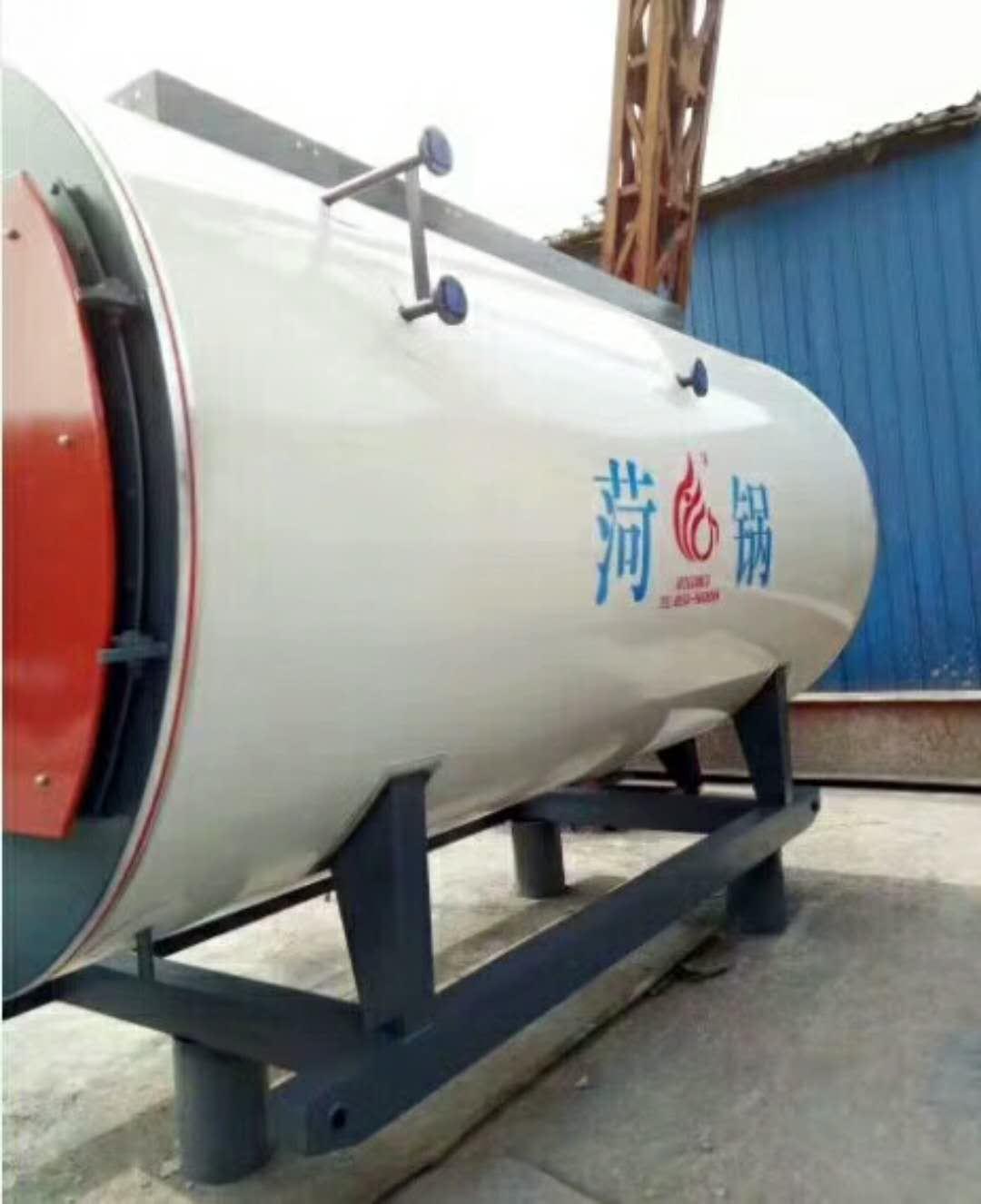
During the operation of low-temperature storage tanks, it is indeed necessary to avoid wrinkling. Wrinkling refers to the occurrence of creases or deformation in the tank walls, which may lead to a decrease in the structural integrity of the tank, and could even cause leaks or ruptures.
Here are some precautions to avoid tank flexing in low-temperature storage:
Tank Design: Select an appropriate tank design that can withstand the pressure and weight of low-temperature liquids. The wall thickness and supporting structure of the tank should comply with relevant standards and regulations.
Material Selection: Choose materials suitable for low-temperature environments, with sufficient strength and low-temperature resistance. Common materials include low-temperature steel, stainless steel, etc.
Insulation Layer for Storage Tanks: The design and construction of the insulation layer must meet the requirements to ensure effective reduction of heat conduction and temperature variation. The materials and thickness of the insulation layer should be selected based on specific conditions.
Tank Operation: During the loading and unloading of liquids in the tank, it is essential to avoid rapid or excessive fluid flow to minimize impact and stress concentration on the tank walls.
Tank Maintenance: Regularly inspect and maintain the structure and insulation of the tank to ensure it remains undamaged. Any abnormalities or damage should be repaired or replaced promptly.
Temperature Control: During the operation of low-temperature liquid storage tanks, it is essential to strictly control the temperature difference between the inside and outside of the tank to avoid excessive temperature changes and thermal stresses.
In summary, preventing deformation in low-temperature storage tanks hinges on proper design, material selection, insulation installation and maintenance, as well as strictly controlling temperature variations. Regular inspections and maintenance are crucial for ensuring the safe operation of the tanks.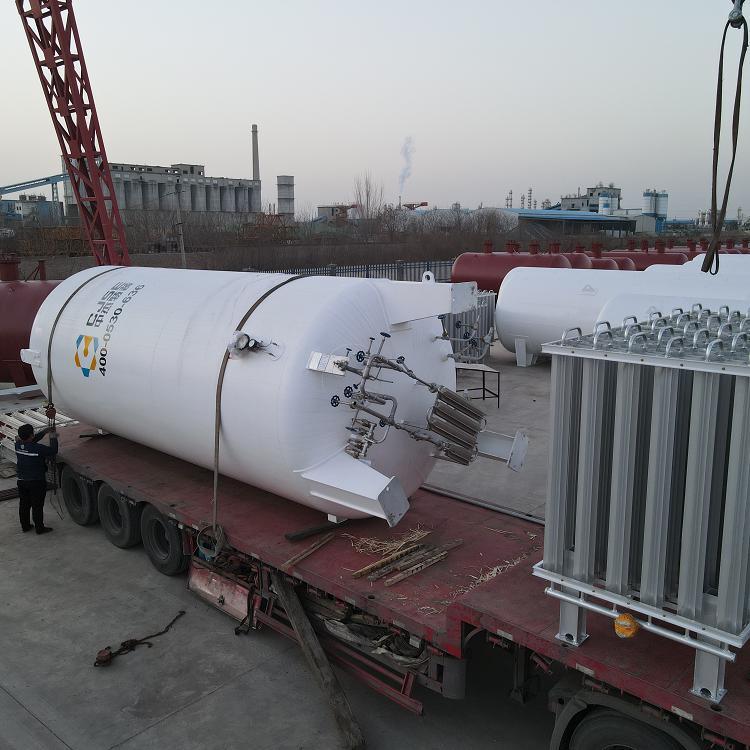
Low-temperature liquid oxygen tanks typically require certain safety accessories to ensure safe operation and to mitigate potential risks. The following are some common safety accessories for low-temperature liquid oxygen tanks:
Pressure Sensor: Used to monitor pressure changes within storage tanks. In the event of pressure exceeding the set range, it triggers alarms or automatically stops filling measures to prevent overpressure in the tank.
Safety Valve: Used to automatically release gas when the pressure inside the storage tank exceeds the set value, preventing overpressure. The safety valve should be selected and installed based on the design pressure and capacity of the storage tank.
Pressure Relief Device: Used to release gas into a safe area when the pressure inside the storage tank is too high, thereby reducing the pressure on the tank. The pressure relief device typically includes relief valves, relief pipes, and the like.
Level sensor: Used to monitor the liquid oxygen level changes within the storage tank to ensure an adequate supply of liquid oxygen and prevent overfilling.
Temperature Sensor: Used to monitor temperature changes within storage tanks to ensure the temperature of liquid oxygen inside remains within a safe range.
Fire Detectors and Fire Suppression Systems: Designed to monitor fire risks around storage tanks and activate fire suppression systems as needed, preventing the spread of fires to surrounding areas.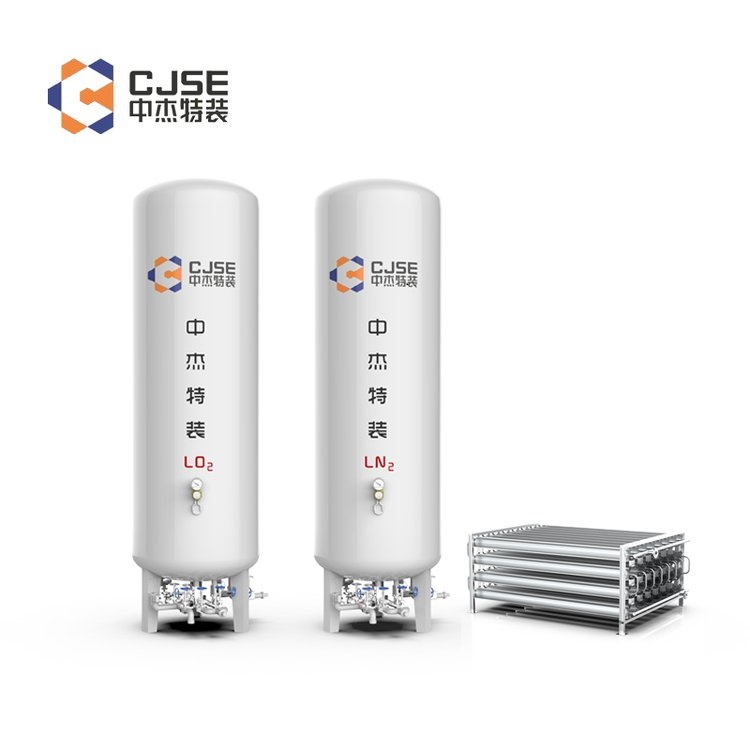
The daily inspection of liquid nitrogen tanks primarily includes the following aspects:
Visual Inspection: Check for any obvious damage, deformation, or corrosion on the tank's exterior, including the tank walls, valves, pipes, and joints.
Sealability Inspection: Check the tank's sealing performance, including inspecting for leaks at valve and pipe connections, and verifying that the tank's exhaust valve and safety valve are functioning properly.
Pressure Check: Verify that the tank's pressure gauge is functioning correctly and that the pressure is within the normal range to ensure the tank operates properly.
Level Check: Monitor the liquid nitrogen tank's level to ensure it remains within the normal range, avoiding issues caused by either too high or too low levels.
Insulation Layer Inspection: Check for any damage or detachment in the storage tank's insulation layer to ensure proper insulation and reduce evaporation losses of liquid nitrogen.
Leak Inspection: Check for signs of liquid nitrogen leakage around the storage tank, including frost, ice, or liquid nitrogen stains on the ground.
Safety Equipment Inspection: Verify that the safety equipment of the storage tank, such as leak detectors, alarm systems, and safety valves, are functioning properly to ensure the tank's safety.
Cleaning Inspection: Regularly clean the interior of the tank to remove accumulated impurities and dirt, maintaining the tank's cleanliness and hygiene.
The above outlines the daily inspection requirements for liquid nitrogen storage tanks. The specific inspection items should be adjusted and supplemented based on the tank's model, usage, and relevant regulations. During the inspection process, strictly adhere to the relevant operational procedures and safety standards to ensure the safe operation of the tank.
Zhongjie Special Equipment upholds the grand vision of "realizing employees' dreams, creating value for customers, and striving for the prosperity and strength of our motherland," and is dedicated to the development of the green energy equipment industry. We offer society high-quality products and services at competitive prices!
WeChat Official Account

Scan to follow Official Account




















