


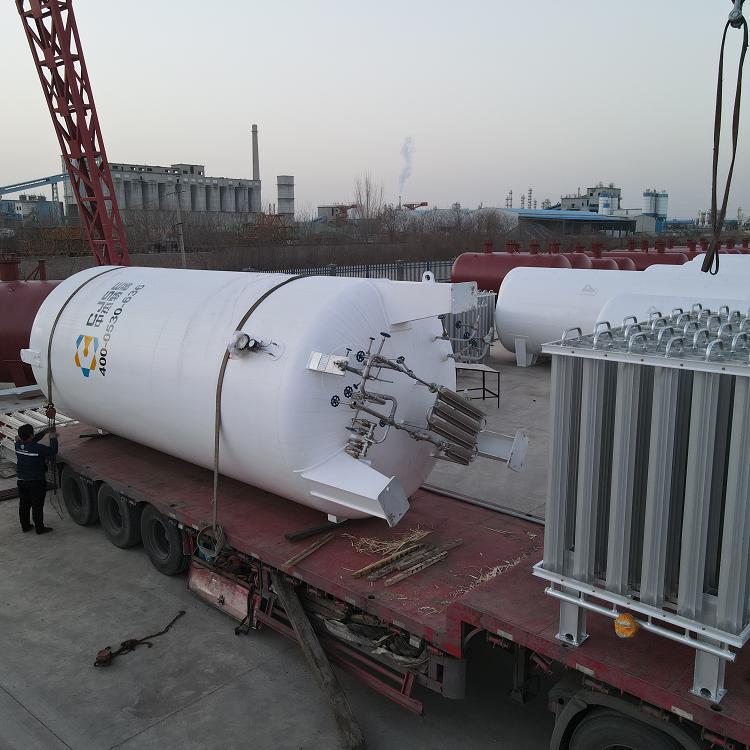

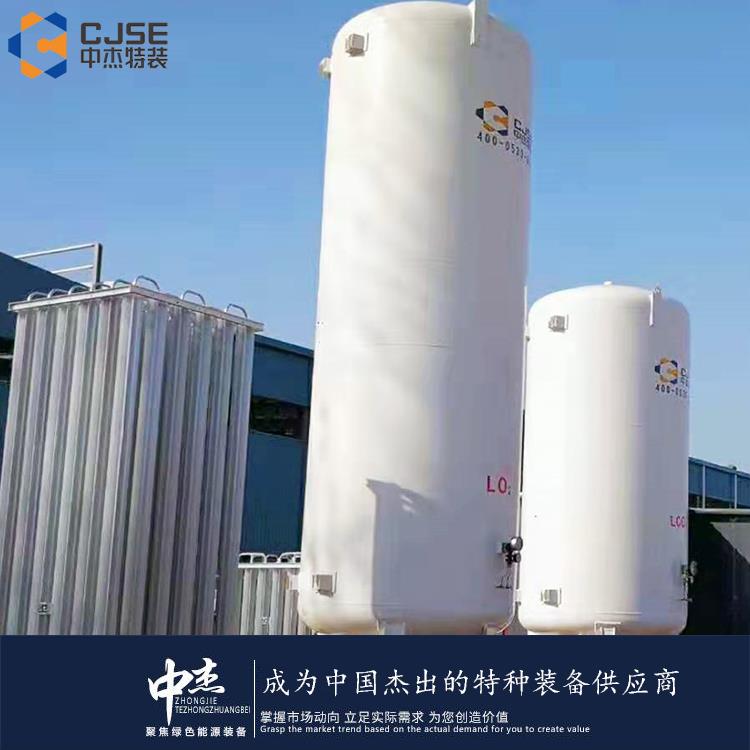
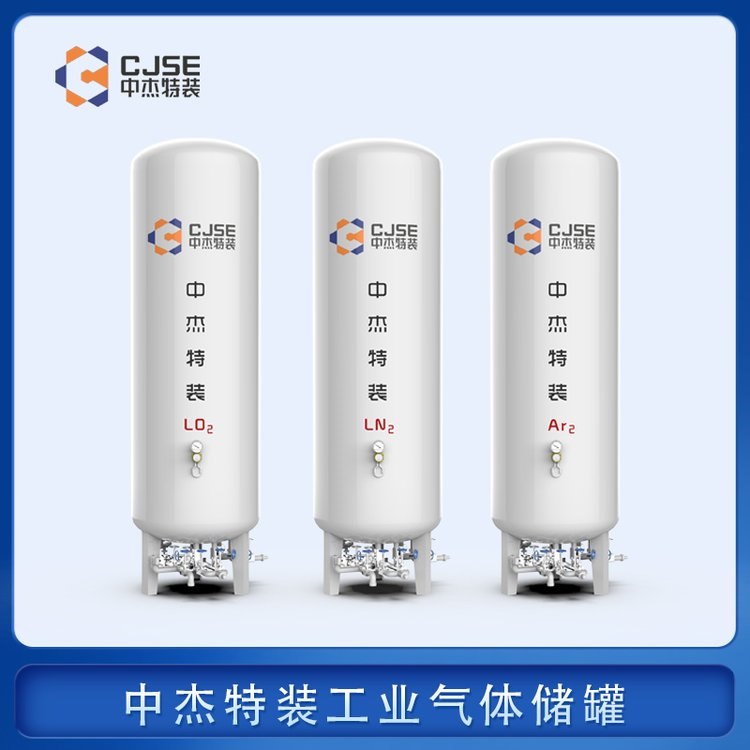



















Shandong Zhongjie Special Equipment (formerly Heze Boiler Factory Co., Ltd.) was established in 2001, located at No. 2218 Jinnan Road, Economic and Technological Development Zone, Heze City, with a registered capital of 50 million yuan and total assets of 500 million yuan. The company has 7 business centers: boilers, deep-freeze containers, pressure vessels, central air conditioning, engineering installation, international trade, and the Internet of Things. It has three factory sites on Jinnan Road, East Changjiang Road, and Bohai Road, covering a total of 200,000 square meters, with the main workshop area at 83,000 square meters. It currently employs 710 people, including 247 engineering and technical staff and 82 middle-level technical personnel. In December 2016, it was recognized as a "High-tech Enterprise" by the Science and Technology Department. In June 2021, it was identified as a "Specialized and New Enterprise in Shandong Province" by the Ministry of Industry and Information Technology. In June 2022, it was recognized as a "Gazelle Enterprise in Shandong Province" and in August 2022, it was identified as a "Specialized and New Small Giant Enterprise" by the Ministry of Industry and Information Technology.
Liquid Oxygen Storage Tanks are specialized equipment that require careful attention to safety and an understanding of their characteristics. Below are the safety precautions and features of using liquid oxygen storage tanks:
**Safety Precautions:**
- **Operation:** The operation of liquid oxygen storage tanks should be carried out by trained and experienced personnel. Operators should be familiar with the tank's structure, performance, and operational procedures, and should operate strictly according to the manual and safety regulations.
- **Fire Prevention Measures:** Liquid oxygen is highly oxidizing and can easily cause fires and explosions. Open flames and sparks should be prohibited around the storage tank, and precautions should be taken to prevent contact with high-temperature objects. Fire protection equipment and fire extinguishers should be established and regularly inspected and maintained.
- **Leakage Control:** In the event of a leakage, immediate measures should be taken to control the leakage. Leaks can lead to the evaporation of liquid oxygen and an increase in oxygen concentration, which can raise the risk of fire and explosion. A leakage alarm system should be established, and leakage control devices and personal protective equipment should be provided.
- **Insulation Protection:** Liquid oxygen storage tanks should have good insulation to reduce evaporation and maintain low temperatures. The insulation should be regularly inspected and maintained to ensure its integrity and insulating properties.
- **Safety Distance:** A certain safety distance should be maintained around the liquid oxygen storage tank to prevent the spread of fires, explosions, and leaks. The specific requirements for safety distances should be assessed and determined according to local regulations and standards.
**Features:**
- **High Oxidizing Property:** Liquid oxygen has a high oxidizing property, which can support and intensify combustion. Therefore, special attention should be paid to fire and explosion prevention measures when using liquid oxygen storage tanks.
- **High-pressure Storage:** Liquid oxygen storage tanks typically store high-pressure oxygen, with pressures usually around 2-5 bar. Therefore, when operating and maintaining liquid oxygen storage tanks, attention should be given to pressure control and the safety of pressure relief devices.
- **Low-temperature Storage:** The liquid oxygen in the storage tank is at a low temperature, usually around -183°C. Therefore, when handling the liquid oxygen storage tank, appropriate protective measures should be taken.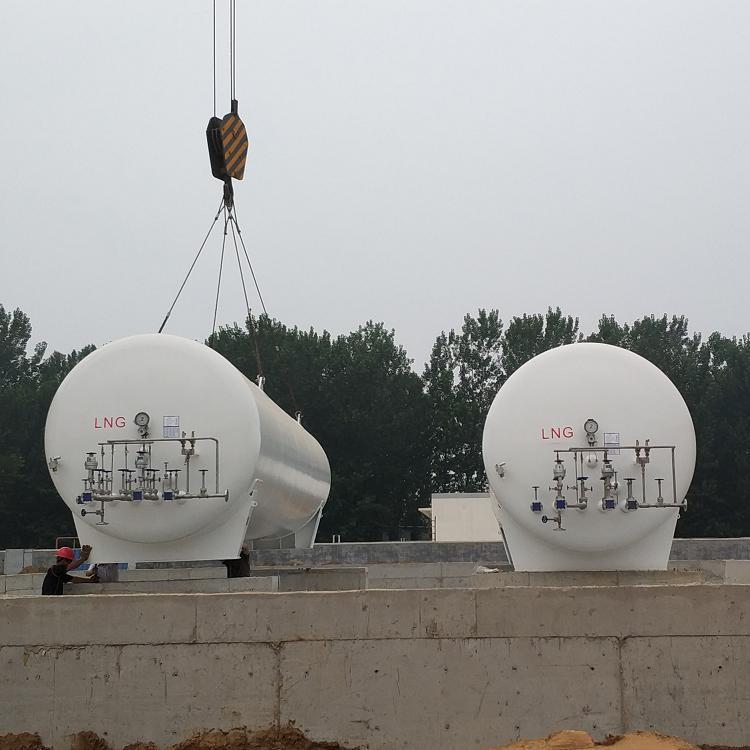
Liquid oxygen tanks are used for storing and supplying liquid oxygen as fuel and oxidizer, playing a crucial role in launch propulsion systems, etc. Industrial Production: Liquid oxygen is used as an oxidizer in industrial production for processes such as combustion, oxidation, and oxygen supply. Liquid oxygen tanks are used to store and supply liquid oxygen to meet the needs of industrial applications like metal cutting, welding, and chemical reactions. Equipment: Liquid oxygen tanks are used in equipment to supply oxygen, such as oxygen therapy, oxygen inhalation, and operating rooms. These tanks provide high-purity oxygen while maintaining low temperatures to meet the oxygen demands of equipment. Laboratory Research: Liquid oxygen tanks are used in scientific research and laboratories to provide liquid oxygen as experimental materials and reagents. The low temperature and high purity of liquid oxygen make it widely applicable in laboratories for fields such as materials science, chemical reactions, and biomedical research. In summary, liquid oxygen tanks are crucial in various fields including industrial production, equipment, and laboratory research, providing storage and supply functions for liquid oxygen at the application sites.
When cleaning low-temperature liquid storage tanks, the following steps should be taken:
Safety Preparations: Prior to cleaning, ensure there are no remaining liquids or gases inside the tank, and that the tank has been properly drained and vented. Wear appropriate personal protective equipment, such as protective suits, gloves, and safety shoes.
Cleaner Selection: Choose a cleaner suitable for low-temperature environments and liquid storage tank materials. Common cleaners include acidic and alkaline solutions, organic solvents, or specialized cleaners. Select the appropriate cleaner based on the tank material and the nature of the contaminants.
Cleaning Process: Inject the cleaning agent into the tank and use appropriate tools (such as sprayers, brushes, or high-pressure water) to clean the interior walls of the tank. Multiple cleanings can be performed as needed to ensure all contaminants are removed.
Washing and Discharge: After cleaning, flush with clean water or an appropriate solvent to remove all cleaning agents and residues. Ensure the tank interior is dry and discharge the flushing liquid into the appropriate treatment system.
Inspection and Verification: After cleaning, inspect the tank to ensure no residues are left inside. Appropriate testing equipment or methods, such as optical inspection, chemical analysis, or ultrasonic testing, can be used to verify the cleaning effectiveness.
Be mindful that when cleaning low-temperature liquid storage tanks, it's crucial to adhere to relevant safety regulations and operational guidelines. Liquid storage tanks are typically highly flammable and possess low-temperature characteristics, so operators must strictly follow safety procedures to ensure the safety of personnel and equipment. During the cleaning process, attention should be given to prevent leaks of cleaning agents and contaminants, and appropriate measures should be taken for handling and disposal.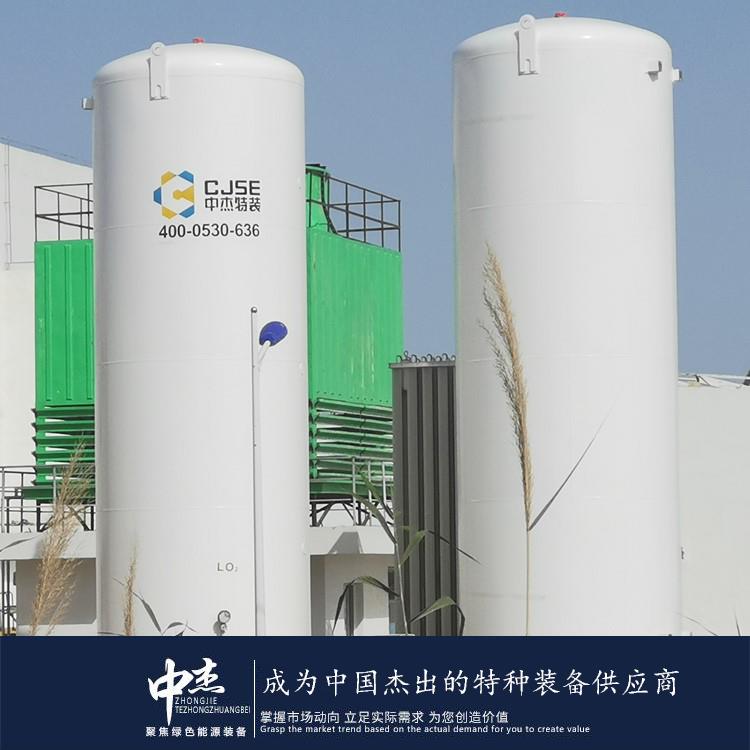
A liquid oxygen station is a facility for storing and supplying liquid oxygen, and the liquid oxygen tank is an essential component of the liquid oxygen station. The liquid oxygen tank has several important functions and features:
Storage of Liquid Oxygen: Liquid oxygen tanks are primarily used for storing liquid oxygen, cooling gaseous oxygen below its critical temperature to convert it into a liquid state. The storage density of liquid oxygen is high, allowing for a large amount of oxygen to be stored in a relatively small space.
Maintain Low Temperature: Liquid oxygen tanks are typically designed with a double-layer structure, separated by a vacuum layer between the inner and outer layers to reduce heat conduction and maintain low temperatures. This helps to keep the liquid oxygen at a low temperature, preventing premature vaporization.
Safety Design: The design and manufacturing process of liquid oxygen tanks must prioritize safety. They are typically made from high-strength materials such as stainless steel or aluminum alloys to withstand high pressure and low-temperature conditions. Additionally, liquid oxygen tanks are equipped with safety valves, pressure sensors, and temperature sensors to ensure that the internal pressure and temperature remain within safe limits.
Supply System Connection: Liquid oxygen tanks are typically connected to the supply system to transport liquid oxygen to the required locations. The supply system includes liquid oxygen pumps, pipelines, valves, and other equipment for extracting liquid oxygen from the tank and delivering it to the customer end.
Liquid oxygen tanks play a crucial role in storing and maintaining liquid oxygen in liquid oxygen stations. Their design and operation must strictly adhere to relevant safety regulations and procedures to ensure the safety and reliability of the storage and supply process.
ZJ Special Equipment adheres to the grand vision of "realizing employee dreams, creating customer value, and striving for the prosperity and strength of our motherland," and is dedicated to the development of the green energy equipment industry. We offer society high-value products and services!
WeChat Official Account

Scan to follow Official Account




















