


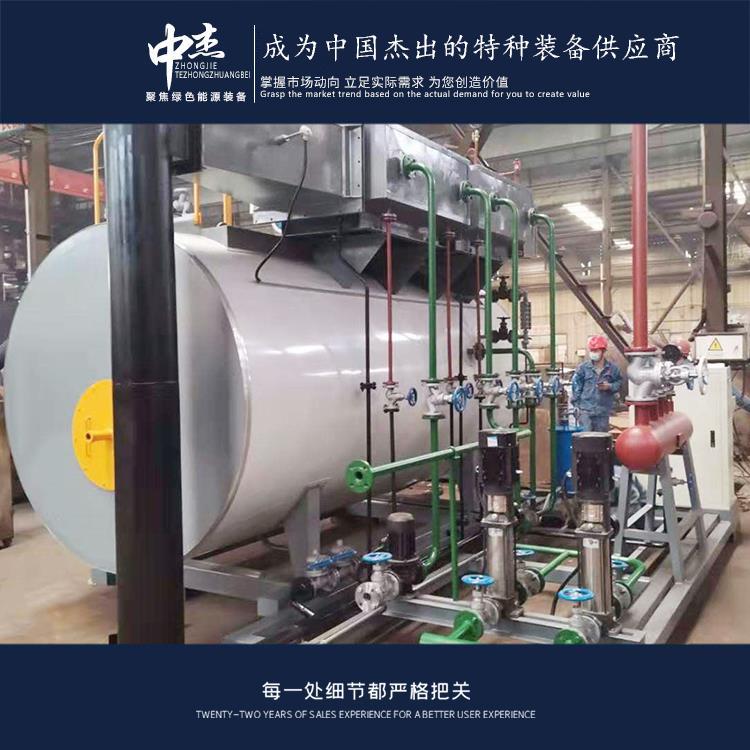

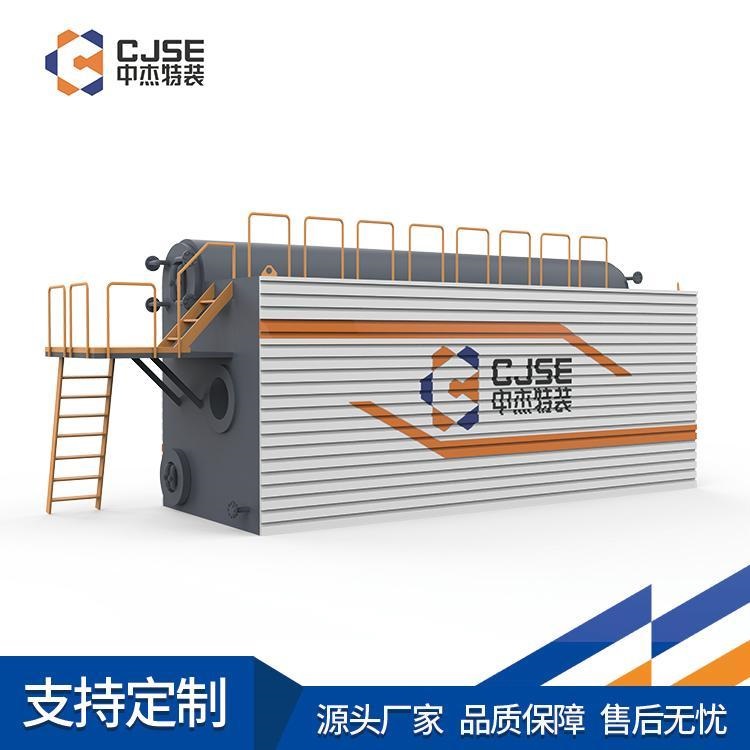



















Shandong Zhongjie Special Equipment (formerly Heze Boiler Factory Co., Ltd.) was established in 2001, located at No. 2218 Jinnan Road, Development Zone, Heze City, with a registered capital of 50 million yuan and total assets of 500 million yuan. The company has 7 business centers: boilers, deep-freezing containers, pressure vessels, central air conditioning, engineering installation, international trade, and Internet of Things. It has three factory sites on Jinnan Road, East Changjiang Road, and Bohai Road, covering a total area of 200,000 square meters, with the main workshop spanning 83,000 square meters. It currently employs 710 people, including 247 engineering and technical staff and 82 intermediate-level technicians. In December 2016, it was recognized as a "High-tech Enterprise" by the Science and Technology Department. In June 2021, it was identified as a "Specialized and New Enterprise in Shandong Province" by the Ministry of Industry and Information Technology. In June 2022, it was recognized as a "Gazelle Enterprise in Shandong Province" and in August 2022, it was identified as a "Specialized and New Small Giant Enterprise" by the Ministry of Industry and Information Technology.
Before ignition, the preparation of the steam boiler involves the following steps:
1. Clean the boiler: First, clean the internal and external dirt and impurities from the boiler. Remove ash, sediments, and dirt inside the boiler to ensure the efficiency of combustion and heat exchange.
2. Check fuel supply: Inspect the fuel supply system to ensure a smooth fuel supply. Check the fuel storage tank, transmission pipelines, and filters, clean blockages, and replace damaged parts.
3. Inspect the burner: Check the operational status and cleanliness of the burner. Clean the burner's nozzle and flame sensor to ensure proper functioning of the burner.
4. Check the gas system: If it's a gas boiler, inspect the gas supply system. Check the gas pipelines, valves, and pressure regulators to ensure safe and stable gas supply.
5. Check water level and pressure: Inspect the boiler's water level and pressure. Ensure the water level is within the normal range, and pressure is stable and meets requirements. Add water and adjust pressure if necessary.
6. Check safety devices: Inspect the boiler's safety devices such as safety valves, pressure switches, and water level controllers. Ensure these safety devices operate normally to guarantee the safe operation of the boiler.
7. Prepare ignition tools: Prepare the tools and equipment required for ignition, such as a lighter rod, igniter, and so on. Ensure these tools function properly and are safe.
While performing these preparation tasks, follow relevant operational procedures and safety requirements to ensure safety and effectiveness. If unsure about the preparation, consult with an expert or the boiler manufacturer for advice.
The key to maintaining a hot water boiler is regular maintenance and inspections. Here are some common maintenance steps and precautions:
* Clean the burner and flue: Regularly clean the burner and flue to remove accumulated ash and dirt, maintaining combustion and heat exchange efficiency. Use cleaning tools and equipment as instructed in the operation manual.
* Check water level and pressure: Regularly inspect the water level and pressure of the hot water boiler to ensure safe operation within the appropriate range. Refill water and adjust pressure to avoid issues caused by low or high water levels.
* Check water quality: Conduct regular water quality tests to check for hardness, alkalinity, oxygen content, and other indicators. Take appropriate water treatment measures based on test results, such as descaling and replenishing missing chemicals, to prevent scale and corrosion from damaging the boiler.
* Inspect safety devices: Regularly check the safety devices of the hot water boiler, including safety valves, pressure switches, and water level controllers, to ensure they are functioning properly and to ensure safe boiler operation.
* Check the electrical system: Regularly inspect the boiler's electrical system, including power connections, controllers, and sensors, to ensure the proper functioning of electrical equipment and to avoid electrical failures.
* Regularly drain: Regularly drain the waste water and impurities from the boiler to avoid their impact on the boiler. Develop a reasonable drainage plan based on the boiler's usage and water quality conditions.
* Keep records and monitor: Record the boiler's operating parameters, maintenance records, and fault situations, and regularly monitor and analyze them to identify and address issues promptly.
* Train operators: Ensure that operators are adequately trained.
During the production welding of thermal oil boilers, the following points should be noted:
Welder Qualification: Ensure that the welders involved in the welding work have appropriate qualifications and experience, and are familiar with welding processes and operational procedures.
Welding Material Selection: Choose welding materials suitable for thermal oil boilers, ensuring their compatibility with thermal oil and high-temperature resistance.
Welding Process Control: Select an appropriate welding process based on the material and design requirements of the thermal oil boiler, such as manual arc welding, gas shielded welding, etc. Control welding parameters like current, voltage, and welding speed to ensure the quality and strength of the weld.
Welding Area Protection: During the welding process, the welding area must be protected to prevent contamination from thermal oil and welding materials. Use welding barriers, welding shields, and other equipment to ensure the cleanliness and safety of the welding area.
Post-Welding Treatment: After welding, post-treatment of the weld is required, such as slag removal, grinding, and cleaning, to ensure the flatness and surface quality of the weld.
Welding Quality Inspection: Conduct welding quality inspections, including visual inspection of the weld, dimensional measurements, and non-destructive testing, to ensure the welding quality meets requirements.
Safety Measures: Pay attention to safety measures during the welding process, such as wearing protective eyewear, gloves, and fire-resistant clothing, to ensure the safety of welding operations.
It is important to follow relevant standards and specifications during the welding process to ensure welding quality and safety. If unsure about how to perform welding or if there are potential safety hazards, seek the advice of a welding engineer or consult relevant agencies.
Excessive exhaust gas temperature in a thermal oil boiler may be due to several reasons: Incomplete combustion: If the fuel is not fully combusted during the boiler's combustion process, it leads to a high concentration of unburned fuel and harmful substances in the flue gas, raising the exhaust gas temperature. Possible causes include insufficient fuel supply, improper adjustment of the burner, and burner wear. Excessive air: Excessive air can lower the combustion temperature, making the heat in the flue gas insufficient to reduce the flue gas temperature to a reasonable level. Possible causes include improper adjustment of the burner and excessively wide air door openings. Flue blockage: Accumulated ash, slag, or other impurities in the flue can obstruct the flow of flue gas, increasing the residence time of the flue gas and thus raising the exhaust gas temperature. Abnormal thermal oil flow: Abnormal thermal oil flow, either too high or too low, can lead to uneven heat transfer, increasing the flue gas temperature. Overheating of the boiler: Improper temperature control in the thermal oil boiler can cause overheating, raising the exhaust gas temperature. Design issues of the boiler: Design problems such as a narrow flue or poor flue gas flow can also lead to excessive exhaust gas temperature. To address the issue of high exhaust gas temperature, a comprehensive inspection and analysis of the thermal oil boiler is required. Solutions may include adjusting burner parameters, cleaning the flue, checking thermal oil flow and temperature control. In severe cases, boiler system modifications or repairs may be necessary. Additionally, regular maintenance and inspections are crucial preventive measures against excessive exhaust gas temperature.
ZJ Special Equipment adheres to the grand vision of "realizing employees' dreams, creating value for customers, and striving for the prosperity and strength of our motherland," and is dedicated to the development of the green energy equipment industry. We commit to society with high-quality, cost-effective products and services!
WeChat Official Account

Scan to follow Official Account




















