


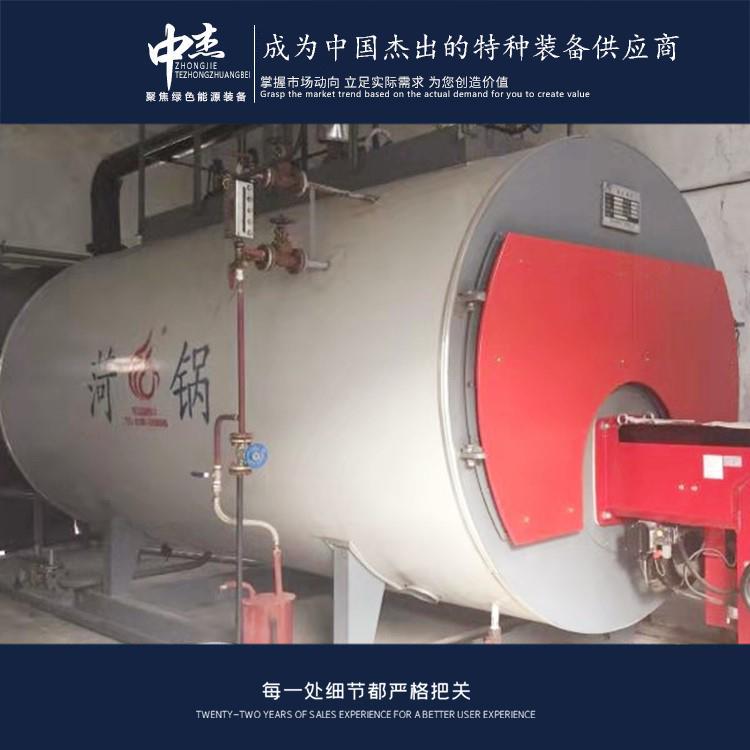

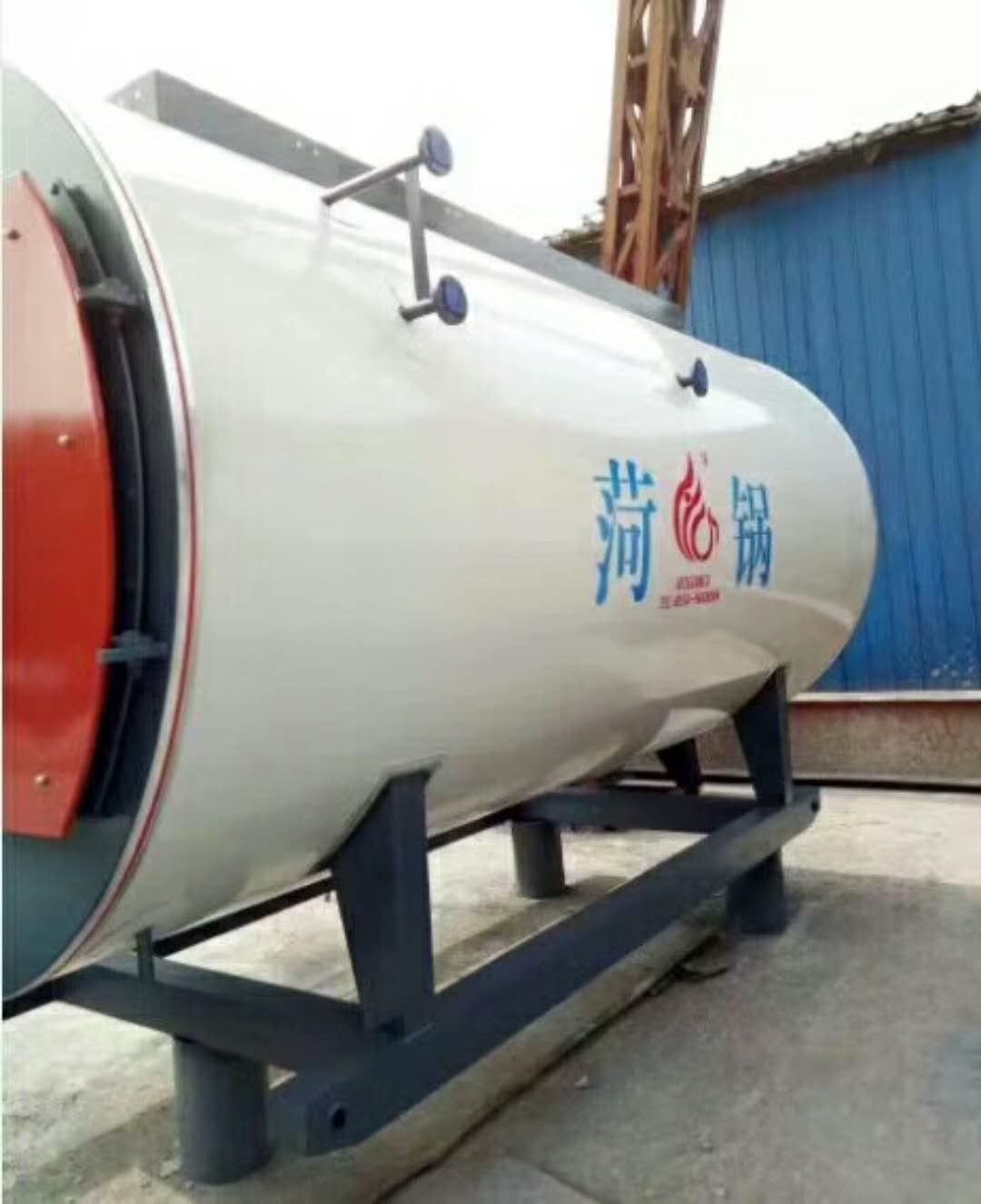
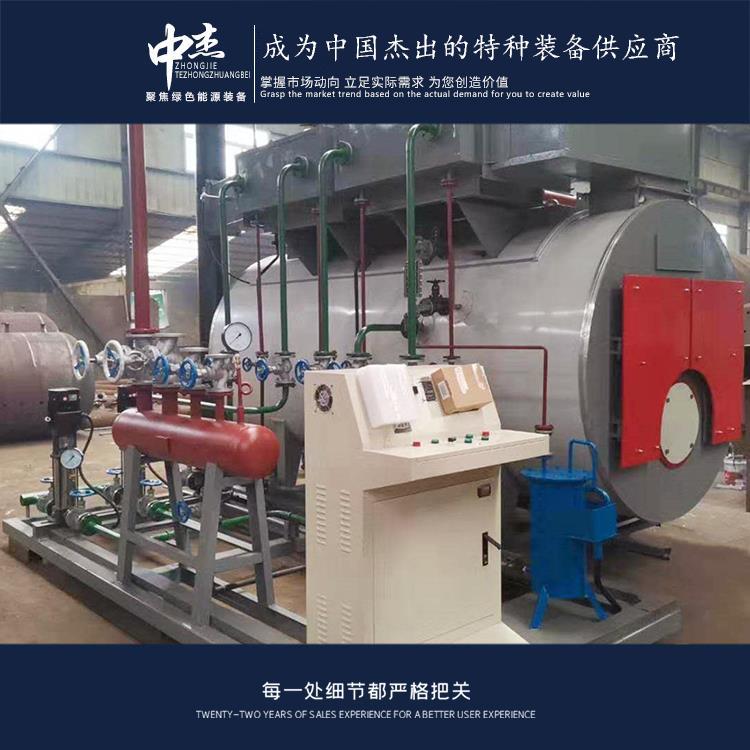



















Shandong Zhongjie Special Equipment's main products include: fuel (gas) boilers, organic heat carrier boilers, biomass boilers, waste heat boilers, and other boiler products; vacuum insulation cryogenic pressure vessels such as LNG tanks, oxygen/nitrogen/argon tanks, and CO2 tanks; pressure vessel products such as denitrification engineering equipment, heat storage and energy storage equipment, and complete chemical equipment; central air conditioning and ventilation equipment such as ground (water) source heat pumps, air source units, water-cooled screw units, and air-cooled modular units. Planned products include large-scale energy centers, LNG transport vehicles, LNG tank containers, and other green energy equipment.
A condensing steam boiler is an energy-efficient boiler equipment, with the following working principles and features:
Working Principle:
- Steam Generation: The condensing steam boiler produces high-temperature flue gas by burning gas, which then exchanges heat with the water pipes inside the boiler, heating the water to produce steam.
- Steam Condensation: After steam is generated, it enters the condenser where it exchanges heat with the condensing medium (usually cold water or recycled water), releasing heat from the steam and condensing it back into water.
- Flue Gas Reuse: The flue gas after condensation still contains some heat, which can be recovered and reused through a flue gas reuse system, improving the boiler's thermal efficiency.
Features:
- Energy-Saving: The condensing steam boiler utilizes the principle of steam condensation to fully utilize the heat in the steam, enhancing the thermal energy utilization efficiency and saving energy consumption.
- Low Emission: Due to the recovery of most of the heat during the flue gas condensation process, the flue gas temperature is lower, resulting in relatively low emissions of pollutants, and having a smaller environmental impact.
- Compact Structure: The condensing steam boiler usually features a compact design, occupying less floor space, making it suitable for places with limited space.
- Fast Startup: The condensing steam boiler has the characteristic of quick startup and shutdown, allowing for flexible adjustments and operation according to actual needs.
- Wide Application Range: The condensing steam boiler is suitable for heating and steam requirements in industrial production processes, such as power plants, chemical factories, and textile mills.
- Maintenance and Care: It is important to note that the condensing steam boiler requires regular maintenance and care during use, including periodic cleaning of the condenser and flue gas reuse system to ensure proper operation.
Thermal oil furnace fuel systems may encounter issues due to operations such as:
- Inadequate fuel quality: Using low-quality or contaminated fuel can cause problems within the fuel system. For instance, the presence of impurities, water, or excessive fuel can lead to clogs in the fuel pump, nozzle, and burner, affecting fuel supply and combustion efficiency.
- Unregular maintenance of fuel filters: Fuel filters are designed to filter out impurities and particles from the fuel to prevent them from entering the fuel system. If fuel filters are not regularly cleaned or replaced, they can become clogged, affecting fuel flow and supply.
- Improper fuel pump adjustment: Proper adjustment of the fuel pump is crucial for maintaining stable fuel supply volume and pressure. Incorrect adjustment can result in either excessive or insufficient fuel supply, leading to incomplete combustion or insufficient fuel supply, affecting the furnace temperature and thermal efficiency.
- Clogged or worn fuel nozzles: Fuel nozzles are key components that atomize and inject fuel into the furnace. If the nozzles are clogged or worn, it can lead to uneven fuel injection or incorrect angles, affecting combustion efficiency and heat output.
- Insufficient fuel preheating: Fuel must be preheated before entering the burner to enhance combustion efficiency. Inadequate preheating can increase fuel viscosity, affecting its flow and injection performance.
- Fuel system oil leaks: The sealing integrity of the fuel system is vital for stable fuel supply. Oil leaks in the fuel system can lead to unstable fuel supply.
Before starting the heating gas hot water boiler, the following correct procedures must be followed:
- Inspect the gas supply system: Ensure the gas supply system is operating properly, check gas pipes, valves, and pressure regulators, ensuring there are no leaks or blockages in the gas supply.
- Inspect the water system: Check the water circulation system of the heating system, including pumps, valves, and pipes, ensuring the waterway is clear of leaks and blockages.
- Inspect the electrical system: Check the boiler's electrical system, including power connections, controllers, and sensors, ensuring electrical equipment operates normally.
- Inspect safety devices: Check the boiler's safety devices, including safety valves, pressure switches, and water level controllers, ensuring they are functioning properly to ensure safe operation of the boiler.
- Prepare for ignition: According to the boiler's operating instructions, prepare the tools and equipment needed for ignition, including igniters and electrical ignitions.
- Open the gas valve: Slowly open the gas valve to ensure a steady gas supply and avoid gas surges.
- Ignition start: Follow the boiler's operating instructions to ignite and start the boiler. Perform the appropriate operations according to the boiler model and control system to ensure smooth ignition.
- Monitor operating status: After startup, closely monitor the boiler's operating status, including combustion, water level, and pressure, ensuring normal operation without any abnormalities.
- Adjust parameters: Adjust the boiler's parameters as needed, including temperature, pressure, and water level, to meet the requirements of the heating system.
- Regular maintenance: After startup, perform regular maintenance, including cleaning the burner, checking water level and pressure, and replacing worn parts, to ensure normal operation and safety of the boiler.
- It is recommended to refer to the boiler's operation manual and manufacturer's guidelines before starting the heating gas hot water boiler to ensure correct and safe operation. If necessary, personnel may be requested for operation and maintenance.
The gas steam boiler's gas consumption over a year, for a 1-ton capacity unit, depends on various factors such as the efficiency of the boiler, load conditions, and operating hours. Generally, it can be estimated using the following formula: Gas Consumption (m) = Boiler Efficiency × Rated Thermal Power × Operating Hours. Here, boiler efficiency refers to the heat energy utilization efficiency of the boiler, usually expressed as a percentage; rated thermal power is the boiler's rated thermal output, typically in kilowatts (kW); and operating hours are the duration of the boiler's operation, usually measured in hours.
It's important to note that the boiler's efficiency and rated thermal power can be determined based on the specific model and parameters of the boiler, while operating hours need to be estimated based on actual usage. Therefore, for an accurate calculation of the 1-ton gas steam boiler's annual gas consumption, it is recommended to refer to the technical specifications and operating records of the boiler, or consult the boiler manufacturer or engineer.
Zhongjie Special Equipment upholds the grand vision of "realizing employees' dreams, creating value for customers, and striving for the prosperity and strength of our motherland," and is dedicated to the development of the green energy equipment industry. We commit to society with high-quality, cost-effective products and services!
WeChat Official Account

Scan to follow Official Account




















